
On this page
Where the square-root conversion takes place
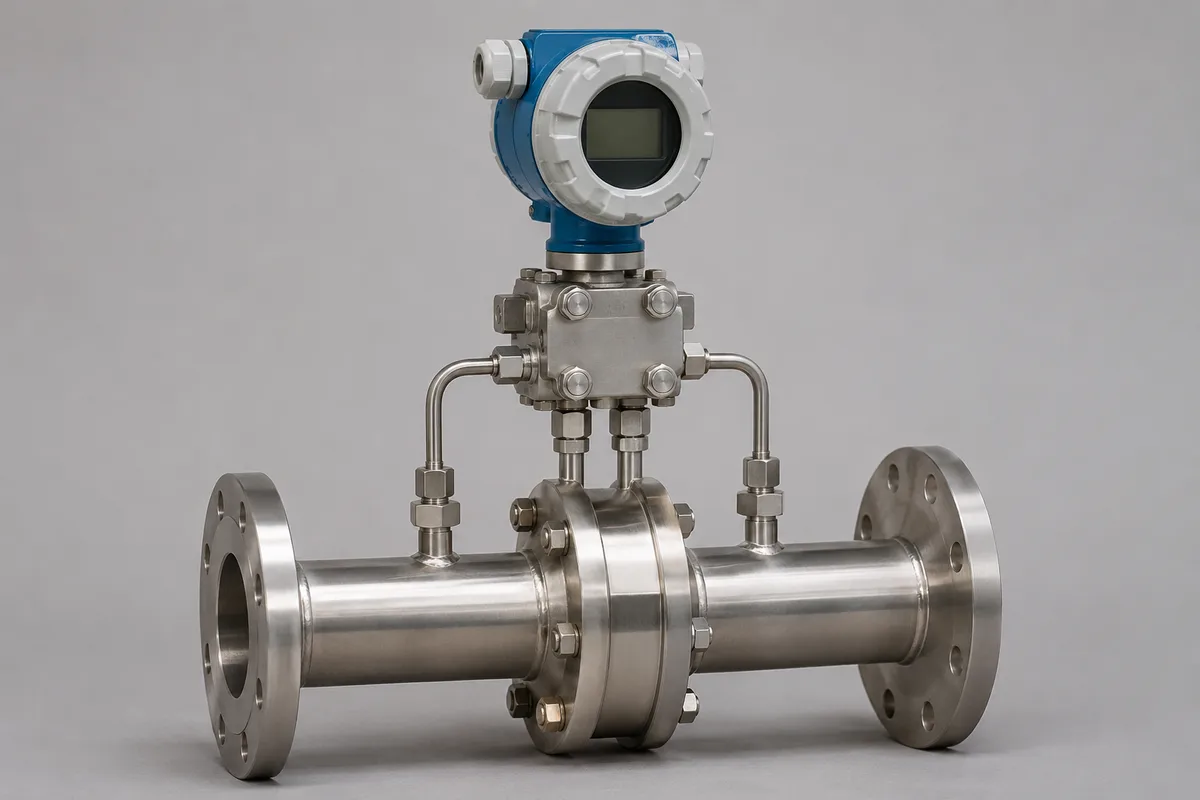
Identify the primary element, pipe bore, tapping arrangement and fluid. Indicate where the square-root conversion takes place. If both the transmitter and the controller are capable of applying it, the configured settings are as important as the marked pressure range.
With a zero-based square-root flow scale, a differential pressure of 25% of span corresponds to 50% of the flow span under the stated conditions. A panel showing 25% at that point may be displaying the pressure signal directly. Check which conversion the transmitter and the panel each perform.
Specifications and service checks
A comparison using only a simulated differential pressure can establish how the transmitter and indicator convert the input to flow. A comparison of the installed flow under actual fluid movement also involves the primary element and pipe conditions. State which part of the line the buyer needs assessed.
- Range and configuration
- The flow scale depends on the primary element and fluid. At one-half of full flow, the differential is about one-quarter of full scale under the same density and operating assumptions.
- Manufacturers and models
- Emerson Rosemount 3051SFA combines an Annubar averaging element with differential-pressure measurement.
- What we check
- A differential-pressure simulation checks the transmitter and square-root scaling. A flow comparison includes the primary element and its installation.
- Reference equipment and accuracy
- Use a calibrated differential pressure reference for the transmitter. Evaluating the assembled meter requires an independent flow reference and the applicable density information.
- When to repeat the check
- Inspect sensing ports and impulse lines after cleaning or process changes. Repeat the flow comparison if the primary element or its position changes.
Technical references Emerson Rosemount 3051S flow instrumentation