
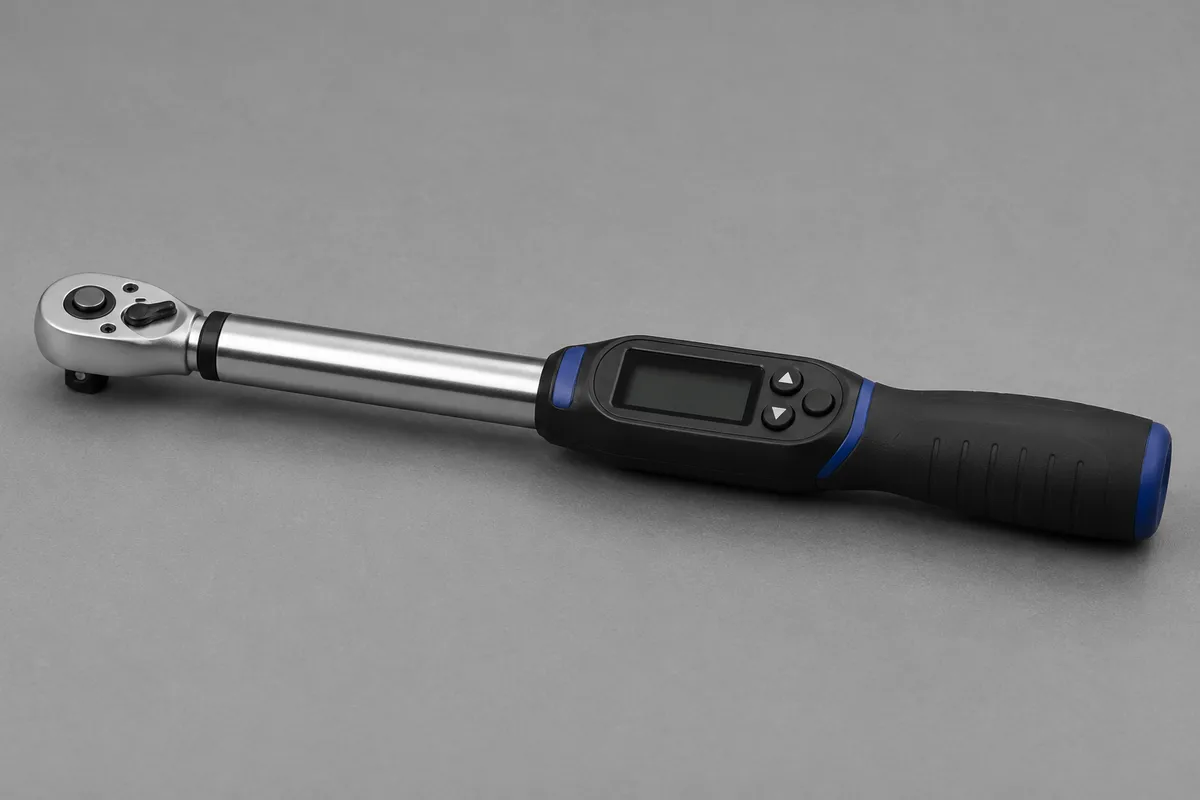
On this page
Torque setting, direction and operating mode
List the preferred units, setting, direction and operating mode. If the wrench also reports tightening angle, identify that as a separate requested function. Include the adapter or interchangeable head used with the stored length or compensation setting.
The operator may stop at the buzzer while the quality record stores the peak torque reached a moment later. If you use both, give the alarm setting and tell us which peak value is downloaded. We can then distinguish the threshold check from the final indicated peak.
Specifications and service checks
A torque-and-angle fastening job may save a peak in N·m and the angle turned after a threshold is crossed. Include the threshold setting if asking about the angle function. An angle counted from first movement describes a different part of the cycle.
- Range and configuration
- Record the selectable torque units, the calibrated torque band and any separate angle mode. A torque span in N·m does not also specify an angle tolerance.
- Manufacturers and models
- Snap-on ATECH is an electronic torque-and-angle family. Supply its complete part number, including the drive and range suffix.
- What we check
- Apply reference torque and compare the live and peak readings in the modes used. Angle indication, if requested, needs its own comparison.
- Reference equipment and accuracy
- Use a calibrated torque transducer for torque and a traceable angular reference for an angle channel. Record the handle and head combination.
- When to repeat the check
- Review the instrument after an overload event or head replacement. Compare stored peak values with the actual calibration results when setting recall.
Technical references Snap-on Digital torque wrench reference