
On this page
Slot width for each aggregate fraction
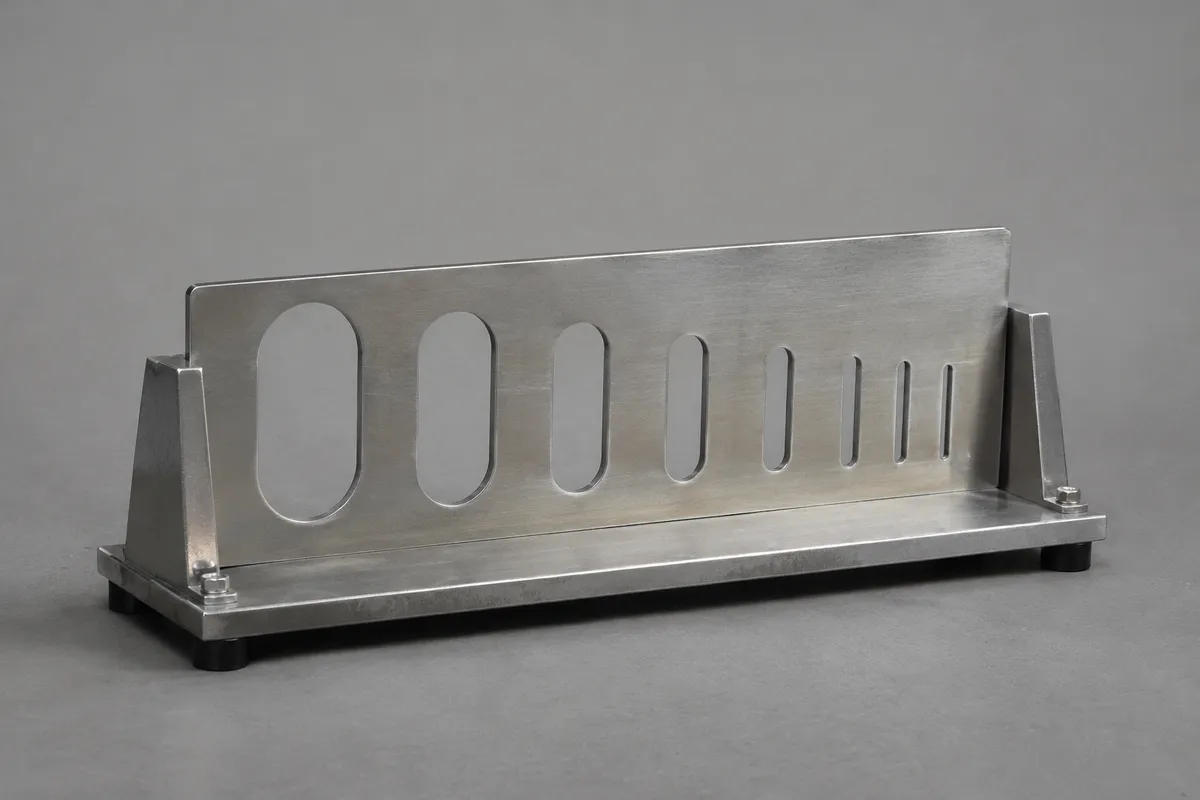
A slot can be wider at the end where aggregate is normally pushed through. If that is the concern, mark the slot and the worn end on a photograph, or put a removable label beside it. The relevant size is the width of that particular opening and its assigned aggregate fraction. The overall size of the plate and the pin spacing on an elongation gauge are different checks.
Flakiness gauge slots
Supply the dimensional requirement for each opening and identify the plate. Note damaged or worn measuring edges. The equipment enquiry concerns defined dimensions of the gauge; the sample preparation and classification of aggregate particles remain part of the laboratory's material-testing procedure.
Specifications and service checks
A plate with a burr at one end of a slot can admit a particle at one position and catch it at another. Identify the slot and working edge when asking for a dimensional review of the plate.
- Range and configuration
- The important dimensions are the slot widths associated with the marked sieve fractions. Plate length and overall width do not determine the classification.
- Manufacturers and models
- Matest A070 is a slotted thickness gauge for aggregate. Humboldt also lists a slotted flakiness gauge for aggregates.
- What we check
- Verify each slot at several positions along its usable length. Record burrs or local damage where particles pass through.
- Reference equipment and accuracy
- Use traceable pin or gauge-block combinations suitable for the slot shape, with uncertainty small enough to resolve its width tolerance.
- When to repeat the check
- Check suspect slots after an impact and review wear more often on heavily used fractions.
Technical references Matest product reference · Humboldt product reference