
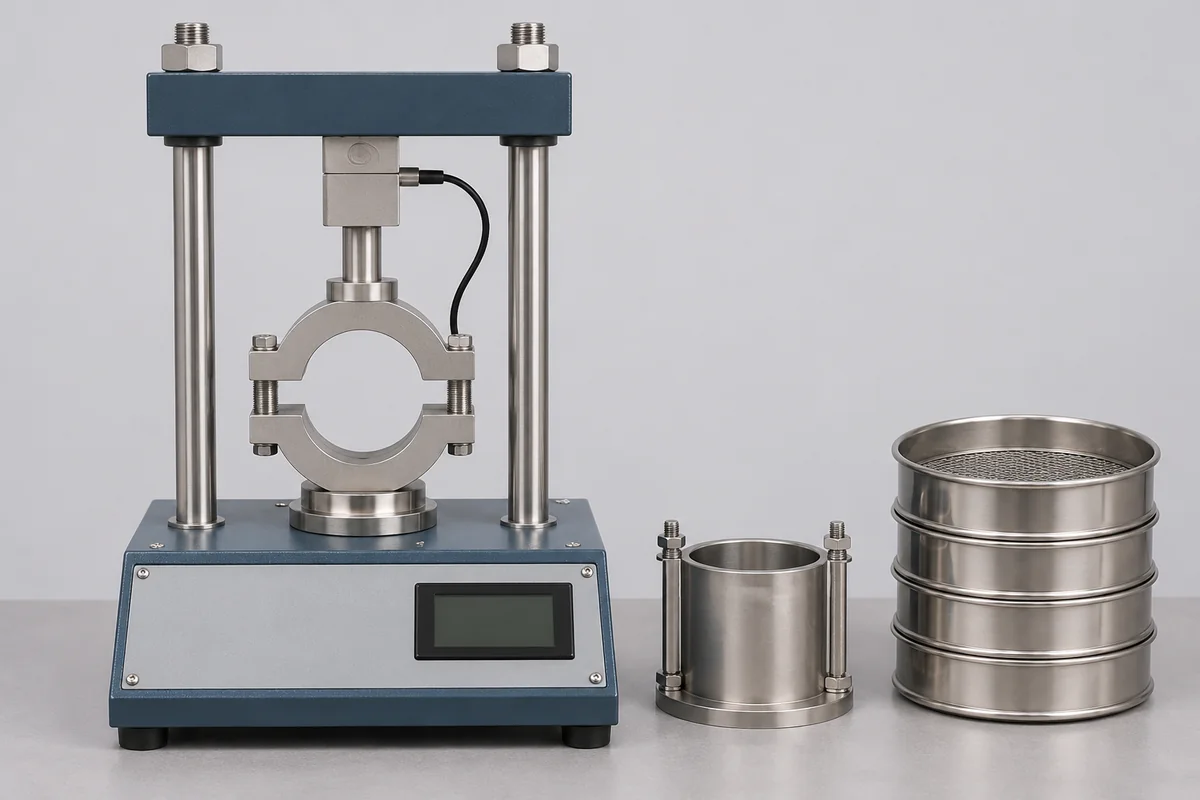
Aggregate crushing value apparatus
For aggregate crushing value apparatus, identify the cylinder, plunger and base as a matched assembly. Send the required dimensions and the test method used by the laboratory. List the loading machine and force indication separately if they also need assessment. Checking the apparatus dimensions does not produce an aggregate crushing value; that material result belongs to a separately controlled test.
Flakiness gauge slots
List the flakiness gauge's marked fractions and the slots used in routine work. Supply the dimensional requirement for each opening and identify the plate. Note damaged or worn measuring edges. The equipment enquiry concerns defined dimensions of the gauge; the sample preparation and classification of aggregate particles remain part of the laboratory's material-testing procedure.
Elongation gauge openings
For an elongation gauge, identify each pin or opening pair and the aggregate fraction to which it belongs. Send the reference dimensions from the applicable method, rather than a single overall board size. Describe loose pins or changes in the supporting base. RTS can review the specific dimensional request without treating a visual condition check as a complete measurement of the gauge.
Los Angeles abrasion machine
An enquiry for a Los Angeles abrasion machine should identify the drum, internal lifting feature, revolution counter and operating speed requirements. List the abrasive charge separately with its existing identification. State which dimensions, mass, speed or counting checks are required. A machine that completes a run has not thereby demonstrated every condition needed for the laboratory's abrasion test.
Asphalt mixer operating measurements
For an asphalt mixer, distinguish a sample-preparation machine from an instrument producing a test result. Identify any controlled temperature, mixing speed and elapsed-time requirements. Include the bowl, blade and batch arrangement where they affect the requested checks. A general calibration label is insufficient: the quotation should name the measurable functions assessed and leave product mixing suitability with the laboratory's method owner.
Bitumen extractor configuration
State the bitumen extractor type, bowl or chamber arrangement and the operating method. If the machine has speed, time or temperature indications, identify the functions requiring measurement and the normal settings. Provide the equipment manual and receiving-condition requirements. The extraction result also depends on the material-testing procedure; an equipment indication check should not be described as verification of binder content.
Bitumen penetrometer
List the bitumen penetrometer's displacement indication, needle assembly, loading pieces and timing arrangement. Give the quantities controlled by your method and identify the bath used to condition the sample. Each measurement needs its own requirement. Needle movement, applied mass and specimen temperature should not disappear into a request for a single generic penetrometer certificate.
Ductility testing machine
For a ductility testing machine, give the travel measurement, pulling speed, temperature arrangement and specimen mould details. State whether the system also records force. Ask for the required functions separately and supply the relevant acceptance limits. A travel check alone does not establish the thermal conditions, force channel or suitability of the complete material-test procedure.
Flash point apparatus method
Name the flash point apparatus and the exact method used, including the cup type and whether the operation is manual or automatic. Identify the temperature sensor, timing functions and detection arrangement that require review. RTS must confirm suitable facilities and the available assessment before accepting this specialist equipment. A temperature comparison by itself is not a flash-point determination or method validation.
Marshall stability apparatus
For Marshall stability apparatus, list the force system and the flow or displacement indication independently. Include the loading head, working range, loading-rate requirement and conditioning equipment named in the method. The order should say which measurement channels are included. A force result for the frame does not automatically cover specimen conditioning or the displacement used to report the material test.
Core drilling machine and sample dimensions
A core drilling machine primarily prepares a specimen. Identify any feed, speed or depth indication for which a measurement is actually required. Supply the bit and core-size requirements where dimensional checks matter. Do not request routine calibration of the entire machine without a defined quantity; core condition and suitability for a later material test need their own examination under the laboratory's procedure.
Send a measurement list with the apparatus list
For every item, attach the method revision and the quantities that control acceptance. RTS will confirm scope, available references and the reporting laboratory before a booking. Large equipment may need site access, while removable gauges can have a separate receiving arrangement. Include the plant address and the person who can explain the testing sequence.