
On this page
Which conditions do the flow units refer to?
If a gas calibrator displays litres per minute, check whether the figure refers to the gas as it passes through the instrument or has been converted to specified conditions. Two readings with the same unit can differ on that account alone. On the job sheet, mark the direction of flow, fluid and range. For a pulse output, copy the factor and its units exactly, especially where one instrument uses pulses per litre and another uses litres per pulse.
Flow calibrators used as references
Include the inlet and outlet arrangement and any pressure or temperature sensors forming the reference system. Source and measurement functions should have separate point lists. RTS calibrates the flow reference for the stated medium and operating conditions, including the pressure and temperature measurements used in the result.
Specifications and service checks
A sampling pump may be set with the reference upstream on one bench and downstream on another. Record the intended connection, especially for a gas stream with appreciable pressure differences. It gives meaning to a volume-flow comparison across the two setups.
- Range and configuration
- The cell serial number matters as much as the display number. Quote the cell used for the pump or meter under test.
- Manufacturers and models
- Sensidyne offers three Gilibrator 3 gas flow cells. The published ranges are 5–450 mL/min, 50–5,000 mL/min and 1–30 L/min.
- What we check
- Compare each cell against an independent gas-flow standard at agreed rates. Record gas type and the conditions to which the displayed flow refers.
- Reference equipment and accuracy
- A calibrated gas prover or transfer standard must resolve the accuracy specified for that cell, including at its minimum flow.
- When to repeat the check
- Follow the history of each cell individually. Damage or cleaning of the measuring cell may bring the next check forward.
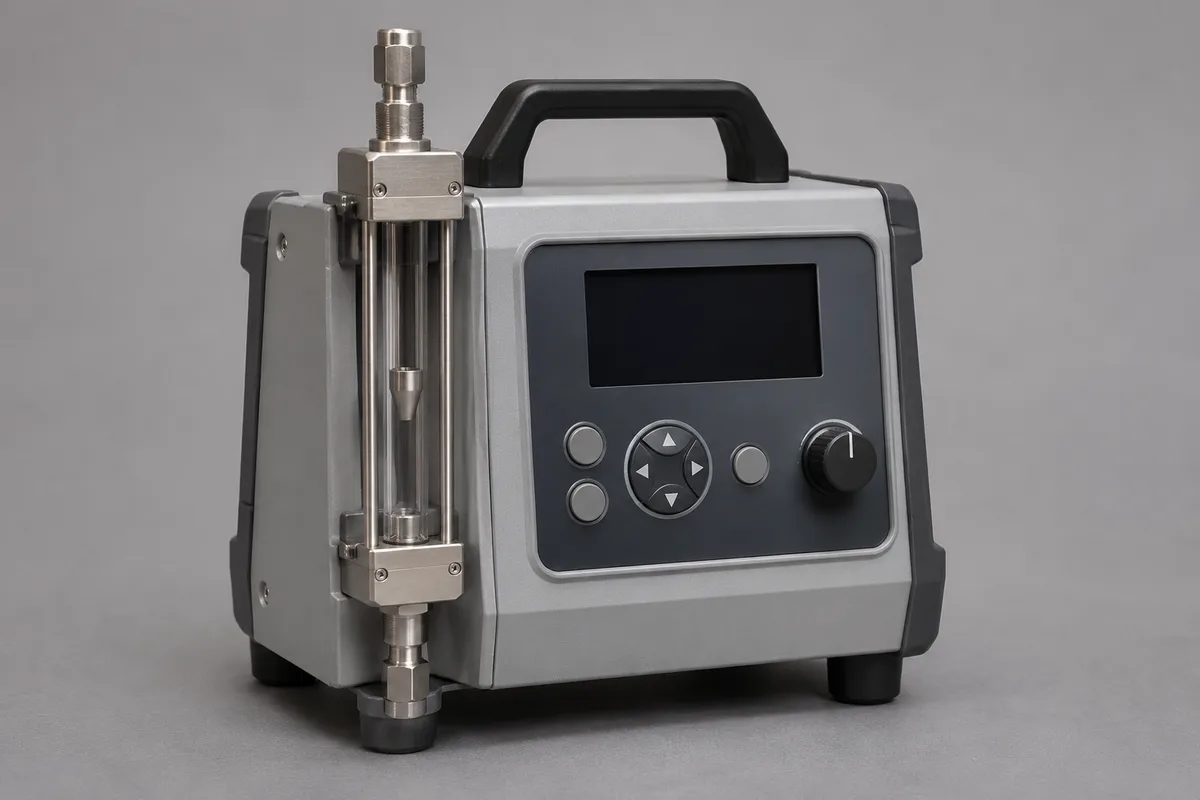
Technical references Gilibrator 3 Air Flow Calibrator