
On this page
Graduation marks and delivery time
If you use the interval between two graduations, name both marks. Where delivery ends at the tip, copy the drainage convention on the glass and any specified waiting time. The result can then be compared with the way the pipette is used on your bench.
A box labelled 10 mL glass pipettes may contain single-mark pipettes and graduated ones. Photograph one clear inscription from each type and count them separately. The laboratory can then associate each result with the correct delivery convention and avoid quoting both types as the same item.
Specifications and service checks
A delivery pipette may be marked to drain under a specified convention. Copy its delivery markings before a volume comparison and identify which end mark is used on the bench. A student worksheet that simply says “empty the pipette” can leave that detail unresolved.
- Range and configuration
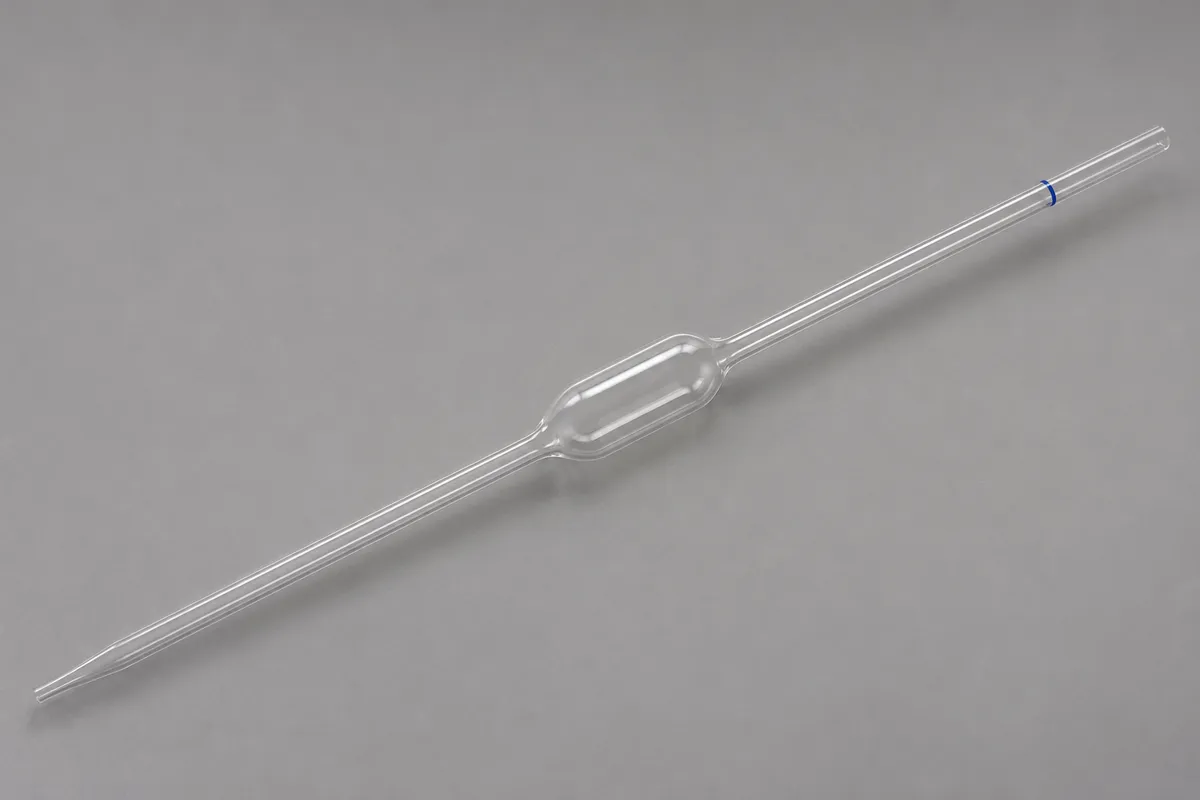
- BRAND shows a 25 mL glass bulb pipette marked ±0.03 mL. Capacity, tolerance and the delivery marking identify that particular glassware. A chip at the outlet can affect how much it delivers.
- Manufacturers and models
- BRAND BLAUBRAND includes bulb and graduated glass pipettes. Corning’s Stripette is an example of a serological pipette.
- What we check
- Measure the amount delivered under the drainage convention marked on the instrument. Record which marks were used and whether blow-out is specified for that design.
- Reference equipment and accuracy
- A traceably calibrated balance and thermometer support a volume comparison. Choose resolution and evaporation control for the smallest delivery under test.
- When to repeat the check
- Identify glass pieces individually where practical. For disposable serological or transfer pipettes, follow the lot-control requirements used by the laboratory.
Technical references BRAND volumetric glassware testing guide · Corning Stripette serological pipettes · NIST volumetric calibration procedures · Corning 4488 10 mL Stripette · BRAND volumetric instrument markings