
On this page
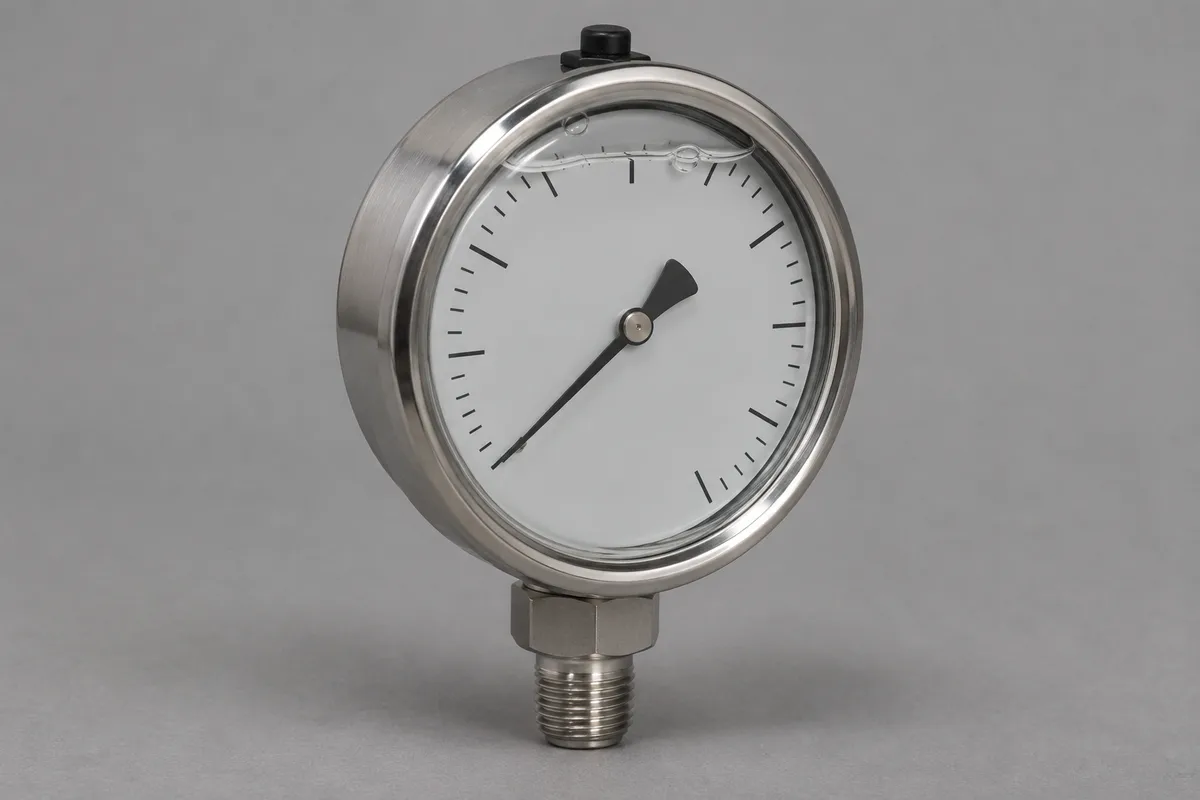
Vent position on a liquid-filled case
For repeat work, record how the case vent is normally set under the maker’s instructions and the mounting position. If the pointer is slow to settle on a pulsing line, describe that separately from an offset seen at a stable applied pressure.
If a dial is compared immediately after removal from a warm machine and then again after it stabilises in the room, the readings need their conditions recorded. Case temperature, mounting and vent state can matter when reviewing a small observed zero change.
Specifications and service checks
A blurred pointer on the running pump and a steady pointer when the pump stops point to two different test conditions. Describe when the blur appears and whether the liquid level in the case has changed. That gives the bench a starting point for separating dial accuracy from the damping complaint.
- Range and configuration
- The 213.53 family includes full scales up to 1,000 bar. This is a family maximum. Quote the range engraved on the particular dial.
- Manufacturers and models
- WIKA 213.53 is one liquid-filled Bourdon design. For a hydraulic installation, confirm the connection and wetted material on the installed gauge.
- What we check
- An increasing and decreasing pressure comparison shows indication error and return to zero. Record the working orientation and whether the case was vented as specified.
- Reference equipment and accuracy
- Use a calibrated pressure reference and a comparator with a compatible medium. The case filling and the pressure-transmitting medium have different functions.
- When to repeat the check
- Look at drift after pump changes, sustained vibration or a pressure spike when deciding whether the regular interval still fits.
Technical references Liquid filled gauge - 213.53 - WIKA United Kingdom