
On this page
Scale marks and the milk reference temperature
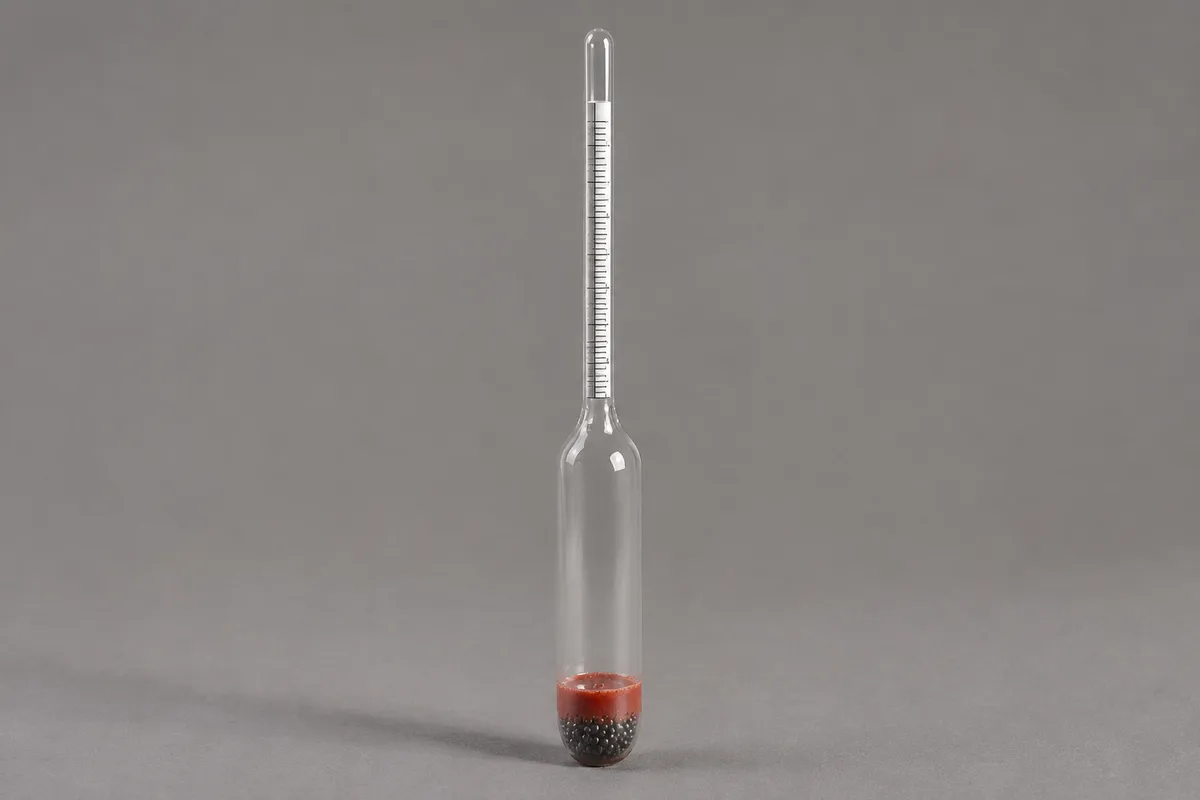
Identify the scale designation, reference temperature and the part of the scale used for intake checks. Where the laboratory applies a temperature correction after reading, keep that calculation separate from the comparison of the instrument’s indicated value.
For two lactometers with overlapping scales, the same numerical graduation may refer to different reference temperatures or scale inscriptions. Identify each glass instrument before transcribing observations into a common receiving log, especially where the results are later corrected for temperature.
Specifications and service checks
A dairy intake sheet can record density, lactometer degrees and a temperature correction in separate columns. Supply the original scale reading and sample temperature if a discrepancy arose after conversion. The raw observation identifies what the floating instrument actually indicated.
- Range and configuration
- A lactometer reads relative density or a defined lactometer scale. Temperature and surface tension affect the position at the meniscus.
- Manufacturers and models
- Zeal offers lactometers including the D4020 with a specific-gravity scale from 1.000 to 1.040 and BS 734 instruments for narrower ranges. Quote the model, stem scale and reference temperature.
- What we check
- Compare the graduations with assigned densities using the instrument's reading convention and controlled temperature. Record the range of marks actually checked.
- Reference equipment and accuracy
- Use density reference liquids or a reference density determination with a calibrated thermometer. Match the surface conditions specified for the hydrometer.
- When to repeat the check
- Check glass, scale position and repeat readings after a knock or long storage.
Technical references Lactometers