
On this page
Where the distance measurement starts
For example, a meter can sit with its back against a wall but still be set to measure from the front face. Before reporting a consistent offset, note which reference icon was on screen. If an extending endpiece or a tripod adapter is used for longer shots, identify it with the meter. For area calculations, specify the individual working lengths that need checking.
Laser distance meter references
Include any extension foot, tripod mode or accessory used. Identify direct distance measurements separately from calculated areas, volumes or indirect heights. The enquiry should define the measured lengths and conditions needed, without treating every derived display function as an independently calibrated quantity.
Specifications and service checks
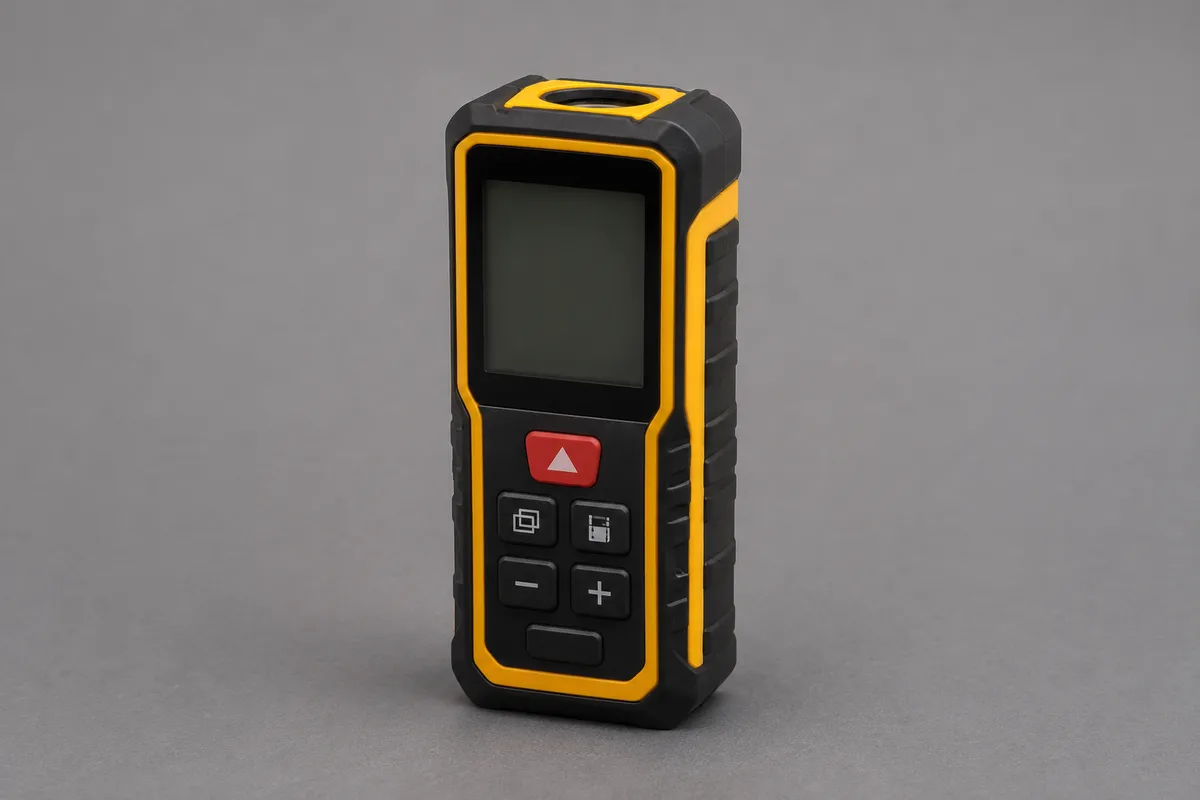
Some handheld meters measure from the front face or the rear of the housing. A change equal to the case length is a reason to check the selected origin before comparing a stored dimension with a tape reading.
- Range and configuration
- For the DISTO D2 in the linked specification, Leica quotes a typical measuring accuracy of ±1.5 mm. Use the model’s specified distance span and the distances used on site. A rear-case datum and a front-case datum can differ by the length of the instrument.
- Manufacturers and models
- Leica DISTO D2 is a handheld laser distance meter. Check the generation when quoting its maximum distance.
- What we check
- Compare readings with known lengths at several distances and document the reference end, target and measurement mode.
- Reference equipment and accuracy
- Use a traceable length baseline or interferometric reference with suitable uncertainty. Target condition and atmospheric effects matter on long baselines.
- When to repeat the check
- Repeat after a fall, housing repair or unexplained offset. A short check length between jobs can reveal a datum error.
Technical references Leica Geosystems product reference