
On this page
Reporting the original Leeb scale
Give the impact device type, original Leeb scale and any conversion selected for routine reporting. If the concern is limited to a curved or lightweight part, describe how it is supported. Keep checks on a reference block identifiable from observations on the production part.
A hardness value converted on the instrument can depend on the material group selected in its menu. When two operators report different converted values, include the native rebound readings as well as the selected material settings before deciding which channel needs investigation.
Specifications and service checks
A hardness result on a light component can change when it is properly coupled to a suitable support. Note the support and impact direction when comparing a shop reading with a reference block using the same impact device.
- Range and configuration
- A Leeb result carries the impact-device designation, such as HLD. The useful range depends on the material, impact body and orientation. Other portable designs use indentation or ultrasonic contact impedance.
- Manufacturers and models
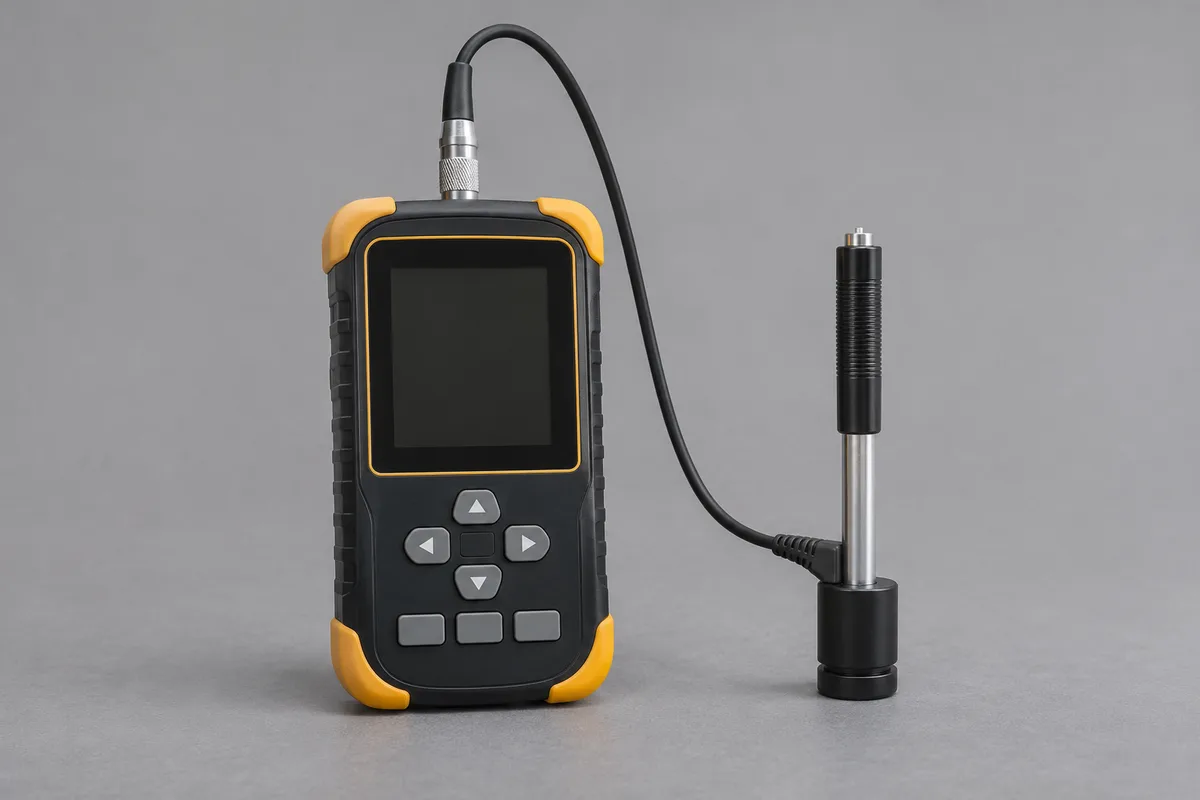
- Screening Eagle’s Equotip 550 Leeb uses interchangeable impact devices. Portable hardness testers based on other principles need their own references.
- What we check
- For a rebound instrument, take repeated impacts on an assigned block in the specified direction. Verify any material-specific conversion separately if a converted hardness value is used on reports.
- Reference equipment and accuracy
- Use a certified block appropriate to the impact device, hardness and orientation. The block must be supported as specified for valid rebound measurements.
- When to repeat the check
- Inspect the impact tip and repeat a block check after cleaning the guide tube or changing the impact device. Keep results in the native scale for tracking drift.
Technical references Screening Eagle Equotip 550 Leeb