
On this page
Reference point for the sighted liquid level
Identify the gauge style, scale unit and the reference point used by operations. With a sight gauge, note the scale offset and which meniscus is read. If marked in volume, include the tank relationship used to convert height into quantity.
Level gauges and their datum
Give the construction and the point from which the scale is read. Mark the working levels on a drawing and explain whether the gauge can be removed or must stay installed. RTS calibrates the level indication from the stated datum; vessel-volume calculations are recorded as a separate requirement.
Specifications and service checks
A vessel drawing can use the tank floor as zero while a gauge scale begins at the lower process connection. If the numbers disagree by a fixed amount, compare these datum locations. Both readings can be sensible and still refer to different heights.
- Range and configuration
- A direct-reading glass or scale is referenced to its mounting datum. For a float-operated scale, include process liquid density and the float identification, since immersion can shift the indicated level.
- Manufacturers and models
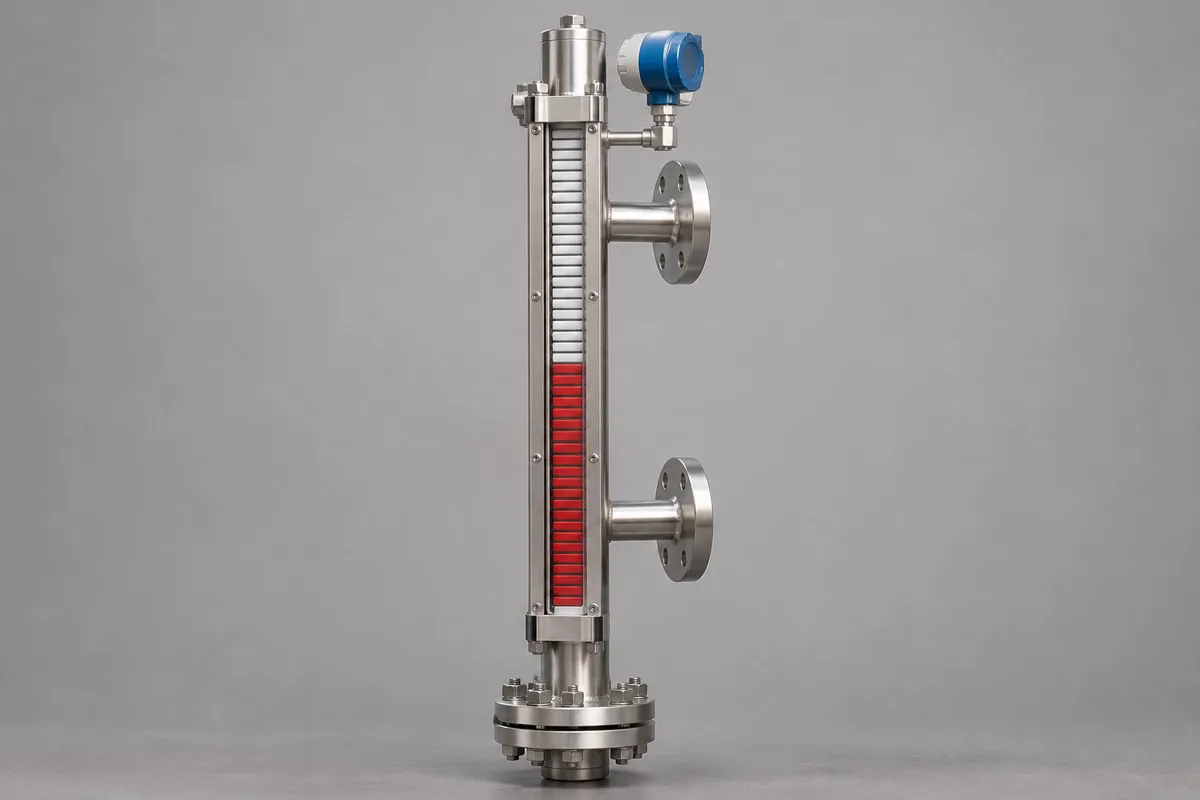
- WIKA BNA is a bypass level indicator with a magnetic float. Other level gauges include sight glasses and graduated scales.
- What we check
- Compare the displayed level with independently established liquid levels, noting rising and falling response. For a bare scale, verify graduation positions from the datum.
- Reference equipment and accuracy
- Use a calibrated height reference, with an appropriate density reference where float immersion matters. The mounting datum is part of the comparison.
- When to repeat the check
- Check for sticking or displaced flags after cleaning or a change in process liquid.
Technical references Bypass level indicator - BNA - WIKA USA