
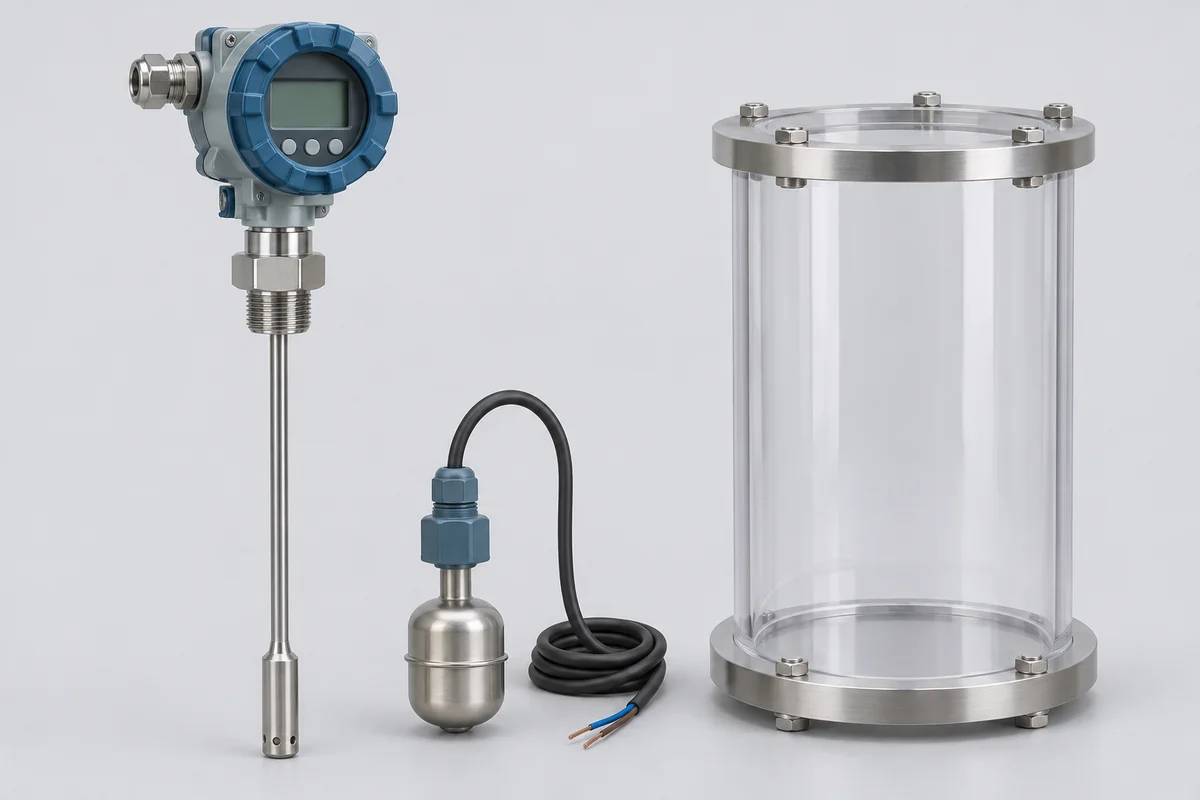
Bypass level indicators
A bypass level indicator uses an external chamber that follows the vessel level. Identify the chamber, float and display assembly, along with the liquid and its relevant operating conditions. Mark the reference datum and the positions at which an indication is needed. Keep any transmitter or switch fitted to the chamber separately identified. RTS can review the measurement arrangement rather than assume every component produces the same kind of result.
Float switches
For a float switch, identify the float, stem or cable arrangement and the contact logic used by the plant. Give the required operating and reset levels from a named datum, with the intended liquid and mounting orientation. An electrical contact check alone does not establish the liquid level at operation. The proposed test must reproduce the relevant arrangement, which RTS will review before accepting a switching-point enquiry.
Level gauges and their datum
A level gauge may show height through a sight glass, magnetic strip or another direct indication. Give the construction and the point from which the scale is read. Mark the working levels on a drawing and explain whether the gauge can be removed or must stay installed. RTS needs the specific quantity and reference arrangement for review; vessel volume cannot be inferred from a level result without separate vessel information.
Level indicators in control panels
A level indicator on a panel may convert a current, voltage or digital input into a height or percentage display. Include the configured lower and upper values and the source of the input. State whether you need an electrical indication check or a complete installed level comparison. Keep any volume-conversion table separate and identified so the report does not imply that the vessel geometry was also verified.
Level sensors and measurement principles
For a level sensor, state the measurement principle, probe or antenna arrangement and the process conditions that affect its use. Include the reference datum and whether the result is distance to a surface, filled height or another quantity. RTS should review the actual reference method before booking. If only the signal electronics will be supplied, make that boundary clear rather than treating the absent sensing assembly as included.
Level switches and reset conditions
A level switch request should specify the operating level, reset level and the output state expected on each side. Give the sensing principle and any delay settings. A simulated electrical output can verify an indication chain but does not necessarily test detection at the actual liquid surface. RTS can review which arrangement is practical and identify the result that will be reported for your switch.
Level transmitters and output span
A level transmitter needs its sensor configuration, output span and reference datum recorded together. State whether it reports height, distance, percentage or a derived quantity. Include any separate sensor and the configured process compensation. An electrical output comparison is only one part of the measurement chain. RTS will review whether the enquiry requires that comparison, a physical level reference or an agreed test of the complete installed assembly.
Pressure head as a level measurement
When the register uses pressure head, identify the pressure-sensing instrument and the calculation that converts its reading to height. Give the liquid, density information, reference elevation and whether the vessel is open or pressurised. Pressure and level are different reported quantities. RTS can review the pressure comparison and any separate calculation check, keeping those boundaries explicit rather than naming a generic head value as a complete level calibration.
Choose a physical or electrical result
For a mixed plant list, mark each item as an indicator-only, sensor-only or complete installed measurement. Put the datum and required quantity beside the asset number. RTS can review those boundaries before agreeing a method and service route. This avoids applying an electrical simulation result to an entire tank measurement or confusing a switch operation with a continuous level reading.