
On this page
Liquid, temperature and pipe size
Identify the working liquid, approximate temperature, line size and flow span. If a substitute fluid is proposed for a comparison, the effect of its properties should be reviewed for the meter principle. Include the batch quantity normally used to reconcile the tank or vessel.
At a constant 10 L/min, a two-minute run corresponds to a nominal 20 L. Comparing the totaliser change with the independently measured collected volume answers a different question from simply multiplying the meter’s own displayed rate by the run time.
Specifications and service checks
A wash station may accept a nozzle by the volume delivered in a timed fill while its meter shows litres per minute. Specify both the fill duration and target volume, particularly if valve opening takes up a substantial part of a short cycle.
- Range and configuration
- Quote the bore and normal flow in m³/h or L/min. A single flow rate represents a different velocity in a 25 mm line and a 100 mm line.
- Manufacturers and models
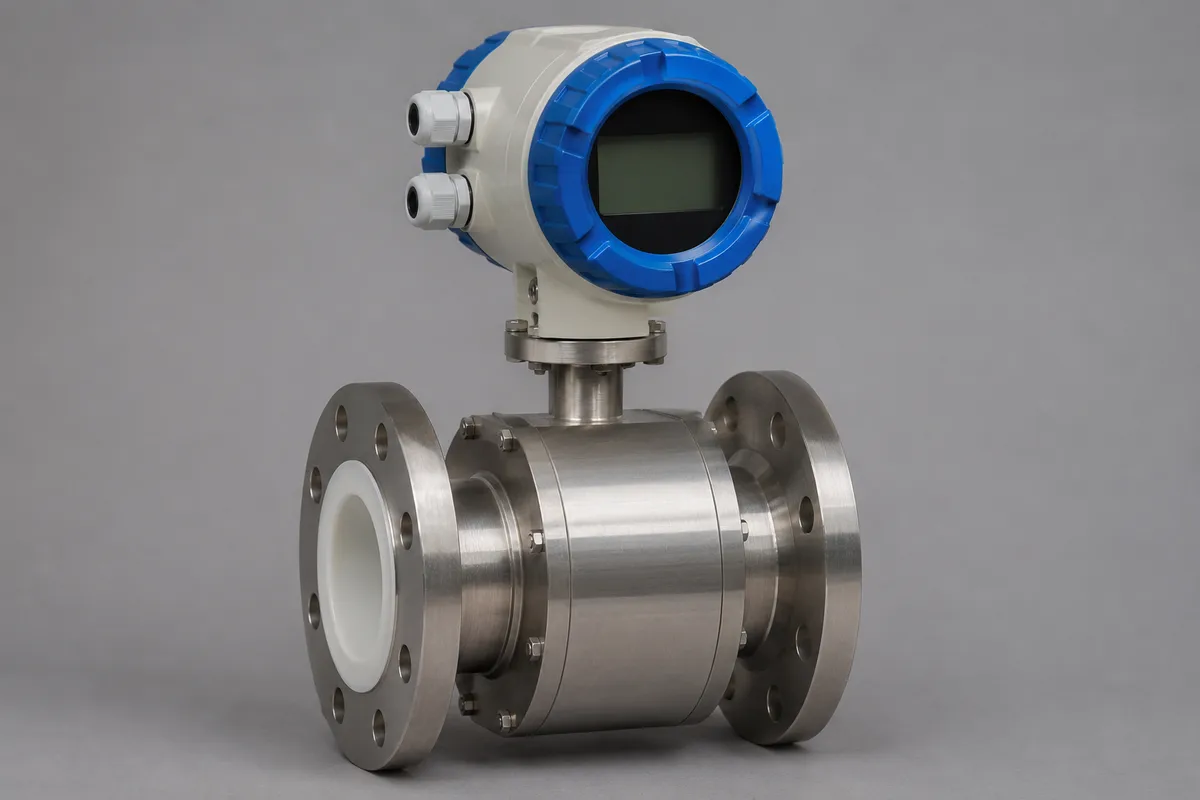
- Endress+Hauser Promag W 400 is an example for conductive liquids; turbine and positive-displacement instruments also measure liquid flow. Identify the fluid, meter size and output.
- What we check
- Compare indicated volume or pulse total with a traceably measured delivery. Record fluid, working temperature and flow, since changes in viscosity can be important for a mechanical meter.
- Reference equipment and accuracy
- The master can be a calibrated volume prover, weighing system with density correction or suitable transfer meter. Its uncertainty must cover the working rates.
- When to repeat the check
- Review any change in zero or totals after electrode cleaning, relining or process-water conductivity changes.
Technical references Proline Promag W 400 electromagnetic flowmeter · Blancett Model 1100 · OVAL positive-displacement flowmeter catalogue