
On this page
Drum, counter and abrasive charge
Include the counter and drive settings used on the machine. Note the ID or replacement date of a new shelf or lining. If the job includes weighing the abrasive charge, list the set and its components separately so the mass readings follow the correct charge.
Some machines count motor revolutions electronically, while the required count is drum revolutions. If a drive has been altered or a counter replaced, give the counter model and explain how its reading is used in the laboratory record. A speed result and a total revolution count then each have a clear meaning.
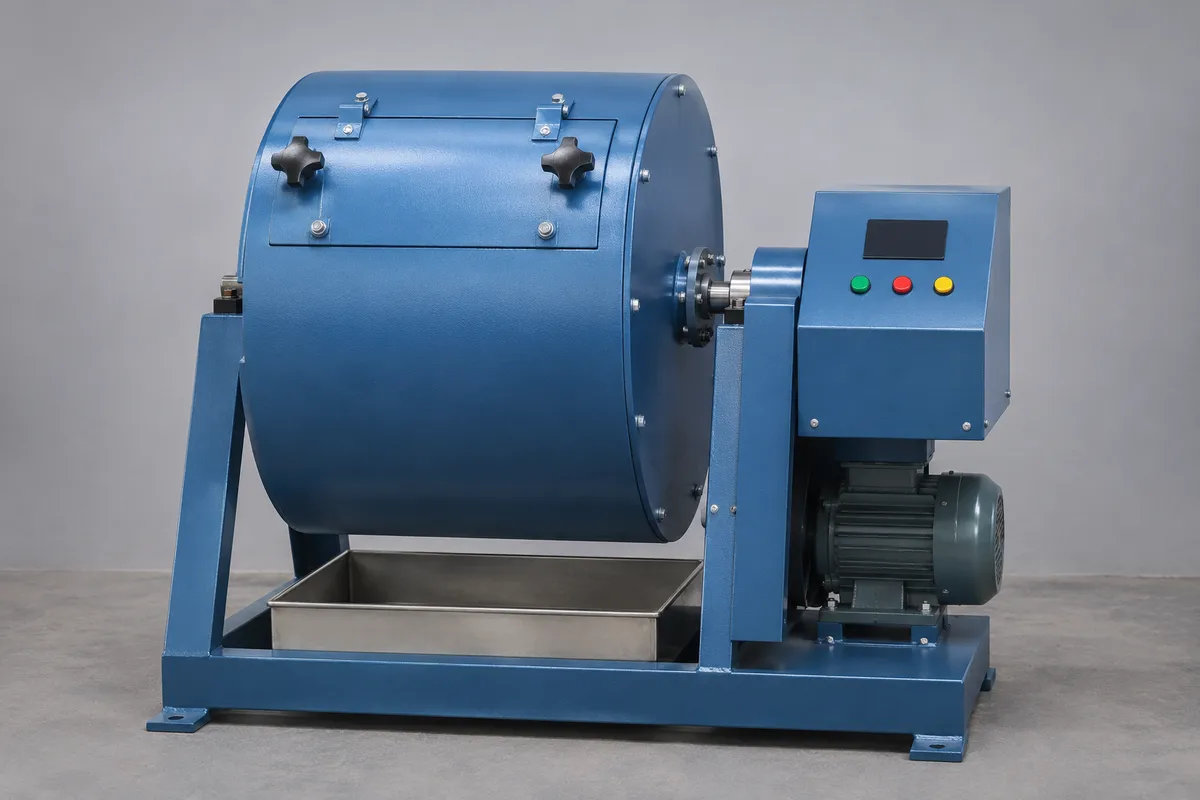
Los Angeles abrasion machine
List the abrasive charge separately with its existing identification. State which dimensions, mass, speed or counting checks are required. A machine that completes a run has not thereby demonstrated every condition needed for the laboratory's abrasion test.
Specifications and service checks
Two charge sets can be used with one drum. Label the steel charge set separately on the order so its mass checks can be associated with the correct drum speed and revolution-count observations.
- Range and configuration
- The model specifies a 711 mm internal diameter, 508 mm internal length and 31–33 rpm. The revolution count is a separate check.
- Manufacturers and models
- Matest A075N is a motorised Los Angeles drum. Humboldt also supplies a Los Angeles abrasion machine for aggregate testing.
- What we check
- Compare indicated revolutions with an independent count and measure speed. Inspect the shelf and drum dimensions if the materials method requires them.
- Reference equipment and accuracy
- Use a calibrated tachometer, an independent counter and suitable dimensional references. Include a calibrated balance if reporting abrasive charge mass.
- When to repeat the check
- Review the drum and shelf for wear during use. Repeat speed and counter checks after drive work.
Technical references Matest product reference · Humboldt product reference