
On this page
Mounting position and dial range
Specify the full model and range, mounting orientation and unit printed on the scale. Include the differential used to trigger a filter change or release the room. Mark which side of the partition the low-pressure connection normally sees.
For a room that must be positive to the corridor, reading the correct pressure difference includes getting its sign right. Name both spaces and identify the tube going to each port. Reversing those tubes changes the sign even on a correctly calibrated gauge.
Specifications and service checks
A differential dial used to monitor a filter can stay near zero after a filter change. If either connecting hose was also disturbed, note which side remained connected to the upstream tap. Equal pressure at both ports and a genuinely low filter drop can look alike on the dial.
- Range and configuration
- Record both full scale and the pressure drop used to make the plant decision. A filter change threshold may occupy only a small part of the dial.
- Manufacturers and models
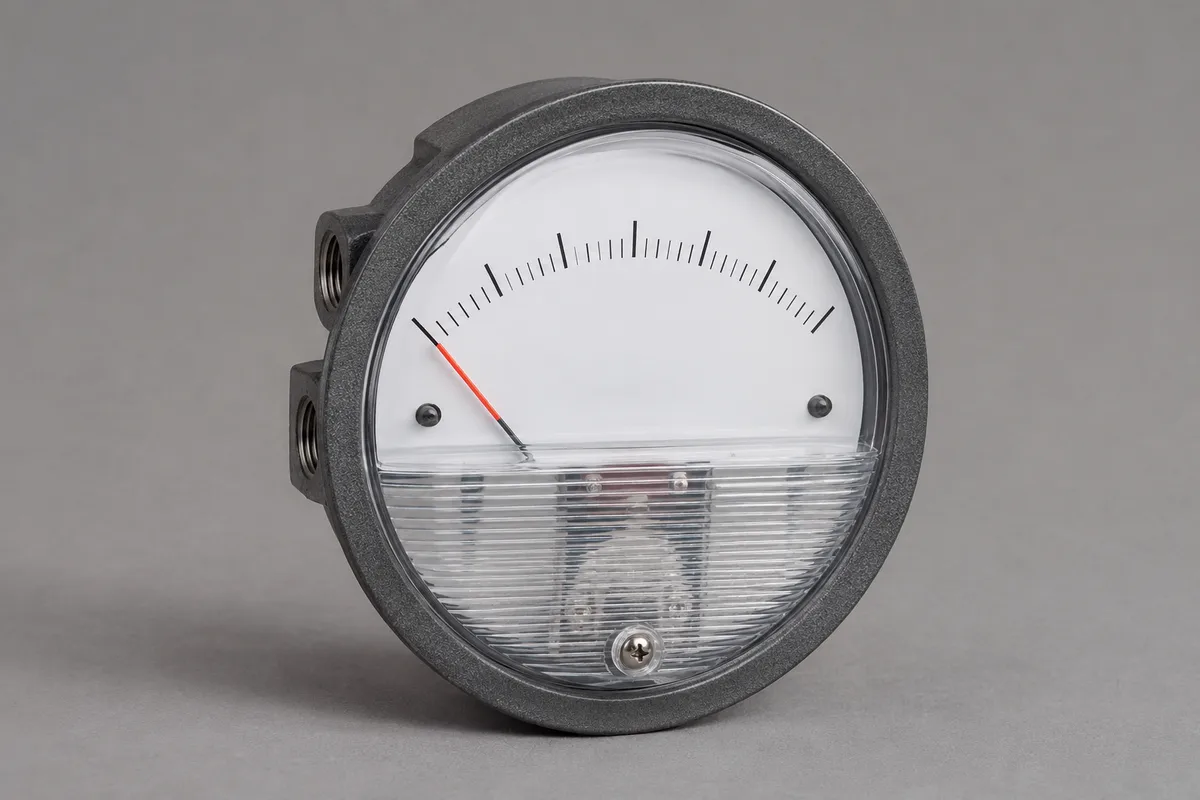
- Dwyer Series 2000 Magnehelic gauges are made in different differential pressure ranges and units for air and compatible gases.
- What we check
- Apply known differential pressure in increasing and decreasing steps. Include the threshold used by the operator and record the zero return.
- Reference equipment and accuracy
- Use a calibrated differential standard with sufficient resolution near that threshold and a leak-tight low-pressure circuit.
- When to repeat the check
- Follow shifts in zero or dial response after transport, dirty impulse lines or a pressure surge.
Technical references Series 2000 Magnehelic® Differential Pressure Gage