
On this page
Load and motion at each station
If station 3 gives a different wear pattern from its neighbours, note whether the difference follows its holder or stays at station 3 when holders are exchanged. Tell us the station number, the holder and the loading combination used. For a request covering the rubbing path, the tracing for that station is useful alongside its cycle count and the applied-load result.
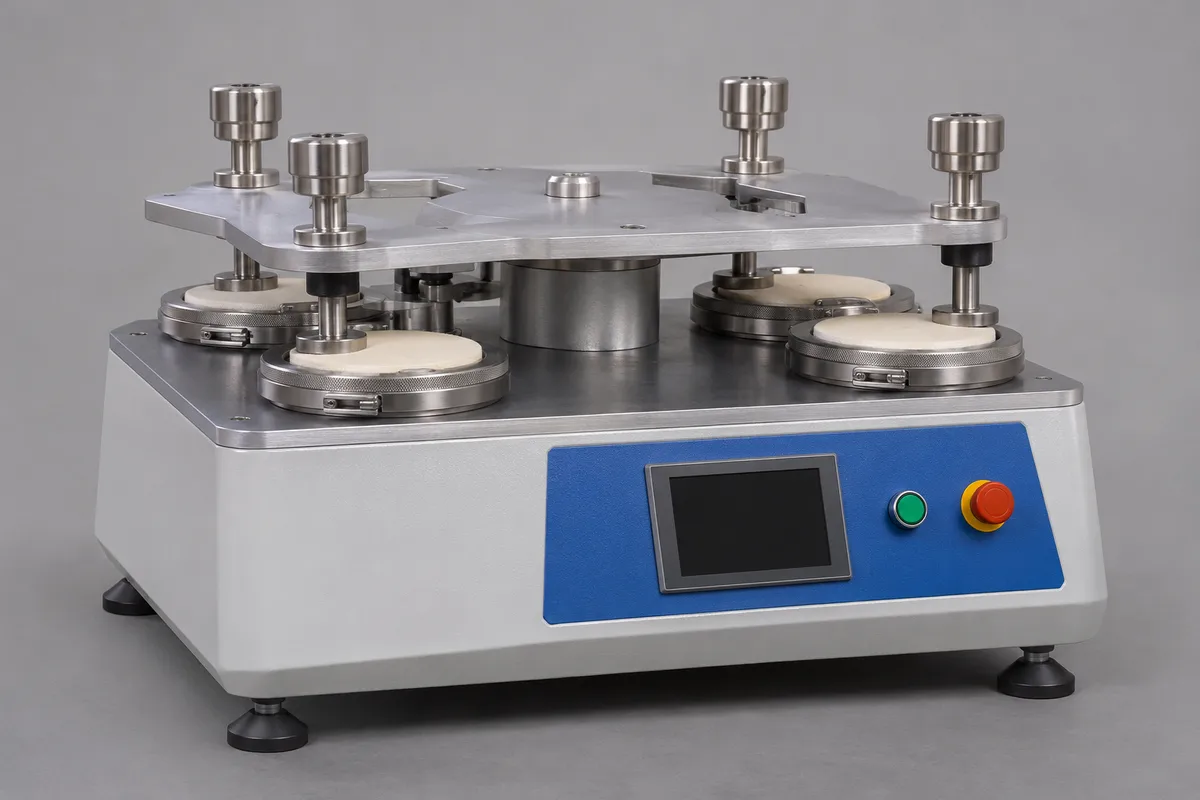
Martindale abrasion tester stations
Identify the apparatus checks required, such as motion, count, loading or defined dimensions. Ask for station identification to remain with each result. A single checked station should not silently stand for the whole machine, and apparatus verification does not grade the tested fabric.
Specifications and service checks
A multi-station machine can give an unusual wear pattern on only one station. Identify that station and its loading assembly, then compare it with another station under the same setup before treating the entire machine as one reading.
- Range and configuration
- SDL Atlas lists the M235 Martindale family. Identify the head count, the loading pieces and the rubbing path selected for abrasion or pilling. A cycle total alone gives no indication of loading.
- Manufacturers and models
- James Heal and SDL Atlas offer Martindale testers with several specimen stations.
- What we check
- Check the movement pattern on each station, the applied load and the cycle counter. Record which holder and drive setting produced the trace.
- Reference equipment and accuracy
- A calibrated balance checks the loading assemblies. A dimensioned trace or verified length scale checks travel. Use the tolerances for the selected test configuration.
- When to repeat the check
- Inspect the pattern after drive or bearing work. Keep station-specific readings to spot wear that a check on one holder could miss.
Technical references James Heal product reference · SDL Atlas product reference