
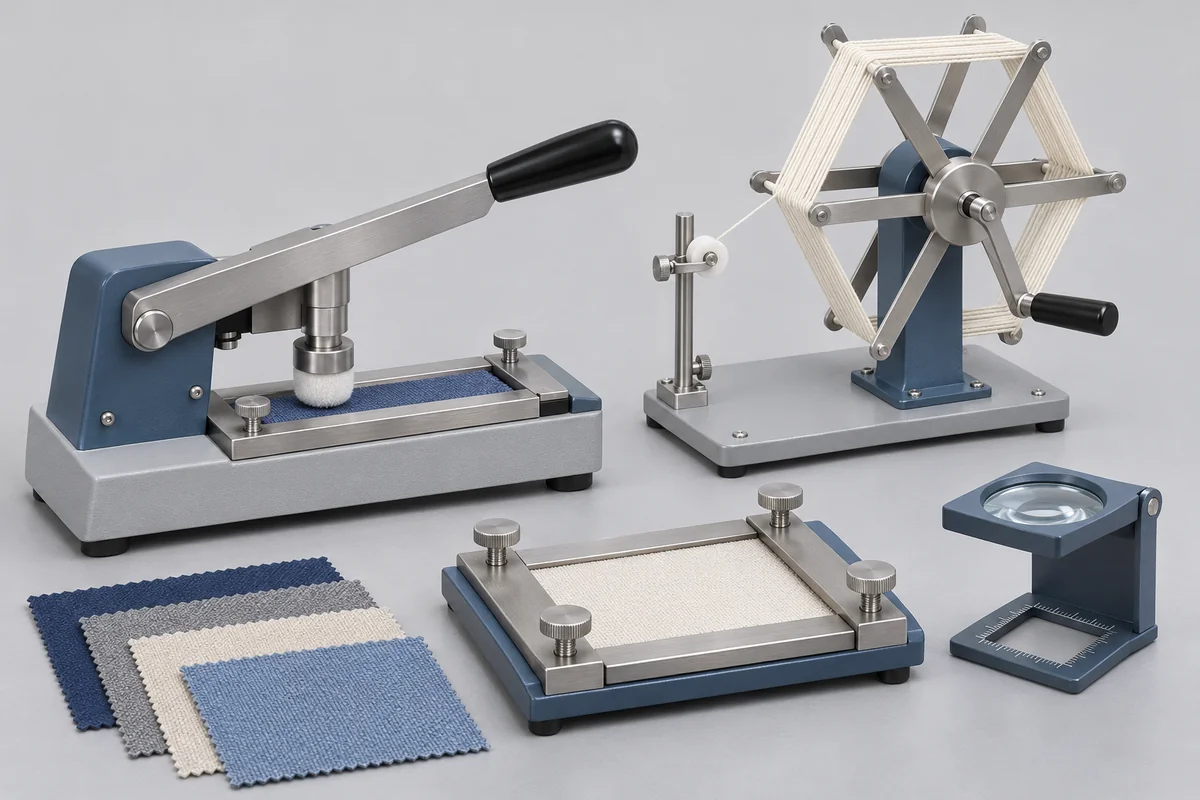
Crockmeter movement and loading
For a crockmeter, identify the finger arrangement, stroke and loading specified by the textile method. State whether movement count, dimensions or applied loading needs a recorded result. Include the model and accessories used for wet or dry tests. Assessing those apparatus quantities is different from assigning a colour-fastness grade to the textile rubbed by the instrument.
Launderometer temperature and rotation
List the launderometer model, vessel positions and the temperature, rotation and timing requirements in the method. Identify whether the requested temperature concerns the bath, a vessel or another defined location. Keep the container and accessory set with the enquiry. A reading at one bath position cannot automatically represent every vessel or establish the washing result of a fabric specimen.
Martindale abrasion tester stations
Give the Martindale model, station count and the holders and loading assemblies used by the test method. Identify the apparatus checks required, such as motion, count, loading or defined dimensions. Ask for station identification to remain with each result. A single checked station should not silently stand for the whole machine, and apparatus verification does not grade the tested fabric.
Perspirometer loading assembly
A perspirometer uses a defined specimen stack and loading arrangement in a colour-fastness method. List the frame, plates and loading components with their identities and required dimensions or mass. The associated conditioning equipment is a separate instrument. Ask RTS to review the apparatus quantities rather than request an unexplained calibration covering the entire chemical exposure and fabric assessment.
Pick glass scale and viewing window
A pick glass supports thread counting over a marked or defined viewing length. State whether the request concerns the engraved scale, aperture dimension or another inspection feature. Magnification alone does not establish the counting length. Include the model and the textile method so the dimensional requirement can be reviewed without implying that the tool automatically determines fabric construction.
Tearing strength tester type and range
Identify the tearing tester principle, selected range and specimen method. A pendulum arrangement and a force-measuring tensile setup need different apparatus information. Include the relevant masses, geometry or force channel and the reporting requirement from the method. RTS must review the suitable verification route; a general force-gauge certificate does not establish the complete tear-test apparatus.
Twist tester gauge length and count
For a yarn twist tester, supply the gauge length, rotation-count arrangement and the tensioning setup used by the method. State whether the procedure counts untwisting alone or includes a further sequence. The enquiry should identify the apparatus quantities to be checked. A rotation-counter result does not by itself establish the twist value of every yarn tested in the laboratory.
Wrap reel circumference and turns
A wrap reel prepares a yarn length through its effective circumference and counted turns. Include the reel designation, winding arrangement and the dimensional and counter checks specified by the method. A marked circumference should not substitute for a measured value when the calculation relies on it. Identify the balance used for the prepared yarn as a separate instrument.
Yarn count balance mass and calculation
Give the yarn count balance model and whether it reports mass directly or calculates a count from an entered length and count system. List the mass points needed and retain the calculation settings in the record. Calibration of the weighing function is separate from verifying the prepared yarn length. Send the complete method when the enquiry concerns the displayed count result.
Yarn strength tester force and extension
Identify the yarn strength tester’s load channel, grips, gauge length and operating method. Specify whether force, extension, speed or several quantities need records. Gripping and specimen preparation remain part of the laboratory’s test process. RTS can review the instrument measurements, but a load-channel comparison alone should not be described as validation of every yarn-strength test performed on the machine.
Keep the test method beside the asset number
Attach the current apparatus requirements or the relevant drawing extract to each instrument line. For an IMT Rohtak laboratory, include the release date and whether a reference must remain available during the visit. For several Indian mills, keep the agreed method and accessory configuration with each site record so the report can be understood by the next quality reviewer.