
On this page
Fluid and output used for the mass-flow result
Identify the measurement principle, fluid and output arrangement. If the plant collects a fixed mass before ending a batch, include the totalised mass and batch duration. For an instrument used on different products, note which fluid and working interval govern acceptance.
Suppose one meter shows kilograms per hour and another totalises litres during a batch. You need the time interval or accumulated mass as well as the fluid density at the working conditions before you can compare them. Keep the original mass reading when the product or temperature changes.
Specifications and service checks
For a gas meter reporting kg/h, a receiver displaying normal m³/h needs a defined conversion. Include the configured gas and reference conditions used by the receiver. A change there can affect the volume figure without changing the meter’s indicated mass rate.
- Range and configuration
- Specify mass per unit time, tube size, fluid and flow direction. A transmitter configured in kg/h may also show density or calculated volume on another channel.
- Manufacturers and models
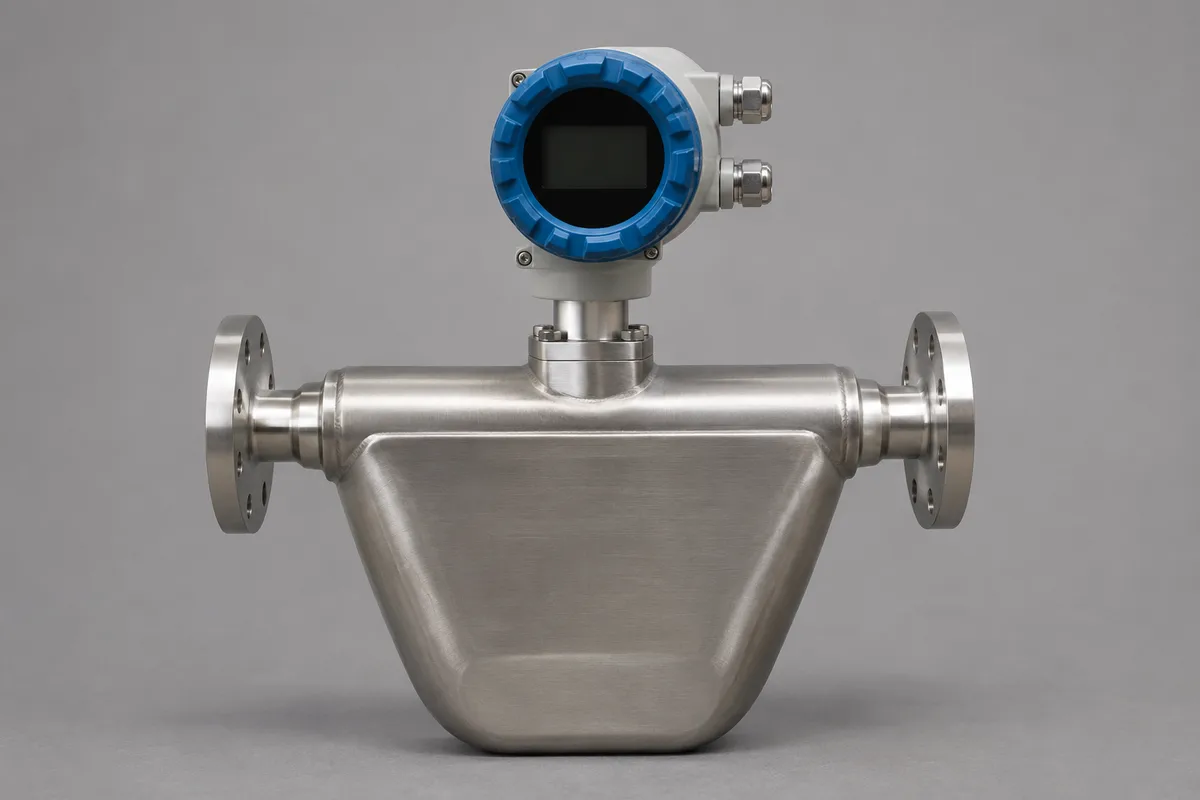
- Endress+Hauser Promass F 300 uses the Coriolis principle. Its t-mass F 300 series is a thermal gas-flow example. Identify the principle, fluid and reference conditions.
- What we check
- For a liquid, compare mass collected per unit time with the indicated mass rate. For gas, use an independent gas-flow reference under the stated gas composition and operating conditions.
- Reference equipment and accuracy
- Use a calibrated weighing system and time reference or a traceable mass-flow transfer standard suitable for the test medium. A reference reporting standard volumetric flow requires the corresponding gas density.
- When to repeat the check
- Check zero behaviour between calibrations and reassess after deposits, mechanical work or changes to the meter mounting.
Technical references Proline Promass F 300 Coriolis flowmeter · Proline t-mass F 300 thermal mass flowmeter