
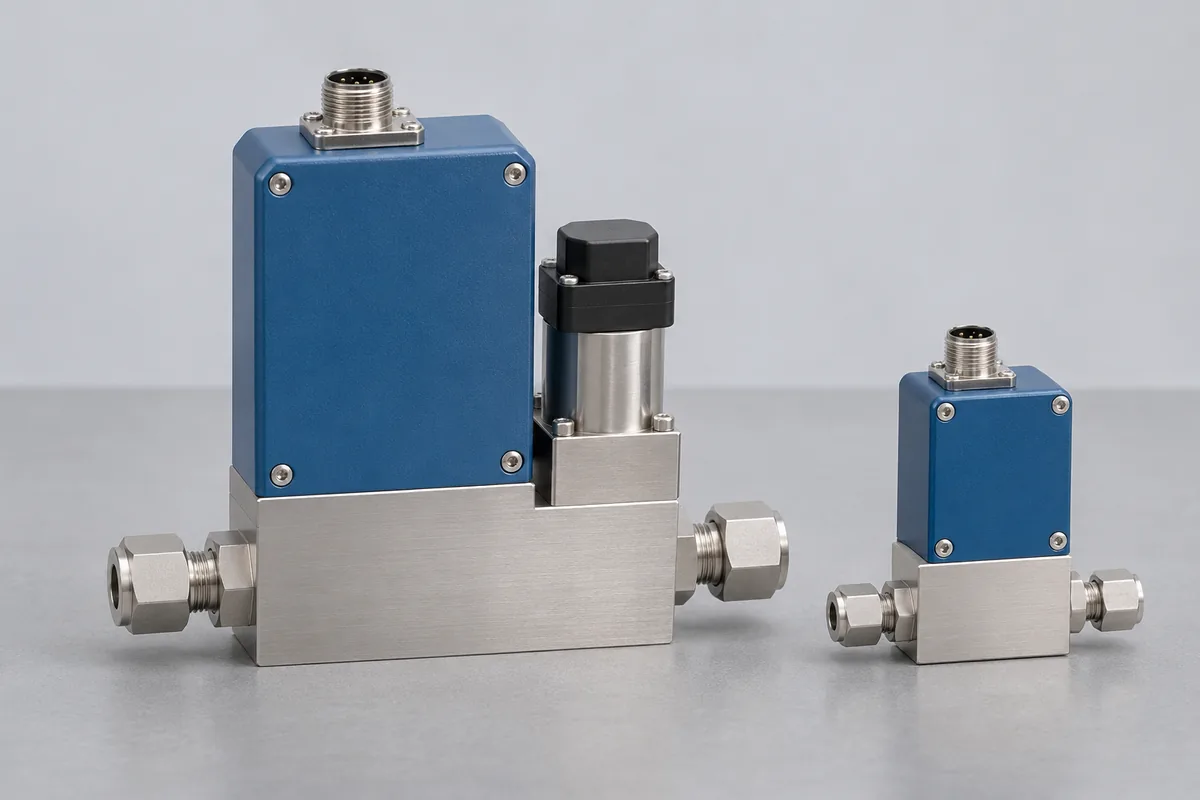
Identify the fluid and the configuration
Give the manufacturer, model, serial number and configured fluid. For a gas mixture, provide the composition used by the process. Include the range, units, inlet and outlet conditions and the flow points of interest. A meter configured for one gas should not be assumed suitable for comparison using another without reviewing its method and correction settings.
If the display uses normal or standard volume units, state the reference temperature and pressure used by that configuration. For a liquid application, identify the liquid and normal operating temperature. Describe wetted-material or cleanliness requirements that affect acceptance.
Separate the command from the measured flow
Identify the setpoint interface and the readback output used in service. State whether the request concerns the measurement channel, delivered flow at selected commands or a specified control response. Include a separate readout or power module when it forms part of the working assembly.
For a mass flow meter without a regulating valve, use the same fluid and configuration details but identify it as a measurement-only device. Keep any previous certificate and adjustment record available. RTS will review the medium, reference arrangement and requested control checks before confirming a method and service location.
Prepare a controlled handover
Report contamination, a valve fault or an unstable output before booking. The responsible plant team should arrange isolation and any required preparation for transport. Agree the receiving condition and packing requirements with RTS, then label the sensor, valve assembly and electronics as one matched set.
For several production lines, put the configured fluid and range beside each serial number. Include the local return contact so the correct controller returns to the correct installation.