
On this page
Current, maximum and minimum readings
State how the stored values are read during a shift and whether an external sensor is connected. A useful record identifies the reference extremes reached during the comparison, the values retained by the instrument and the indication after reset.
An instrument can indicate the current reference temperature correctly while still retaining a maximum left over from a previous run. A useful functional check records the display immediately after reset and then records the extreme reached in the new observation period. This keeps memory and live indication distinguishable.
Specifications and service checks
A retained maximum of 12 °C alongside a current 6 °C might date from before the last stock check. Log the time and values immediately before a reset. The next set of extremes then belongs to a known period, which is essential when comparing two instruments’ memories.
- Range and configuration
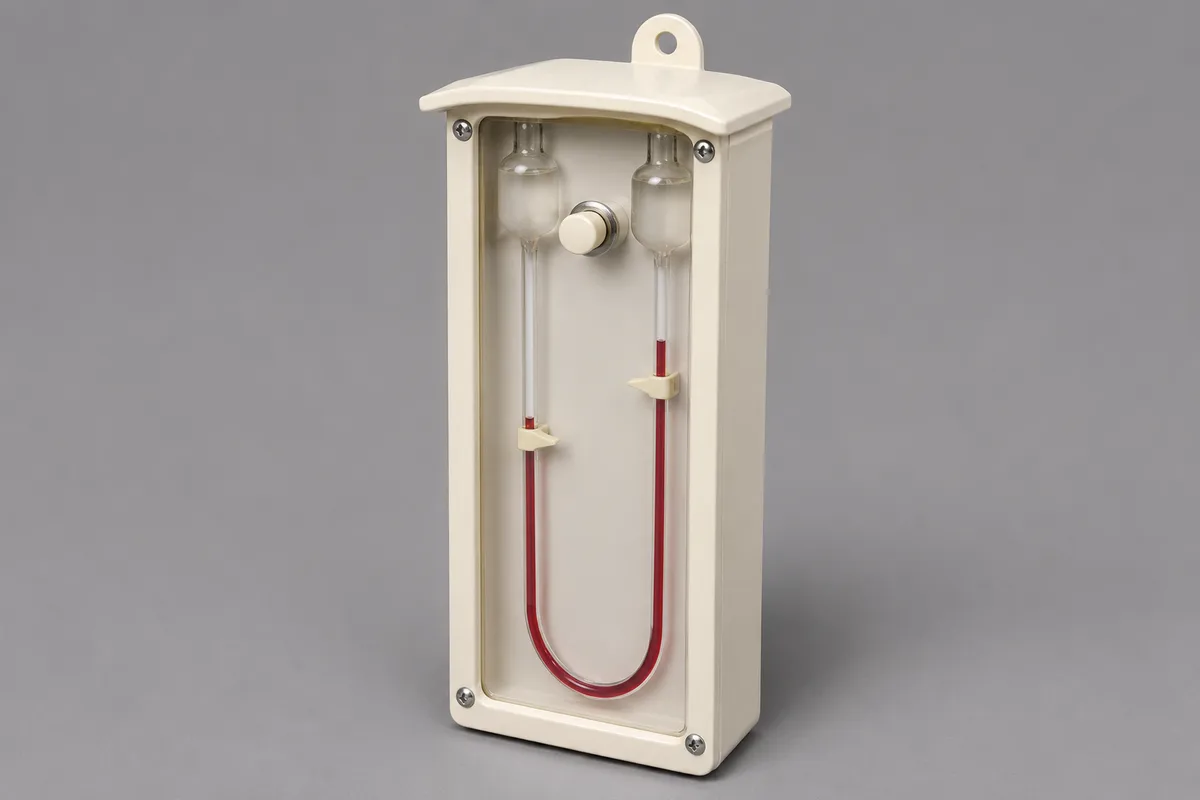
- Brannan’s indoor/outdoor model specifies 0 to +50 °C on the indoor channel and −50 to +70 °C for its external probe. A traditional instrument may instead retain the extremes with mechanical indices.
- Manufacturers and models
- Brannan offers electronic max/min thermometers; identify a glass Six-type model separately if that is the instrument in service.
- What we check
- Compare the present reading and verify that the highest and lowest reference temperatures are retained and reset correctly. Record each channel where fitted.
- Reference equipment and accuracy
- Use a calibrated recording thermometer to follow the temperature history. A reference observed only at the end cannot establish the earlier extrema.
- When to repeat the check
- Check retention after battery replacement or reset problems. Mechanical indices should also be checked after transit.
Technical references Brannan maximum–minimum thermometer · NIST thermometer calibration procedure