
On this page
Volume markings and how the vessel is used
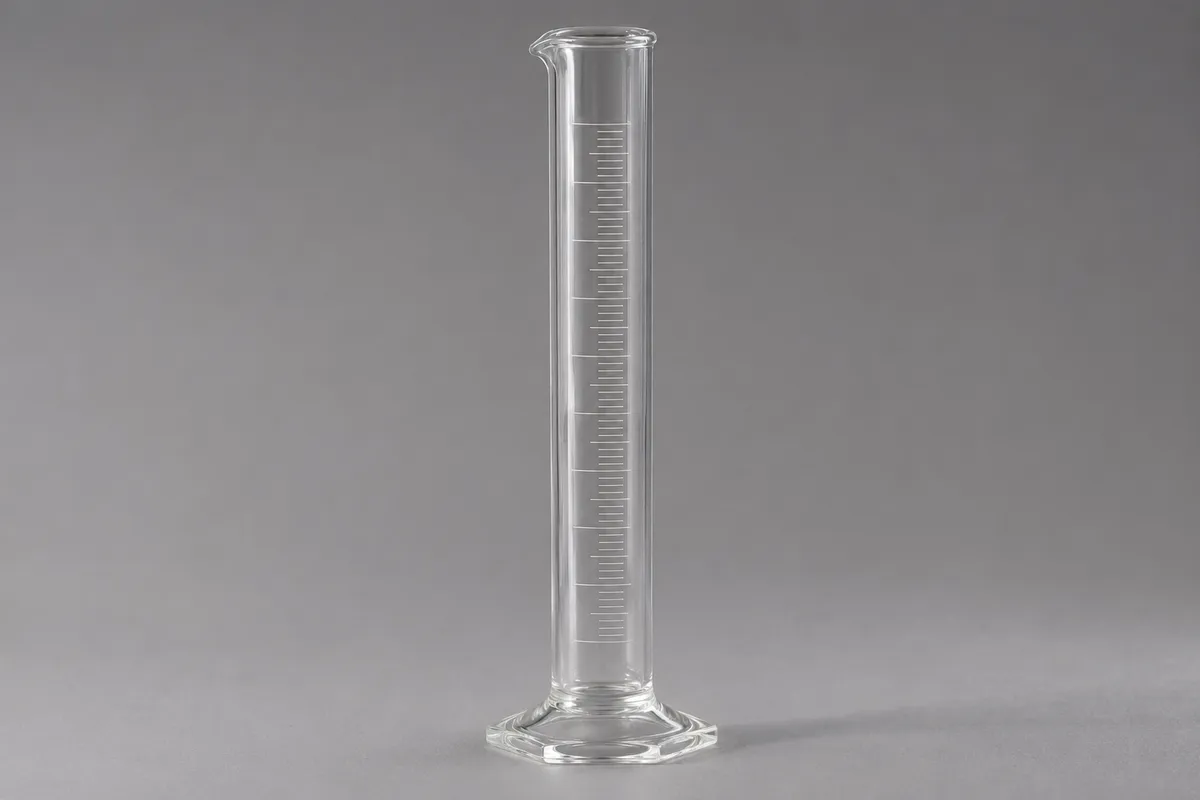
Read whether the cylinder is marked to contain or to deliver and state the reference temperature on the glass. If the cylinder is opaque or uses a nonstandard reading convention, describe how the working liquid level is located in the user's procedure.
A cylinder marked to contain 100 mL need not deliver all of that liquid when poured. If your worksheet treats the poured quantity as the reference, mention that operation to the laboratory. The result for the contained volume alone would answer a different question.
Specifications and service checks
A cylinder with coarse graduations can be adequate for a bulk transfer but hard to read at the small volume used for a test. Identify the smallest working mark and how the meniscus is read at eye level. This makes the comparison more useful than checking capacity alone.
- Range and configuration
- DWK lists 100 mL Class A DURAN measuring cylinders. Read the marked class, subdivision and reference temperature from the individual cylinder before choosing the graduation marks for comparison.
- Manufacturers and models
- DWK lists DURAN Class A measuring cylinders and beakers with approximate volume marks.
- What we check
- Compare the volume at selected graduations using the marked contain or deliver convention. Identify the mark used and report its individual deviation.
- Reference equipment and accuracy
- A calibrated balance and thermometer support a gravimetric determination. The reading uncertainty depends on graduation width and on the bore at the mark.
- When to repeat the check
- Recheck if a mark becomes unreadable or if a vessel fails an in-house comparison. Many low-precision jars are best tracked by condition and intended use.
Technical references DWK DURAN Class A cylinders · DWK DURAN low-form beakers · NIST volumetric calibration procedures · DWK DURAN 100 mL measuring cylinder