
On this page
Volume markings and how the vessel is used
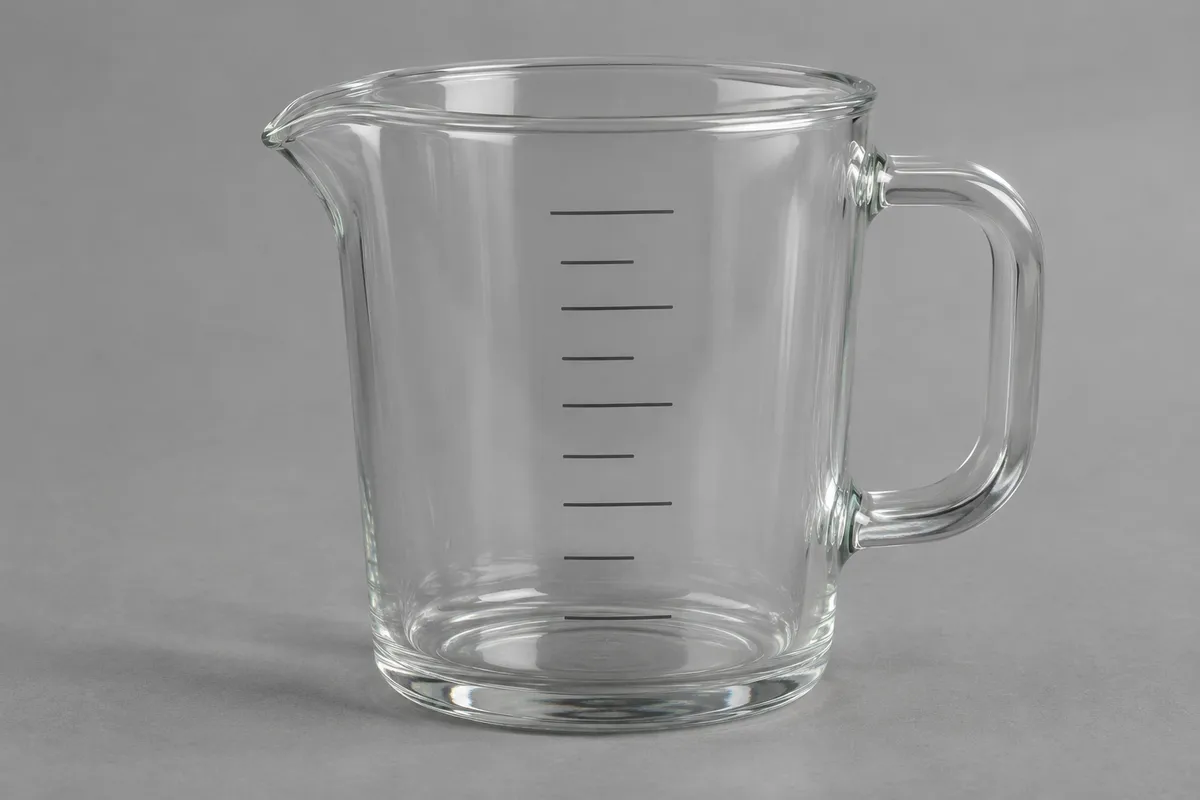
A wide jar can show a substantial volume difference for a small change in level. Record the reading convention and whether the requested result concerns contained or poured volume. These details matter when comparing an old jar with its replacement.
A user may fill one plastic jar to a hand-drawn line rather than the moulded graduation. Photograph the working line and identify which edge is read. If two jars carry superficially similar lines, mark each jar separately before measuring either one.
Specifications and service checks
A wide-mouth jar sometimes carries a printed scale and a separate hand-applied fill line. If operators work to the hand mark, photograph it beside the printed graduation and identify the normal reading edge. A comparison against the wrong mark would answer a different question.
- Range and configuration
- DWK’s 1,000 mL DURAN GL 45 laboratory bottle illustrates approximate graduations, with marks from 100 to 900 mL. For a measuring jar, identify the particular fill line and the volume error your process can accept.
- Manufacturers and models
- A marked DURAN beaker illustrates a vessel with approximate content graduations. Give us the catalogue number on your own jar before assigning a tolerance.
- What we check
- Compare the volume at selected graduations using the marked contain or deliver convention. Identify the mark used and report its individual deviation.
- Reference equipment and accuracy
- A calibrated balance and thermometer support a gravimetric determination. The reading uncertainty depends on graduation width and on the bore at the mark.
- When to repeat the check
- Recheck if a mark becomes unreadable or if a vessel fails an in-house comparison. Many low-precision jars are best tracked by condition and intended use.
Technical references DWK DURAN Class A cylinders · DWK DURAN low-form beakers · NIST volumetric calibration procedures · DWK DURAN 100 mL measuring cylinder · DWK DURAN GL 45 bottle graduations