
On this page
Scale marks and the previous correction
For an intact instrument, state the scale marks used in your procedure and whether an existing correction table is still in use. If the thermometer is damaged, agree handling arrangements with the laboratory before transport.
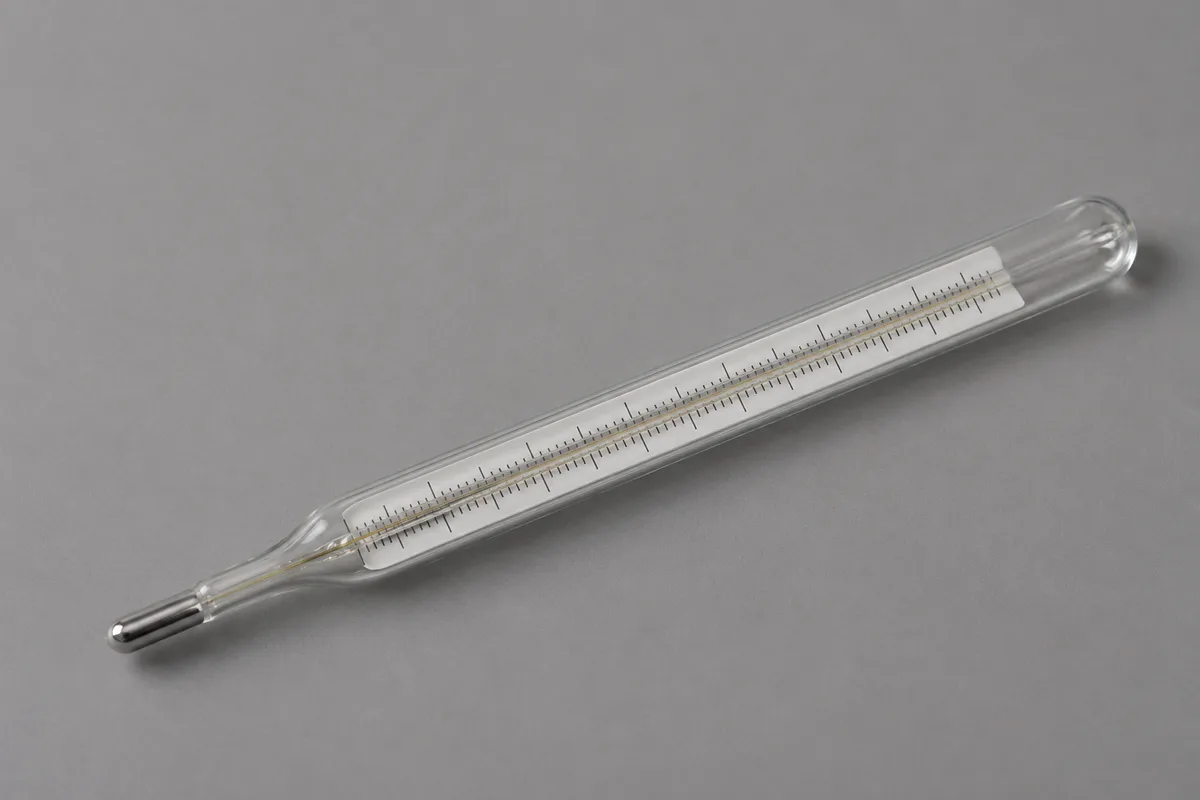
A faint mark on the scale may be a target graduation or an immersion line. Send a photograph showing the bulb, scale and manufacturer’s inscription. If an earlier certificate specifies immersion conditions, retain them with the requested points so the reading can be compared under the same arrangement.
Specifications and service checks
If the stem inscription gives a partial immersion depth, record it before the thermometer is capped for transport. A fixture that covers the marking can make an immersion mismatch hard to explain afterwards. Mention any separated column or visible damage when arranging collection.
- Range and configuration
- NIST’s historical liquid-in-glass service tables include mercury instruments with 0.1 or 0.2 °C divisions over 0–100 °C. Read the range, division and immersion marking on the individual legacy thermometer.
- Manufacturers and models
- Brannan’s THERM-cert laboratory series illustrates non-mercury liquid-in-glass designs. For a legacy mercury instrument use its original maker, scale and serial markings.
- What we check
- Compare scale readings at the specified immersion with an independent reference. Identify the graduation and note any separated column or damaged scale before accepting the job.
- Reference equipment and accuracy
- A traceable reference thermometer, suitable baths and a way to read the meniscus without parallax support the comparison. The filling and immersion specification determine applicable corrections.
- When to repeat the check
- Inspect the column and identification before comparing the thermometer. Record the previous immersion condition and scale corrections so later changes can be distinguished from reading differences.
Technical references NIST thermometer calibration procedure · Brannan laboratory thermometers · NIST liquid-in-glass thermometer service tables