
On this page
Four-terminal connections at low resistance
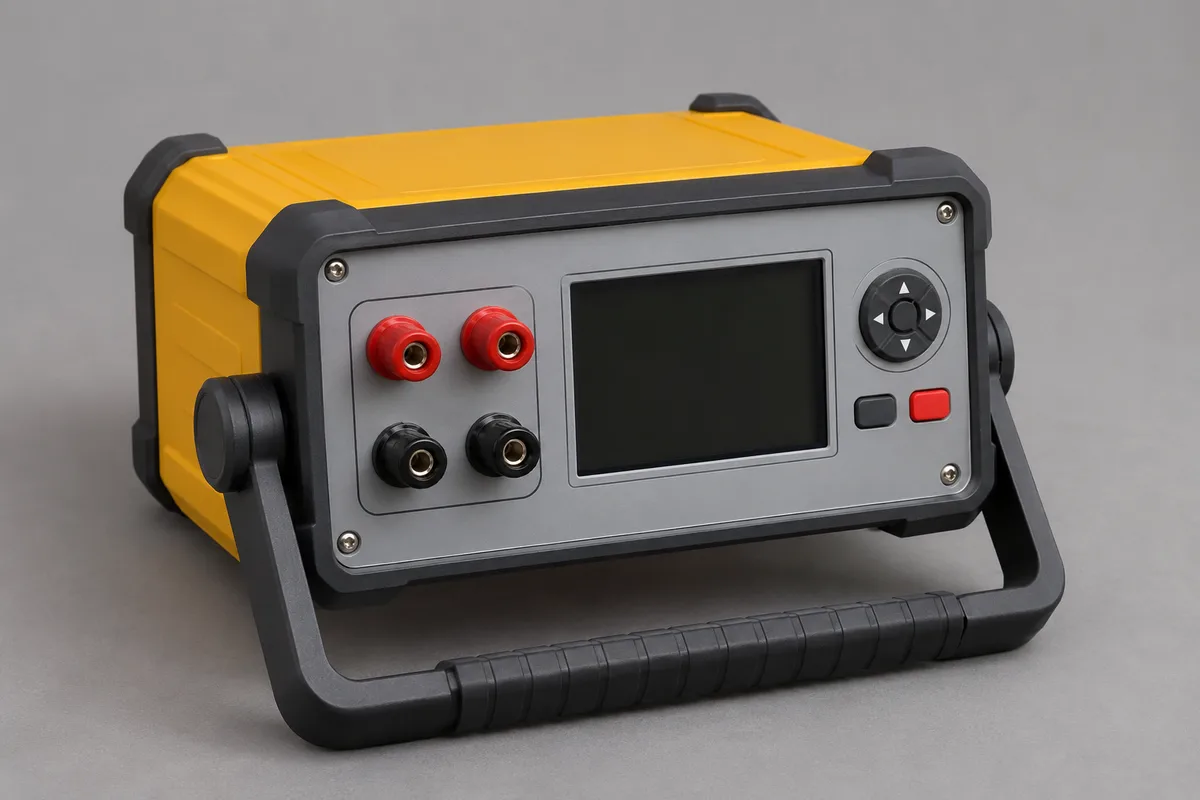
Give the measuring current, four-terminal arrangement and the values used at the low end. If the instrument reverses current or compensates for thermal voltage, record that mode. Include the sense contact locations when a fixture is part of the result.
When measuring a 100 µΩ joint, moving a sense lead to the far side of another contact includes that contact’s resistance. Mark the points where the current leads and sense leads connect. A sketch lets the next technician put them back in the same positions.
Specifications and service checks
A bolted joint dropping 2 mV at 10 A has a resistance of 200 µΩ between the sense points. If one clip moves to the far side of a second joint, that calculation now includes a different electrical path even at the same current.
- Range and configuration
- One milliohm is 1,000 microohms. Provide both the working resistance and the test current, since self-heating can change a low-ohm standard.
- Manufacturers and models
- Megger DLRO10 is a digital four-terminal low-resistance ohmmeter. A traditional Kelvin bridge uses a ratio comparison for similar low-resistance work.
- What we check
- Compare indicated values with calibrated four-terminal resistors; for a bridge, also check the ratio settings used. Current reversal can help quantify thermal offset.
- Reference equipment and accuracy
- Use low-resistance standards rated for the applied current, with separate current and potential connections. Include thermal voltage and self-heating in uncertainty.
- When to repeat the check
- Trend a stable low-ohm checkpoint. Recheck after lead, current-source or selector repairs.
Technical references DLRO10 and DLRO10X digital low resistance micro-ohmmeters