
On this page
Valve position and symptoms in the circuit
Describe its position in the circuit, operating fluid and symptom. If a flow-versus-opening characteristic is required, give the inlet and outlet conditions and how the opening is identified. Otherwise specify the isolation or adjustment function that needs checking.
Needle valves used for pressure control
Record where it sits in the circuit and which reference instrument reads the pressure. Describe any requested shut-off or leakage evaluation separately. For calibration work, include it as an identified accessory only where the agreed setup requires it, with the rating and medium available for compatibility review.
Specifications and service checks
A metering bench might record delivered flow at one turn open. An opening of one turn only has meaning with known inlet and outlet conditions and fluid. Include those conditions if the objective is to repeat the bench setting on another fixture.
- Range and configuration
- A general-purpose needle valve has a pressure rating and flow coefficient. Neither gives it a calibrated flow scale at every handle position.
- Manufacturers and models
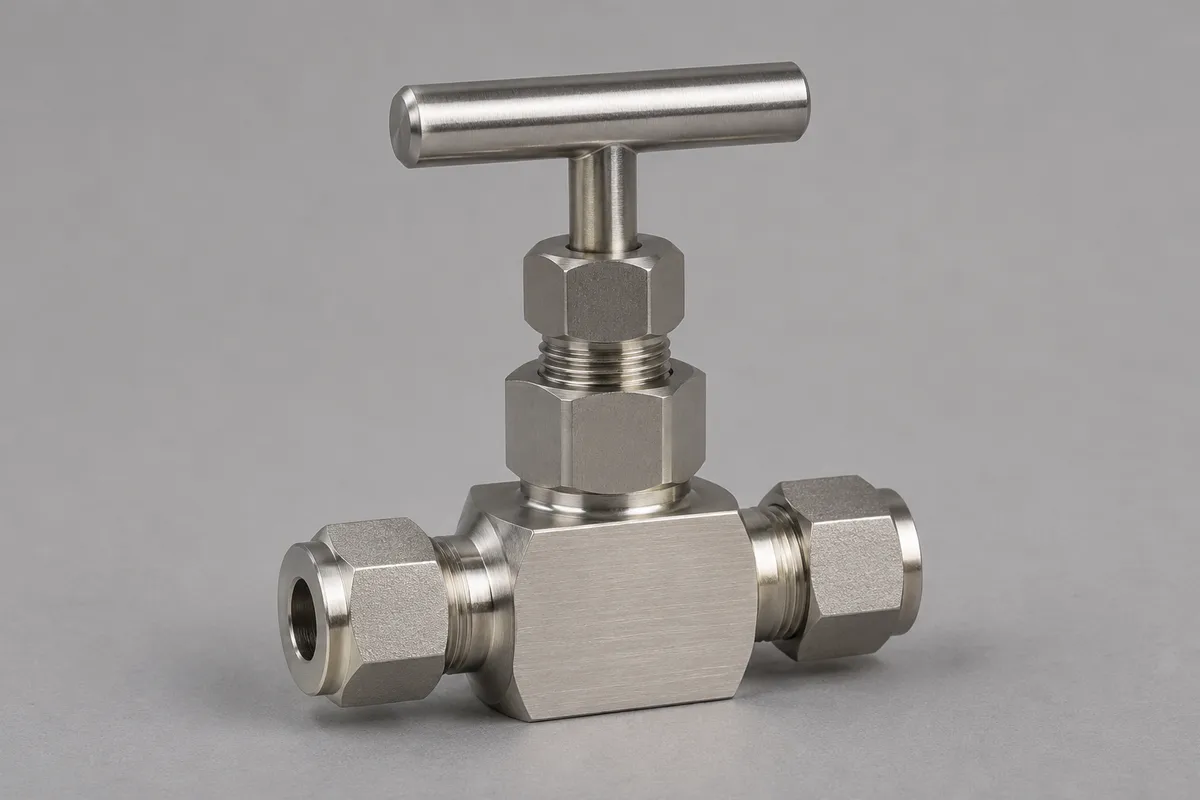
- Swagelok's integral-bonnet needle valves include different stem designs. The stem taper determines how finely flow changes with travel.
- What we check
- Check shutoff or characterise flow versus specified turns under stated inlet and outlet conditions, according to the intended use.
- Reference equipment and accuracy
- Use calibrated pressure and flow references where the flow curve is required. For shutoff, select the leak measurement to suit the acceptance criterion.
- When to repeat the check
- Repeat a flow characterisation after stem or seat replacement. Record any change in the handle reference position.
Technical references Swagelok integral-bonnet needle valves