
On this page
Matching the oil test cell to the method
Identify the test set and cell, the method used at the laboratory and the voltage quantities to be checked. If the request concerns the condition of an oil sample, list that material test separately from the calibration of the electrical source and measuring channel.
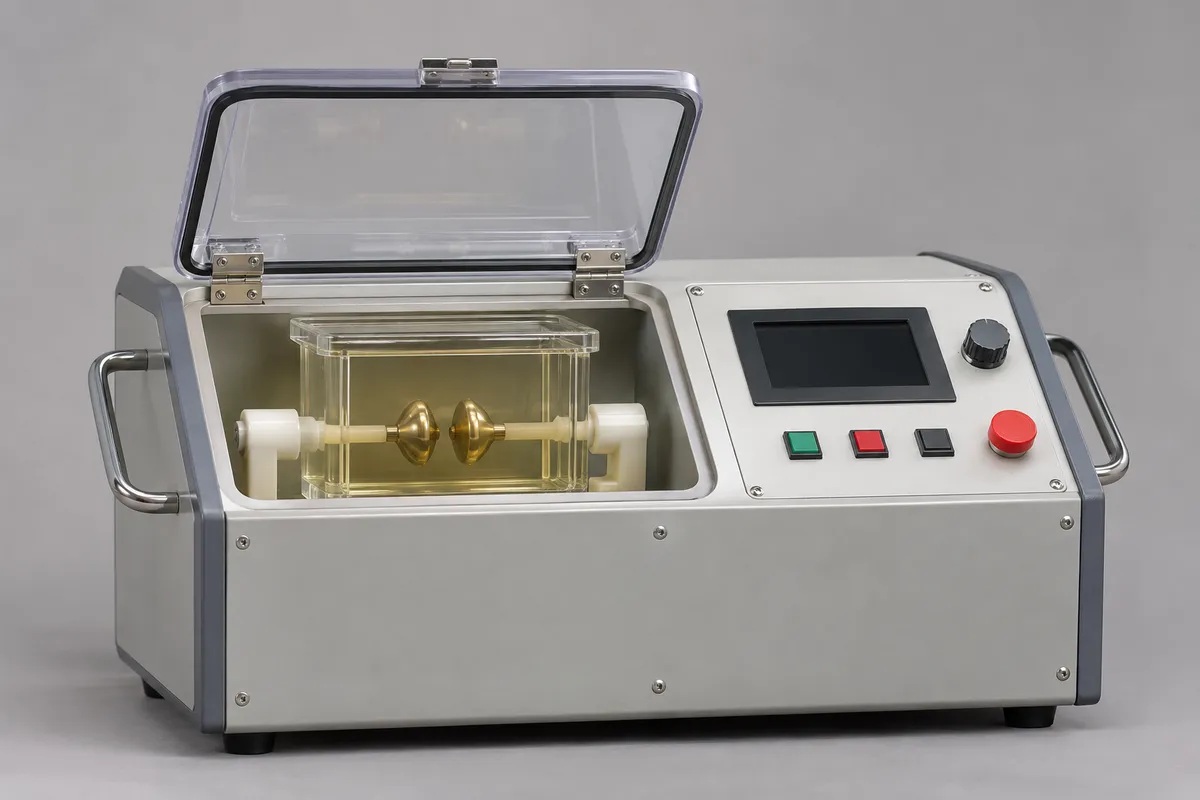
Oil test sets
Give its voltage ramp, reading function, test-vessel arrangement and the procedure used by your laboratory. Distinguish calibration of the instrument from testing an oil sample. Include the manufacturer's verification instructions and any check-device record. RTS calibrates the indicated voltage and verifies the specified test sequence using the appropriate reference arrangement.
Specifications and service checks
A trend of declining oil breakdown values could involve the sample, cell condition or electrical test set. Identify the cell and electrode arrangement as well as the selected method. This lets the laboratory discuss the instrument check independently of the oil-quality finding.
- Range and configuration
- Quote maximum voltage in kV, voltage rise rate and the applicable electrode geometry and gap. An instrument verification and a breakdown result on an oil sample are separate records.
- Manufacturers and models
- Megger OTS series insulating-oil test sets include different maximum test-voltage options. The specimen cell and electrodes are part of an oil test configuration.
- What we check
- Verify voltage indication and programmed ramp or trip response using the specified test equipment. For sample testing, record the method and measured breakdown results separately.
- Reference equipment and accuracy
- Use a calibrated divider or dedicated voltage check system rated for the tester, traceable time measurement and a calibrated gap gauge where applicable.
- When to repeat the check
- Inspect electrodes and the cell between oil tests, and reverify the voltage channel after repairs.
Technical references OTS PB and OTS AF series of insulating oil test sets