
On this page
Working distance and illuminance across the field
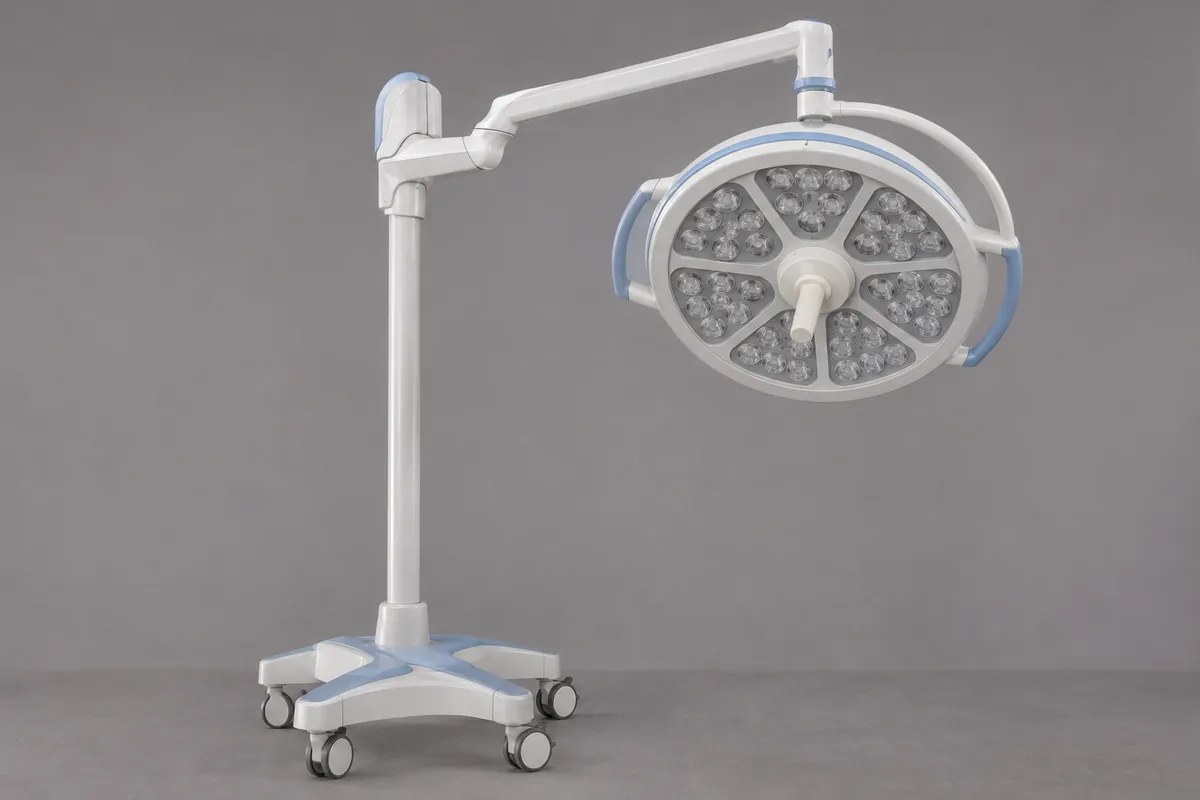
Give the illuminance unit, the working distance from the head to the measurement plane and the dimmer setting. A figure labelled only ‘centre’ is hard to compare after a head has been repositioned. For a multi-head unit, say whether the test uses one head or the combined field. Field diameter and operation on backup supply can each be requested in addition to the illuminance measurements.
OT light illumination enquiries
Illuminance at one position differs from assessing field distribution or the complete lighting assembly. Include the specification and planned engineering access. RTS measures illumination at the specified positions and operating settings of the OT light.
Specifications and service checks
Two lamp heads illuminating the same surface can give one combined illuminance reading. If the maintenance team needs a result for each head, identify the individual head settings, working distance and measurement plane in the job request.
- Range and configuration
- Illuminance is a reading at a specified distance and position. Field diameter and the location of the light head also matter to a comparison.
- Manufacturers and models
- Dräger lists Polaris surgical lights with selectable illuminance from 16,000 to 160,000 lx.
- What we check
- Measure illuminance at the specified working plane with the arrangement and control settings documented. Record ambient light and any second light head in use.
- Reference equipment and accuracy
- Use a calibrated illuminance meter with a suitable spectral response, cosine response and upper range. Verify working distance with a length reference.
- When to repeat the check
- Recheck after lamp head replacement or optical work. Use earlier measurements taken at the same geometry to track change over time.
Technical references Dräger product reference