
On this page
Which tip and pipette were tested together?
For a comparison between tip types or lots, ask for each combination to be identified separately. If the enquiry concerns a drawing dimension instead, give the feature, tolerance and sampling requirement so that the result is attached to the right lot.
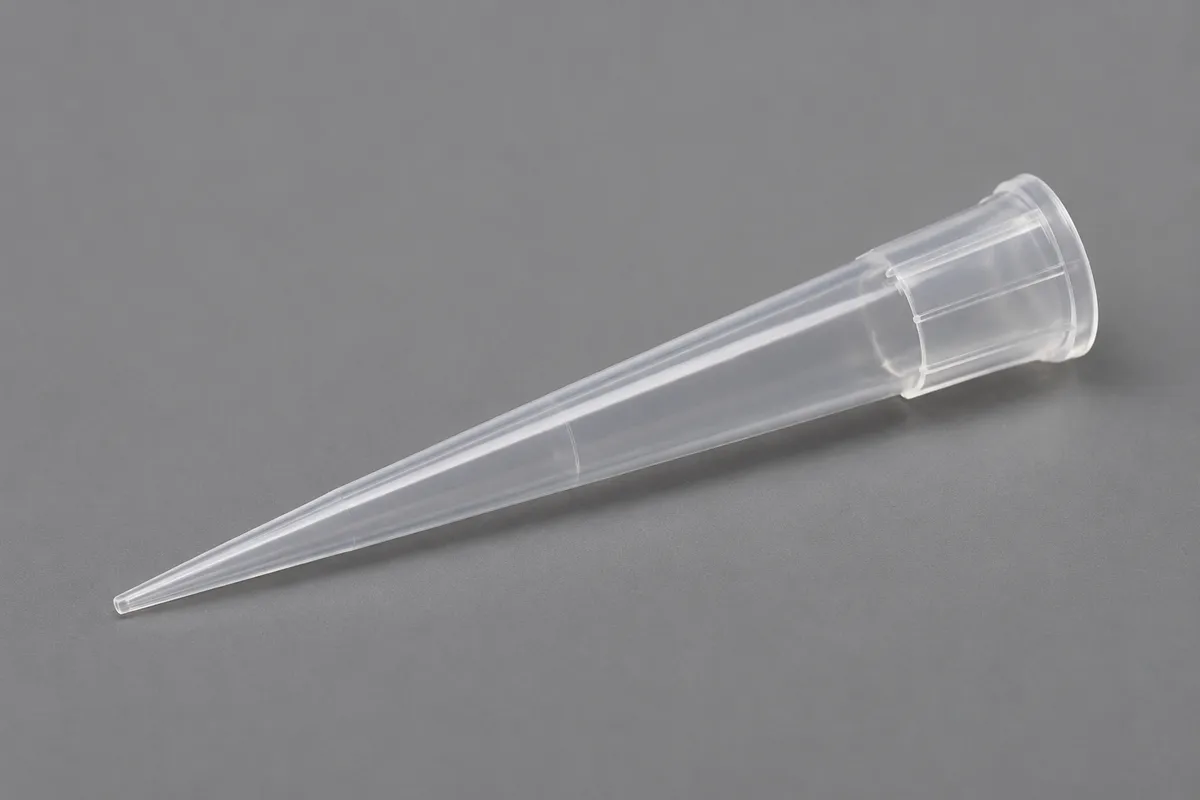
Pipette tip as part of the delivery system
Fit and design form part of the delivery arrangement, so changing the tip type can change the meaning of the result. Disposable tips do not normally receive individual calibration certificates. Keep the tested pipette-and-tip combination clear when reviewing volume and repeatability records.
Specifications and service checks
A tip described simply as “yellow” can come from several suppliers and moulds. If delivery changed when stores opened a new box, retain its lot and product code along with the previous tip reference. That makes a like-for-like comparison on the same pipette possible.
- Range and configuration
- For example, an Eppendorf tip box may be labelled 2–200 µL. That identifies the tip’s nominal volume designation. Ask for the actual pipette-and-tip combination when checking delivery.
- Manufacturers and models
- Eppendorf epT.I.P.S. packaging carries a part number, a lot number and its volume designation. These identify the consumable more reliably than its colour.
- What we check
- For a tip-related delivery question, identify the tip lot and pipette model in the volume comparison. For a stand, record mechanical condition and compatibility.
- Reference equipment and accuracy
- The volume reference belongs to the pipette-and-tip comparison. A passive stand normally needs an inspection record identifying the equipment it supports.
- When to repeat the check
- Inspect stands for damage or poor retention. Review pipette delivery if the approved tip changes or a new lot produces unusual results.
Technical references Gilson pipette stands · Eppendorf epT.I.P.S. instructions · ISO 8655-6 gravimetric volume determination