
On this page
Head configuration and deck positions
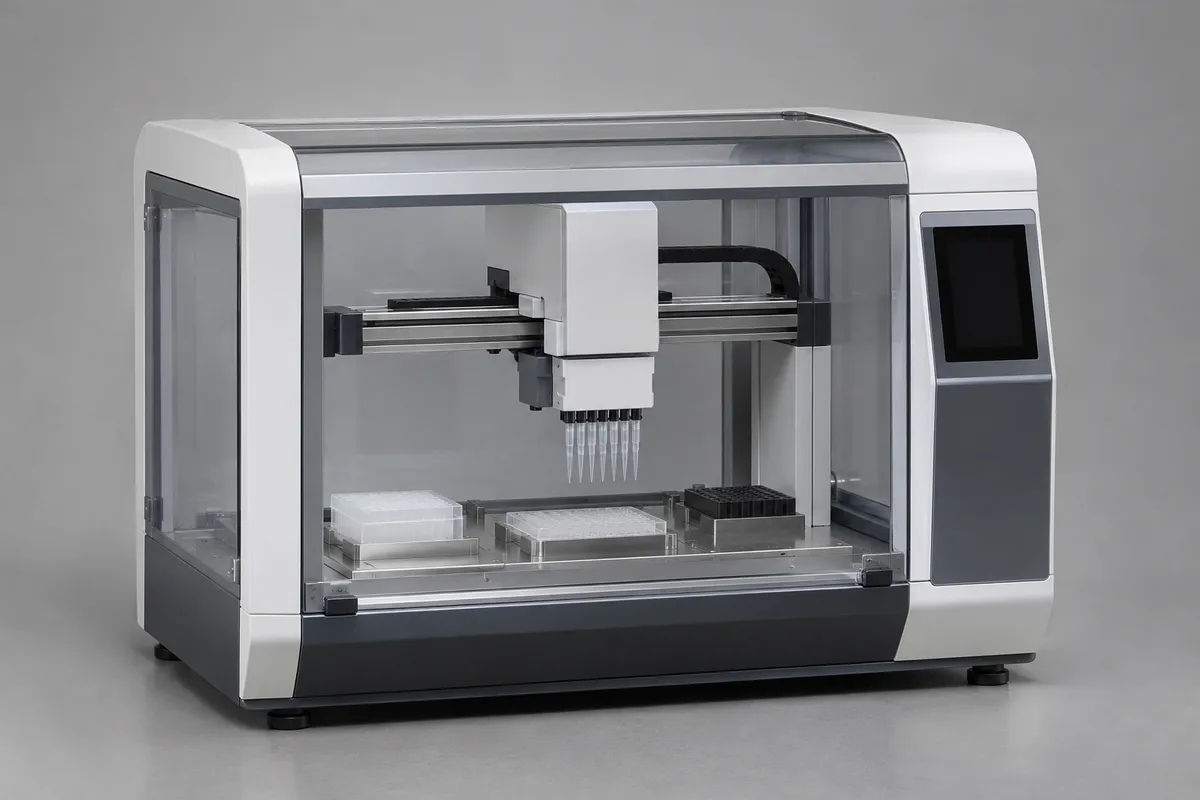
Name the installed head, tip configuration and software programme used for the equipment check. If several deck carriers share a hardware identifier, retain their physical positions on a simple deck plan. Results associated with a particular head and carrier can then be traced through a later exchange or remapping.
For a complaint confined to the far side of a plate, ask for readings identified by physical position and channel. An overall mean for the head cannot show whether the same channel differs across the deck or whether several channels differ at one position.
Specifications and service checks
If only a corner position on a deck gives an unexpected delivery, note the deck location and which head channel reaches it. Identifying those independently allows the team to check whether a repeated observation stays with the position or follows the head.
- Range and configuration
- Identify the platform, head serial number and fitted channel count. A system with interchangeable heads can have several separate volume specifications.
- Manufacturers and models
- Opentrons lists Flex pipettes with 1, 8 and 96 channels. Record the particular head serial number and its service certificate against the robot that holds it.
- What we check
- For the service file, link the detachable head’s calibration record to its mounting position and serial number. Specify the indicated volume or independent measurement channel to be documented.
- Reference equipment and accuracy
- Ask for the reference identifier, uncertainty and channel coverage on the calibration record. A platform service label alone cannot identify the heads included.
- When to repeat the check
- Review the head record when hardware is exchanged or firmware changes the volume indication. Keep service and calibration dates against the appropriate component.
Technical references Tecan Fluent manual · Opentrons Flex pipette configurations