
On this page
Matching the tube to the pressure meter
Specify the tube type, probe dimensions and the pressure meter paired with it. For a duct traverse, identify the velocity range and orientation used in the duct. Ask for a tube comparison, meter comparison or paired velocity result according to the quantity you actually record.
Pitot tubes and differential-pressure instruments
State whether the requested evidence concerns the tube coefficient, its dimensions or the complete velocity calculation. Include the fluid and reference conditions applied by your procedure. RTS checks the specified tube dimensions, coefficient or complete velocity calculation, with pressure-instrument calibration recorded separately.
Specifications and service checks
Suppose an air-balance log records several traversing positions but omits the tube orientation. A low reading near an elbow may be influenced by flow direction. Include the duct section and traverse positions when asking whether the probe comparison should cover directional response.
- Range and configuration
- Velocity is calculated from pressure difference and air density. Twice the air speed produces roughly four times the velocity pressure at unchanged density.
- Manufacturers and models
- Dwyer Series 160 tubes measure the difference between stagnation and static pressure. Tube length and head geometry identify the assembly.
- What we check
- Compare the tube coefficient against an established air-velocity reference. Check the connected differential indicator separately when it is part of the measuring set.
- Reference equipment and accuracy
- Use a characterised wind tunnel or reference Pitot system with a calibrated low-pressure instrument, thermometer and barometer.
- When to repeat the check
- Inspect the port and tube alignment after transport. A dented head warrants another comparison.
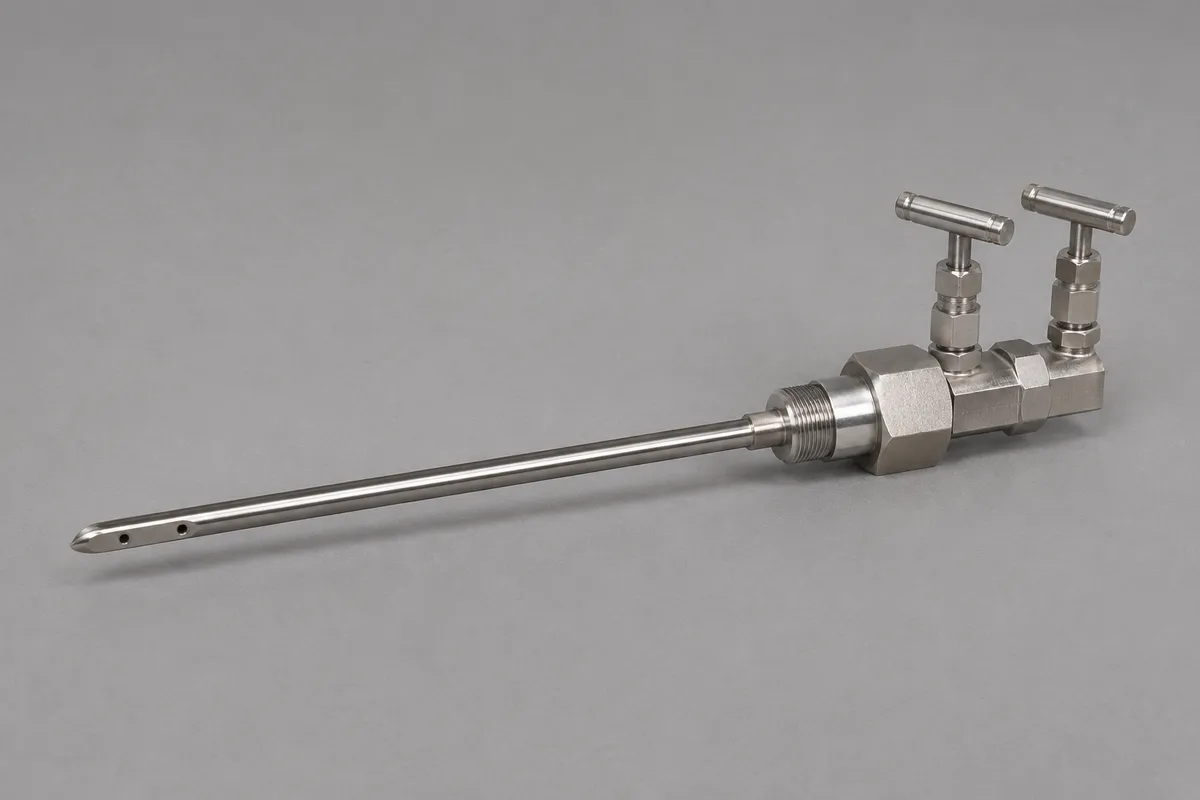
Technical references Series 160 Stainless Steel Pitot Tube