
On this page
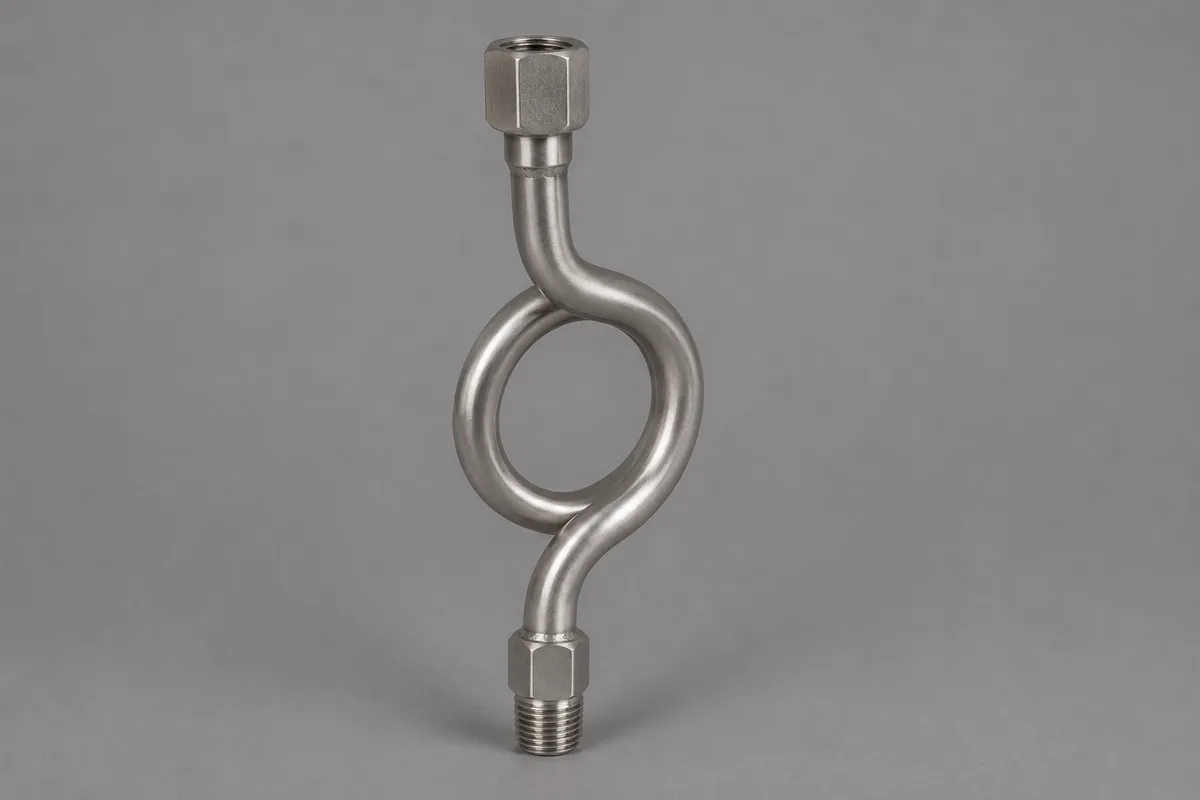
Syphon shape and mounting position
Include the fitting shape, material, connections and mounting position. If the gauge and syphon are to be checked together, show the process tapping and the gauge elevation on a sketch. Let us know if you also need a separate result for the gauge.
Pressure gauge syphons
Record its construction, connection and the service in which it is used. State whether the gauge will be checked with the syphon attached or removed, and identify the required pressure reference level. A gauge result alone does not certify the accessory's mechanical condition or suitability for the process; those questions need separate assessment.
Specifications and service checks
On a steam gauge assembly, a partial blockage can leave the gauge slow to respond even though it reads a steady pressure correctly. Give the period of the normal pressure change and whether the lag persists at stable conditions, together with the syphon type.
- Range and configuration
- Record the process temperature and height difference between tap and gauge. A water column one metre high contributes roughly 9.8 kPa, depending on density.
- Manufacturers and models
- WIKA 910.15 syphons separate a pressure instrument from a hot process by means of a condensate column.
- What we check
- Inspect the syphon for obstruction and leakage. If the installed indication matters, compare the complete assembly while accounting for the liquid head.
- Reference equipment and accuracy
- Use a calibrated pressure reference and measured vertical offset. A dimensional and integrity check is appropriate when the syphon is supplied on its own.
- When to repeat the check
- Inspect after blockage, freezing or replacement. Recheck the head correction when the gauge position changes.
Technical references Syphons and connecting pipes - 910.15 - WIKA USA