
On this page
Fluid conditions at the pressure reference
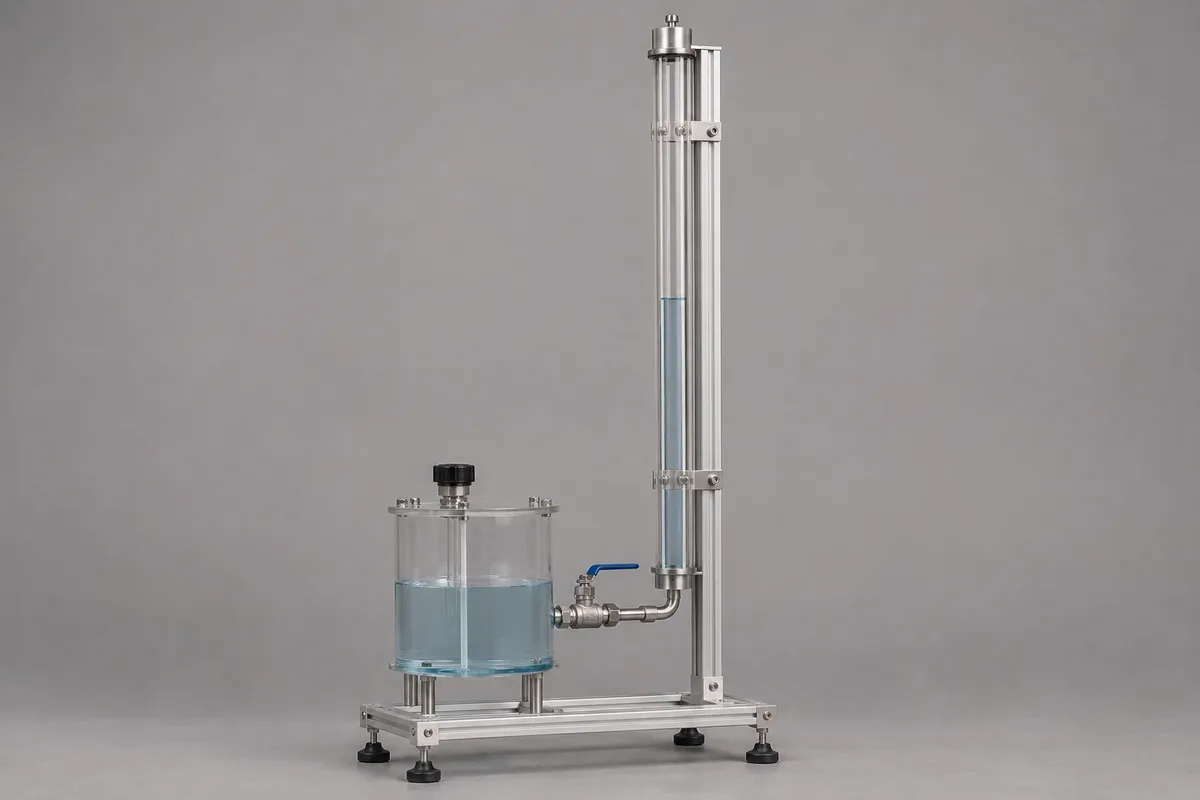
Explain which arrangement is in use and identify the fluid, temperature and reference elevation. Mark the upper and lower points on a sketch if the assembly is fixed. For a transmitter scaled in height, include its pressure range and the density setting.
Pressure head as a level measurement
Give the liquid, density information, reference elevation and whether the vessel is open or pressurised. Pressure and level are different reported quantities. RTS checks the pressure measurement and the specified height conversion with the density and elevation references recorded.
Specifications and service checks
At equal liquid density, doubling the vertical depth doubles hydrostatic pressure. The routing length of a horizontal section of pipe does not add the same vertical head. Mark the two elevations on a sketch if the plant crew is converting a pressure reading into level.
- Range and configuration
- For water near room temperature, a one-metre head is about 9.8 kPa. Use the actual liquid density and local gravity when the uncertainty warrants it.
- Manufacturers and models
- WIKA LH-10 is a hydrostatic level transmitter. A liquid-column pressure head can also be evaluated directly from height and density.
- What we check
- Compare known liquid heights or equivalent pressures with the transmitter output. Establish the reference elevation before interpreting a zero offset.
- Reference equipment and accuracy
- Use a calibrated pressure or height reference, known fluid density and a calibrated output meter for transmitters. Record where the sensing diaphragm sits relative to zero.
- When to repeat the check
- Reassess after moving the transmitter, changing liquid density settings or replacing the vented cable.
Technical references Submersible pressure sensor - LH-10 - WIKA USA