
On this page
Tension hook and compression nose
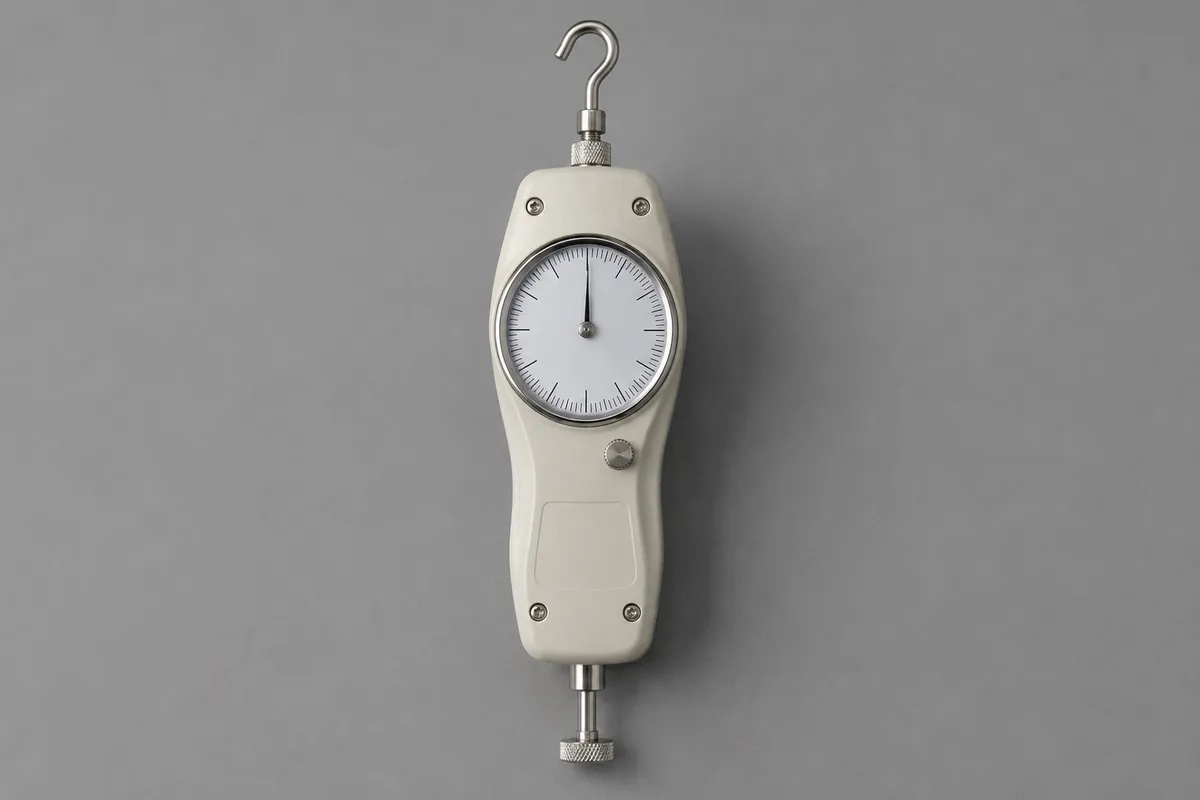
Identify the tension hook, compression nose and the range needed in each direction. For an analogue gauge, note any drag pointer used to hold the maximum reading. For a digital model, indicate whether the acceptance limit uses the peak or the settled value.
A hook pulling on an off-centre part can put a side load on the gauge. A sketch of the fixture and pulling direction helps us identify how it is loaded in service, and whether you need a result for the fitted arrangement as well as for the gauge alone.
Specifications and service checks
A magnetic catch can require a high initial pull and much less force once the door opens. Identify whether the job concerns breakaway force or steady movement. For a two-direction gauge, keep those pull results apart from push-to-close force.
- Range and configuration
- Mark-10 Series 5 spans capacities from 0.5 N to 10 kN across different models. Each gauge has its own capacity. Specify whether the inspection uses push, pull or both.
- Manufacturers and models
- Mark-10 Series 5 is one digital gauge family with model-specific capacities and force units.
- What we check
- Take a push series and a pull series with their respective attachments. Return through zero between directions and check whether the display uses a sign or a separate direction indication.
- Reference equipment and accuracy
- Use a characterised force machine, reference cell or calibrated masses with an appropriate gravity correction. Select a master with useful uncertainty down to the smallest required force.
- When to repeat the check
- Check for a zero shift after overload or side loading. A gauge used close to its lower limit benefits from an intermediate check near that force.
Technical references Mark-10 Digital Force Gauges: Series 5 · ISO Force-proving instrument calibration