
On this page
Which pressure module is fitted?
Identify the particular range or module, pressure reference, pressure medium and reference elevation. Where an earlier certificate gives corrections for the module, keep its serial number with those results. Request comparisons near the pressures used to transfer measurements to other gauges.
Comparing readings from a broad quartz range with results previously taken on a finer module can disguise a range-selection change. Keep the selected module, reference mode and displayed resolution alongside the pressure so the two comparisons can be reconciled.
Specifications and service checks
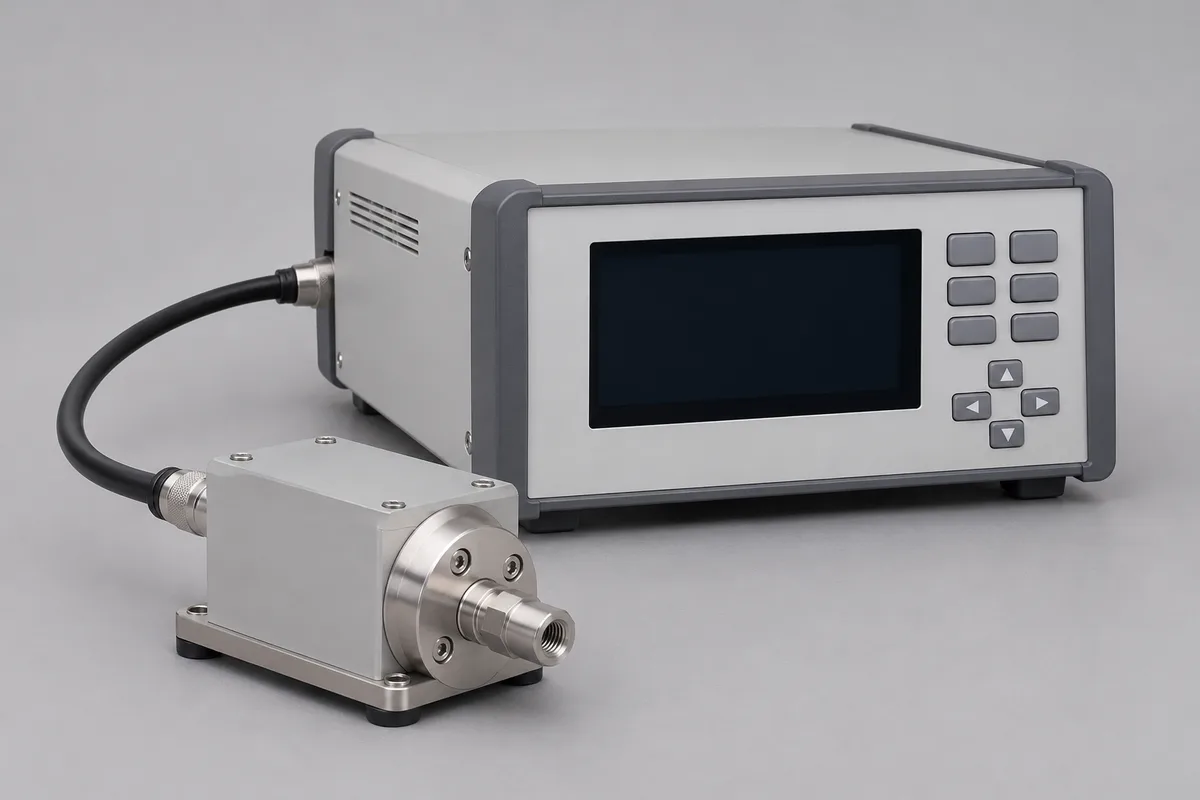
A reference monitor on a test cart may contain two quartz ranges. If the cart automatically switches between them near a working point, request overlapping readings from the named modules. This checks a discrepancy that a result from only one module could miss.
- Range and configuration
- Quote the actual pressure range, mode and scale units from the reference instrument. The word quartz describes the transducer, not its full-scale pressure.
- Manufacturers and models
- Identify the quartz pressure element and electronics by their model and serial numbers. The construction matters when specifying a quartz reference.
- What we check
- Compare the response over increasing and decreasing pressures. Temperature stability and adequate settling affect small errors on a reference instrument.
- Reference equipment and accuracy
- Use a calibrated pressure balance or a transfer standard with substantially smaller uncertainty at the selected points. Record the reference-level correction.
- When to repeat the check
- Reference gauges benefit from check-standard comparisons between formal calibrations, particularly after transport.
Technical references Paroscientific Series 2000 pressure transducers