
On this page
A plain ratchet or a torque tool?
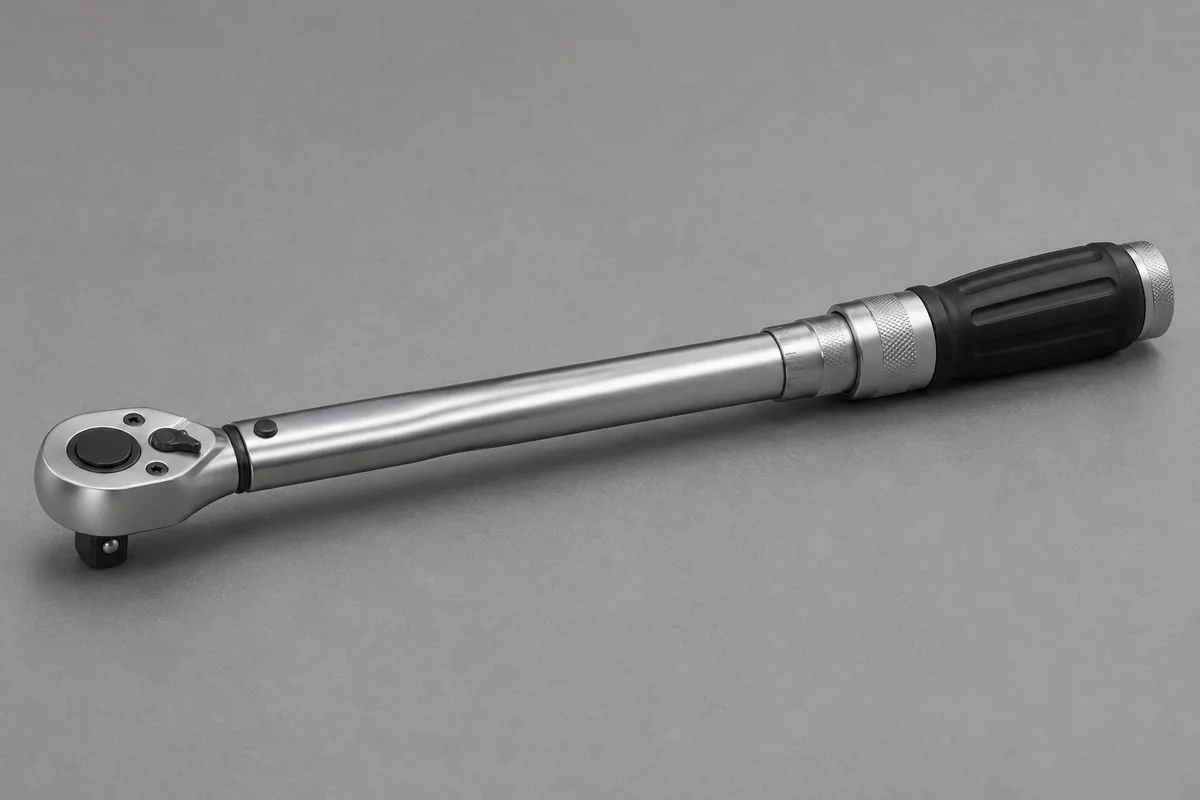
Show the head, handle markings and any setting scale. For a plain ratchet, state the functional check specified by your tooling procedure. For a torque-indicating or release tool, include its working range, directions and the head used during tightening.
Ratchet wrench or torque tool?
Send the model and identify any torque indication, release mechanism or controlled setting. If none is present, define the actual inspection requirement rather than asking for routine torque calibration. A ratchet head fitted to a torque tool should be identified as part of that tool's measurement configuration.
Ratchet
For a reversible workshop ratchet, mark the drive direction in which the pawl slips or binds. When a removable head has its own tag, record the head and handle together so the tool crib can follow the inspection after they are separated.
An intermittent skip may occur at just one point in a full turn. Mark that position and the selected direction on the job card so the workshop can repeat the engagement check on the same part of the mechanism.
- Range and configuration
- The square size defines socket compatibility. A conventional ratchet has no calibrated torque setting.
- Manufacturers and models
- Bahco lists a 270 mm ratchet with a ½-inch square drive.
- What we check
- Check drive fit, retention and mechanism engagement. A specified proof-torque test requires a defined load and suitable fixture.
- Reference equipment and accuracy
- Use a verified square gauge for drive fit. If proof testing is ordered, use a calibrated torque reference with capacity for the stated test.
- When to repeat the check
- Inspect after a slipping pawl or drive replacement. Torque-indicating ratchets need their own torque calibration schedule.
Technical references Bahco product reference
Specifications and service checks
The 1/2 in marking on a socket drive identifies the fit. A free-running ratchet with that marking can be inspected for drive condition and engagement. A wrench with an adjustable scale or torque display adds a measurable torque function.
- Range and configuration
- The 1/2 inch designation on a reversible ratchet identifies drive size. It does not describe a torque measurement range.
- Manufacturers and models
- Bahco makes 1/2 inch pear-head reversible ratchets. Include the handle model to distinguish these from torque wrenches.
- What we check
- For a plain ratchet specify drive fit, engagement and condition checks. A torque-indicating or release head has an additional measurable torque function.
- Reference equipment and accuracy
- Use suitable drive gauges for dimensional inspection. A calibrated torque rig is appropriate only for an agreed torque-related test with a known acceptance criterion.
- When to repeat the check
- Inspect engagement and the drive after heavy use. Put torque-indicating versions on the torque-tool recall schedule.
Technical references Bahco Ratchet wrench reference