
On this page
Hammer readings on the reference anvil
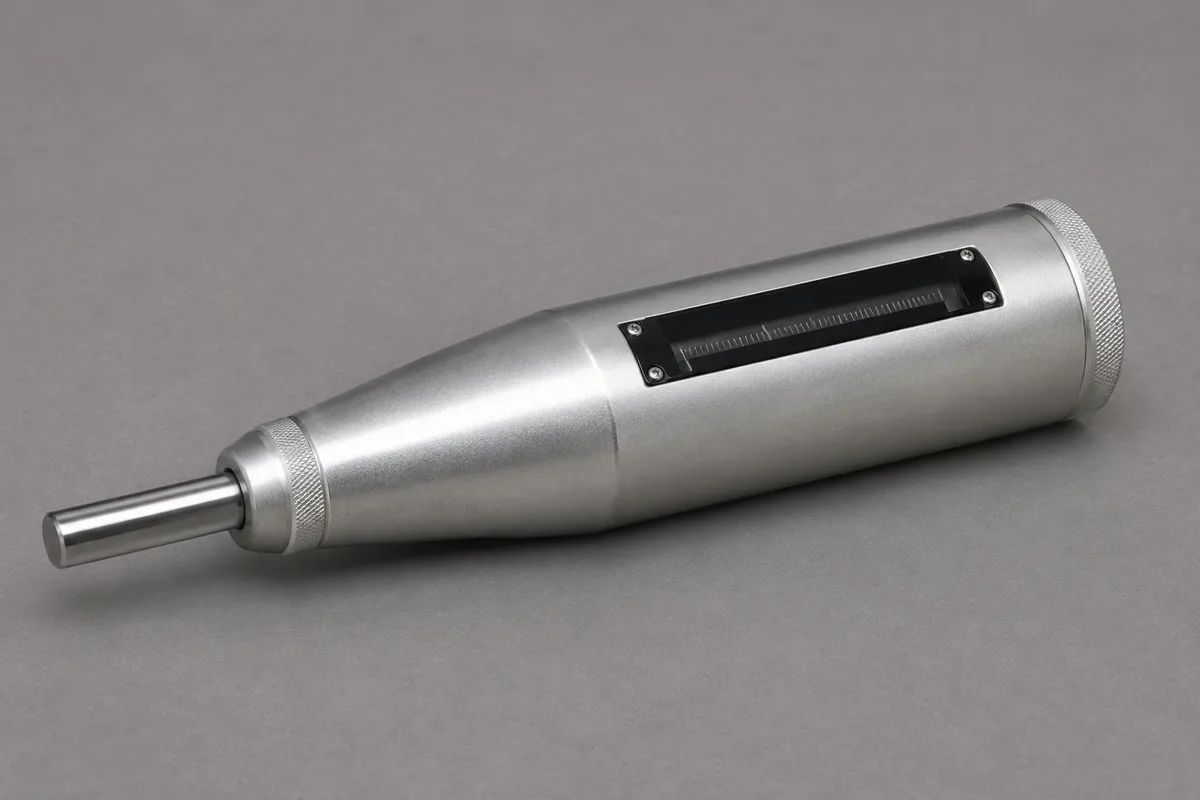
Give the hammer model, its impact-energy designation and whether it displays individual readings or a processed result. For comparisons with earlier checks, retain the individual readings, test orientation and reference anvil identification used in each series.
If a hammer and its reference anvil have moved between sites, the previous verification sheet should travel with their identifiers. An apparent change in the average can come from a different anvil or test orientation. Keeping the individual rebound readings allows a maintenance team to examine the spread as well as the average.
Rebound hammer and concrete test hammer
Include the manufacturer's verification requirements and earlier observations. A response check on the anvil concerns the instrument; it does not directly certify concrete compressive strength. Any interpretation on a structure needs the applicable test method, surface conditions and separate engineering assessment.
Concrete test hammer
When a concrete test hammer has been serviced, include its serial number and the reference anvil used for the return check. The reading on that anvil belongs with the instrument record, separate from any estimate made on a concrete surface.
A reference-anvil check follows the hammer's rebound indication. Record the hammer type, direction of use and reference anvil identity. Estimating the strength of a particular concrete member is a separate site question.
- Range and configuration
- Record the hammer type and its rebound scale. A rebound number from the anvil is different from a predicted concrete strength in MPa.
- Manufacturers and models
- Screening Eagle’s Original Schmidt OS8000 N/L family uses a matching verification anvil. Humboldt also lists rebound hammers by type and impact application.
- What we check
- Compare repeated rebound readings on the specified anvil with its acceptance band. Concrete-strength correlations are a separate site assessment.
- Reference equipment and accuracy
- Use the correct type of certified or manufacturer-verified anvil in suitable condition. Different impact energies require the corresponding reference and limits.
- When to repeat the check
- Check the anvil response around field campaigns and after an impact, cleaning or spring replacement.
Technical references Screening Eagle product reference · Humboldt product reference
Specifications and service checks
The same vertical wall can be tested at more than one height and location. Mark the impact direction and the area on the concrete plan. Checks on the instrument’s reference anvil and rebound observations on concrete serve different purposes.
- Range and configuration
- Concrete rebound hammers are specified by impact energy and the rebound value their reference anvil should produce. Anvil results are reported as rebound readings rather than a concrete strength value.
- Manufacturers and models
- Screening Eagle supplies Original Schmidt N and L models with matching verification anvils.
- What we check
- Use the matching test anvil and take a series of impacts under the maker’s specified orientation and support conditions. Compare the results with the acceptance band marked for that system.
- Reference equipment and accuracy
- Use a characterised anvil intended for the hammer type. A project-specific relationship to concrete strength, where required, needs separate evidence for the material under test.
- When to repeat the check
- Check on the reference anvil before and after a field campaign, after impact mechanism maintenance and whenever readings change unexpectedly.
Technical references Screening Eagle Original Schmidt