
On this page
Flash rate and trigger source
Specify the displayed unit, internal or external trigger and the flash rates used. If you use phase delay or an external trigger input, identify that function separately. For a result in rpm, include the relationship assumed between each flash and a shaft revolution.
A display of 3,000 flashes per minute corresponds to a flash rate of 50 Hz. It does not establish that a shaft is turning at 3,000 rpm. Several marks on a rotor can give repeated stationary-looking images, so keep the instrument’s flash rate and the machine-speed interpretation as separate entries.
Checking a stroboscope’s flash rate
Copy the unit shown on the instrument along with the rates your procedure uses. Identify whether the instrument sets the rate internally or follows an external trigger. For a triggered check, include the input type and any multiplier or divider used.
A calibration request can ask how often the lamp actually flashes. Inferring shaft speed from a stationary-looking pattern is a different observation. Several identical blades, or a flash rate related to the rotation by a whole-number ratio, can produce a similar image. If shaft speed also needs verification, identify the machine and target in a separate request.
Specifications and service checks
A repeated pattern can appear stationary at several different flash rates. A single distinctive mark is useful for judging which part of the pattern repeats. When requesting a flash-rate check, record the displayed flashes per minute separately from any speed inferred from the image.
- Range and configuration
- For example, 3,000 flashes per minute is a flash frequency of 50 Hz. Flash duration and flash rate are different specifications.
- Manufacturers and models
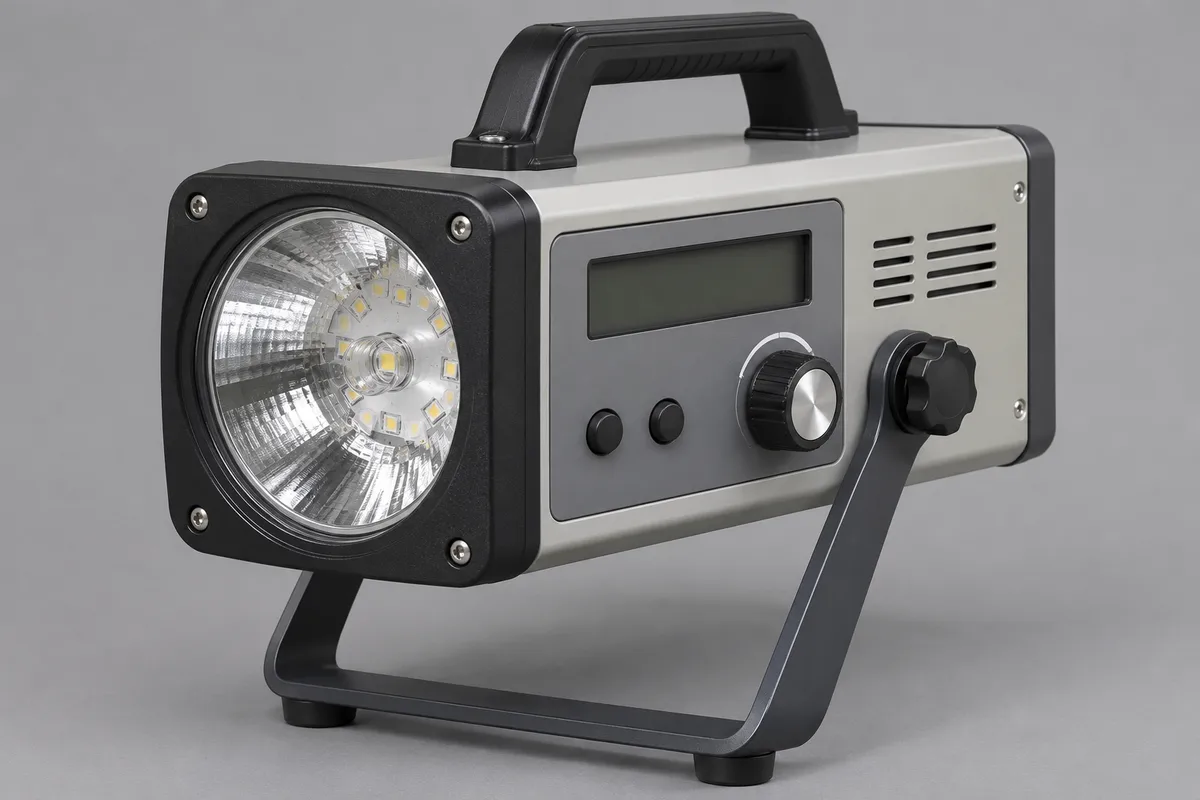
- Fluke 820-2 LED stroboscope covers 30–300,000 flashes per minute. A stationary-looking target can appear at a multiple or fraction of its true speed.
- What we check
- Measure the emitted flashes with an optical detector and independently timed counter. Compare the measured rate with the displayed setting at the required points.
- Reference equipment and accuracy
- Use a suitable detector and calibrated timebase. Include detector triggering and missed pulses at the highest rates in the uncertainty assessment.
- When to repeat the check
- Verify after LED-driver repair or an unexpected difference from an independently measured shaft speed.
Technical references Fluke 820-2 LED stroboscope