
Name the channel and measurement mode
Send the channel label, connector type and frequency points you need. Include the chosen gate time if your inspection procedure specifies one. List period or time-interval measurements separately so RTS can review those functions alongside frequency.
What gives the counter its time reference?
A counter can run from its internal clock on one bench and take an external reference on another. Identify the arrangement used for acceptance testing. If there is a reference input, give its marked frequency and the cable that normally connects it. A result obtained with an external reference has to be interpreted in light of that connection. Include any fitted oscillator option and say whether its reference output also needs a result.
For an intermittent signal, copy the measurement mode from the bench procedure. Counting pulses during a gate interval, measuring frequency on a continuous signal and measuring the interval between two events require different entries on the quotation.
A frequency display fitted to a panel
A panel frequency meter may take its signal from a supply waveform or a separate transducer. Give the input rating and the displayed unit, then list the frequencies that the operator reads. If the meter also requires an auxiliary supply, record that marking separately. A photograph of the model label can resolve variants with the same front display.
For a combined panel meter, mark frequency as the requested function and identify any voltage or current readings that also need results. Before removal, have the site team identify the original panel position and preserve the approved settings. Include the instrument's tag and return panel on the order. Ask for the report to identify the frequency function and the input conditions used.
Keep bench accessories identifiable
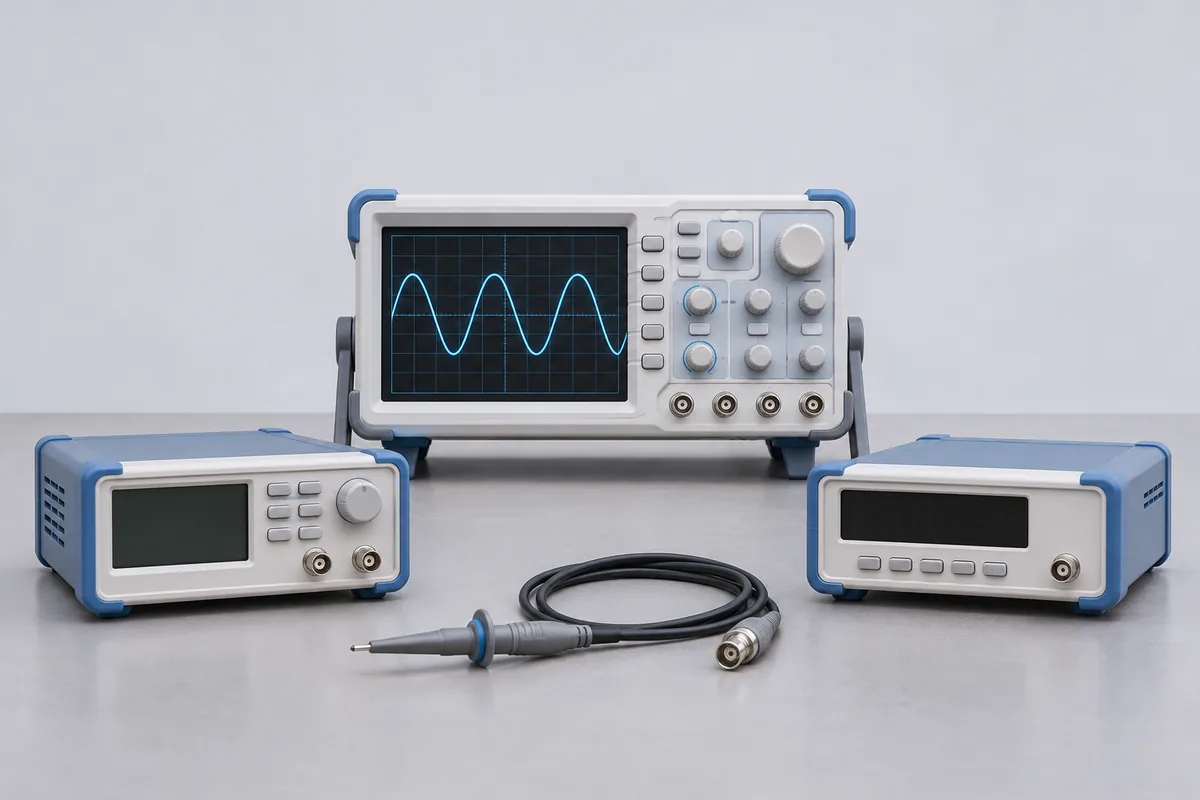
Identify the counter separately from a rack reference used by several benches. Mark the cables and adaptors that can travel. This lets the team discuss the intended configuration before anything is disconnected.
Time interval meters
A time interval meter measures between defined events. State which edge, polarity and trigger level starts and stops the measurement, and identify the input channels. Give the interval points and the reference source arrangement used in the laboratory. Keep this requirement separate from a frequency-only check. RTS can review whether the applicable time method and scope conditions match the event measurement your procedure requires.