
On this page
Pendulum range and the number of plies
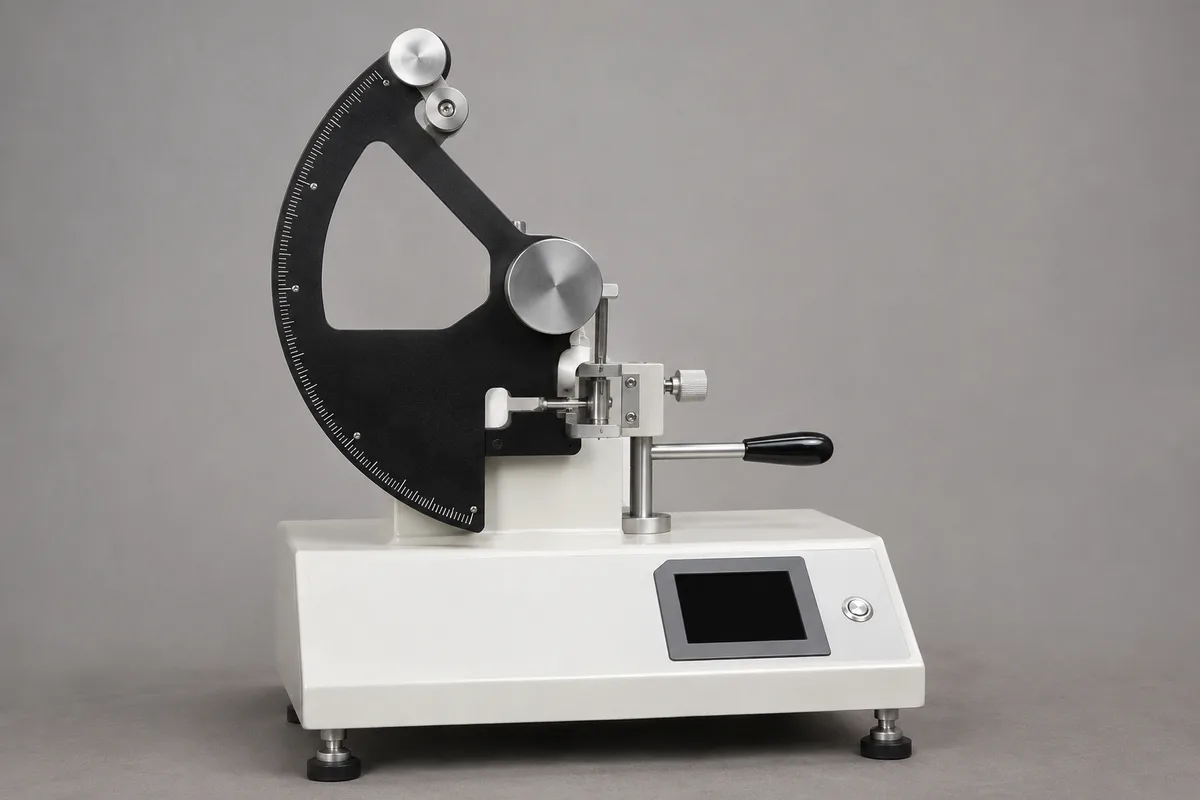
On an Elmendorf-type tester the pendulum range matters. If staff change the pendulum or add an approved weight for heavier material, mark which configuration produced the reading. Record the number of plies too if your worksheet divides the observed force by that number. A calibration result for the instrument scale and a calculated result per ply answer different questions.
Tearing strength tester type and range
A pendulum arrangement and a force-measuring tensile setup need different apparatus information. Include the relevant masses, geometry or force channel and the reporting requirement from the method. RTS verifies the tear-test apparatus under the specified method, with the force reference and complete test configuration identified.
Specifications and service checks
A pendulum tester can use different ranges or added weights. Keep the fitted pendulum and range identification with the reading so the lab can reproduce the scale used for the material under test.
- Range and configuration
- The published ElmaTear pendulum options span 2 to 128 N. A pendulum measures a particular force span. List each pendulum, added weight and display unit so results can be tied to the installed combination.
- Manufacturers and models
- James Heal’s ElmaTear is a pendulum instrument for measuring tear resistance.
- What we check
- Check zero, pendulum losses and the indications obtained with the manufacturer’s check pieces. Verify specimen geometry separately from force indication.
- Reference equipment and accuracy
- Use the designated verification weights with traceable mass values and a length standard for the geometry. A tensile load cell serves a different measurement principle.
- When to repeat the check
- Review checks after a pendulum change or bearing service. Record a reason for unusually high free-swing losses before releasing the instrument.
Technical references James Heal product reference · SDL Atlas product reference · ElmaTear pendulum specifications