
On this page
Probe orientation and duct airflow
A display may also show air temperature or calculate flow for a duct. Mark which result the job requires, list the operating air speeds and note the fitted probe. If the velocity and temperature channels both enter a commissioning sheet, ask for both to be identified.
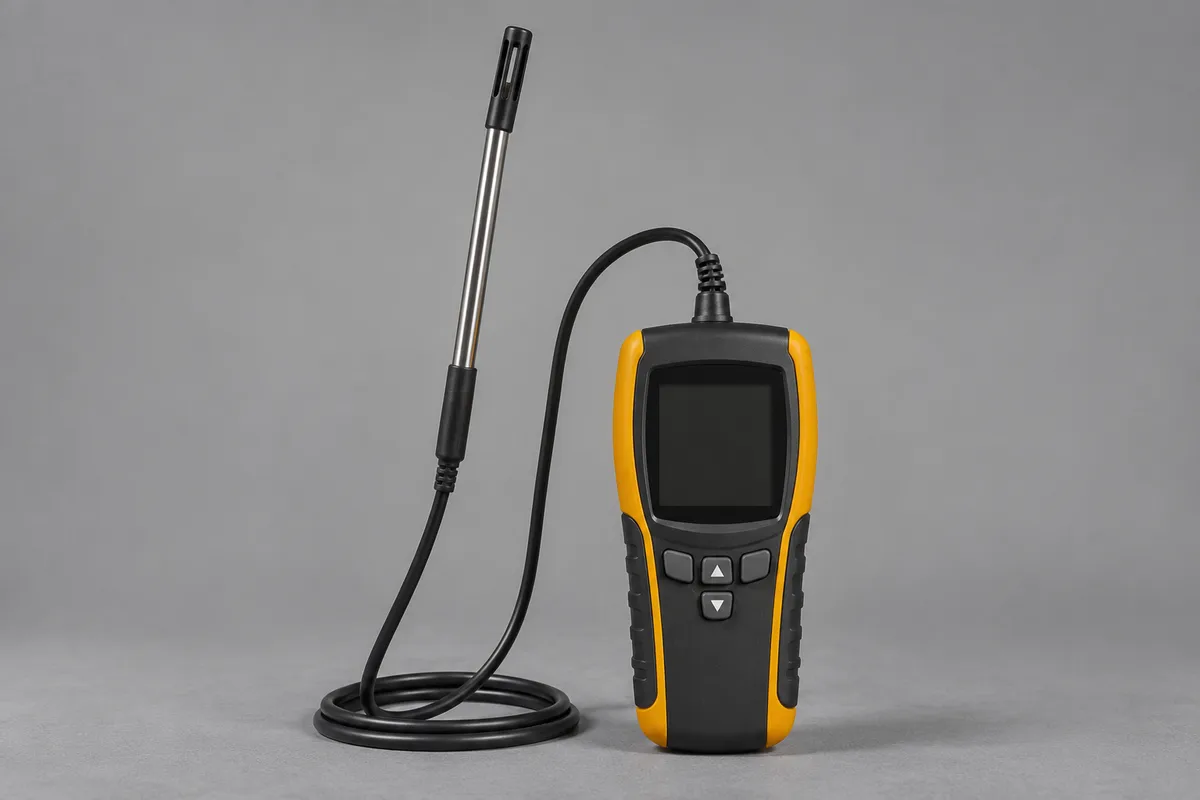
A probe facing along a duct and one turned sideways may not give comparable readings at the same point. Record whether the head is directional or multidirectional and how it was presented during the check. The reference speed and the probe orientation describe the result together.
Specifications and service checks
A probe used to inspect gentle air movement over a workstation may spend its entire service life at the bottom of its scale. Identify that narrow band and the probe’s direction mark. A comparison only at high ventilation speeds would say little about the reading used on the job.
- Range and configuration
- The 405i is a 0–30 m/s hot-wire example. A comparable reading near the bottom of the scale requires the probe direction, ambient conditions and the reference air speed to be recorded.
- Manufacturers and models
- Testo’s 405i is a hot-wire probe. In the same product comparison, its 410i uses a vane and has a different response.
- What we check
- Compare the probe with a reference air stream over its working speeds. Keep its directional mark and temperature compensation configuration in the test record.
- Reference equipment and accuracy
- Use a wind tunnel with a calibrated velocity reference at the sensing position. At low speed, zero behaviour and temperature sensitivity deserve an uncertainty allowance.
- When to repeat the check
- Oil films, dust and physical damage can alter a fine sensing element. Use the history of clean-air checks to decide whether a yearly visit is close enough.
Technical references Testo 405i and 410i metric specifications · NIST air speed metrology