
On this page
Gas mixture and flow reference conditions
Give the gas or mixture, selected gas calibration, temperature, pressure and actual working range. If a substitute gas is used on the bench, identify the conversion used. Include insertion depth and pipe size for an insertion probe that is returned to a fixed duct or line.
A meter moved from an air supply to a nitrogen line may keep displaying the previous gas name or correction. Record that setting before comparing the totals. A change in response after relocation does not by itself establish that the sensor has drifted.
Specifications and service checks
A compressed-air header might use a meter configured for dry air, then supply a process containing moisture. A shift following that change gives the bench a reason to check gas assumptions and sensor condition alongside calibration points.
- Range and configuration
- Identify the gas mixture and whether the output is mass flow or referred volume. The comparison range also depends on pipe size.
- Manufacturers and models
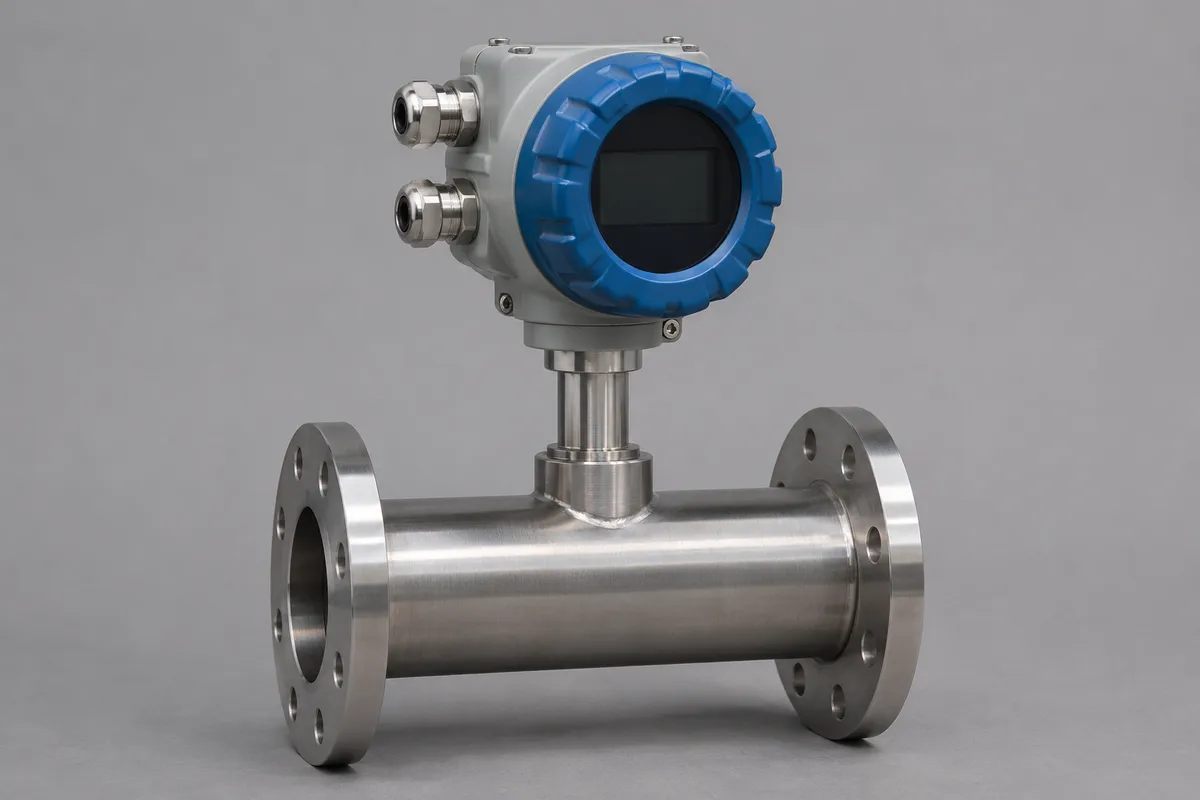
- Endress+Hauser t-mass F 300 measures gas mass flow by thermal transfer. Its configured gas composition affects the result.
- What we check
- Compare flow using the selected gas and record operating conditions. Note whether the original settings or a new gas definition were used.
- Reference equipment and accuracy
- A calibrated gas flow reference should cover the working mass flow with the specified gas or a substantiated transfer correction.
- When to repeat the check
- Check again after sensor cleaning or a sustained change in gas composition.
Technical references Proline t-mass F 300 thermal mass flowmeter