
On this page
Thread class, hand and ring marking
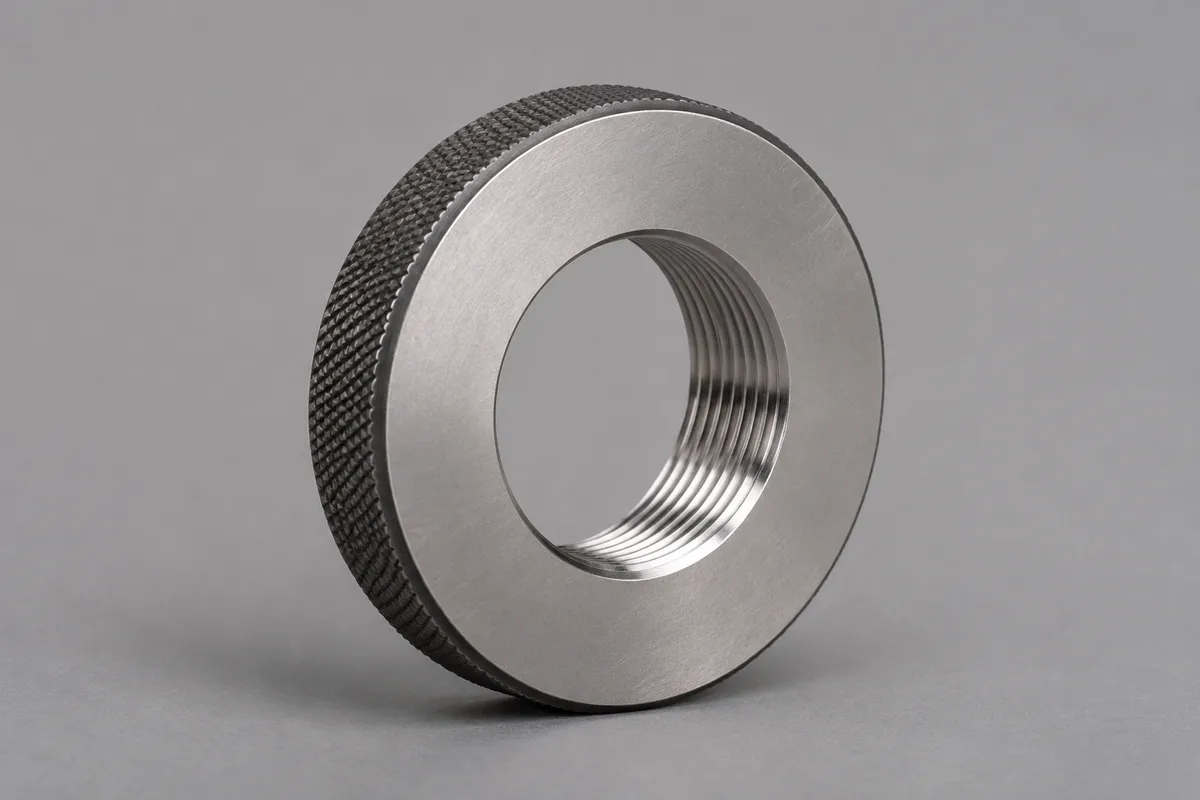
Include the full thread designation, pitch, class, hand and go or no-go marking. Identify the setting plug if it is part of the service. For a ring set near a production limit, specify whether you require the as-received condition before any adjustment is made.
When a setting plug is shared between two adjustable rings, each ring still needs its own result and identity. Record which plug was used so a later change of setting can be traced to the correct reference.
Specifications and service checks
If a ring works on its setting plug yet binds on only some production screws, note whether the affected part is plated or unfinished. Keep the ring setting check separate from the inspection of pitch, form or coating on the screws.
- Range and configuration
- A metric ring specification such as M39 × 3.00 6g identifies nominal diameter, pitch and external product-thread tolerance. GO and NO-GO rings have different limits.
- Manufacturers and models
- Vermont Gage’s metric catalogue lists separate GO and NO-GO rings.
- What we check
- Check an adjustable ring with its calibrated setting plug using the applicable procedure. Include other dimensional characteristics only when they were actually measured.
- Reference equipment and accuracy
- Use the setting plug for the identified ring, pitch and class. Its effective diameter and uncertainty must be known before evaluating the ring.
- When to repeat the check
- Verify setting after adjustment and when inspection results change. Keep the setting plug certificate with the identity of each ring it supports.
Technical references Vermont Gage Standard Thread Gages