
On this page
Prism and reflectorless distance measurements
If the crew reports that prism shots agree but reflectorless shots do not, keep the two sets of field readings separate. Include the prism model and constant, working distance and reflectorless target type. For an angle discrepancy, a field-book entry showing the instrument face and units is more informative than the final calculated coordinates. Send the tribrach identity if it travels with the instrument.
Total station functions
List the prism or reflector, tribrach and controller used. Include the measurement modes and working distances required by the procedure. A distance result with one reflector arrangement should not be assumed to cover every prism setting, reflectorless target or angular characteristic of the instrument.
Specifications and service checks
A prism constant left over from the previous target can shift otherwise repeatable distances. Note the prism mode and selected constant when sending a distance discrepancy, together with whether the reference line used a reflector.
- Range and configuration
- Prism and reflectorless distance modes have different specifications. List the prism constant, working distances and the instrument’s stated angular class.
- Manufacturers and models
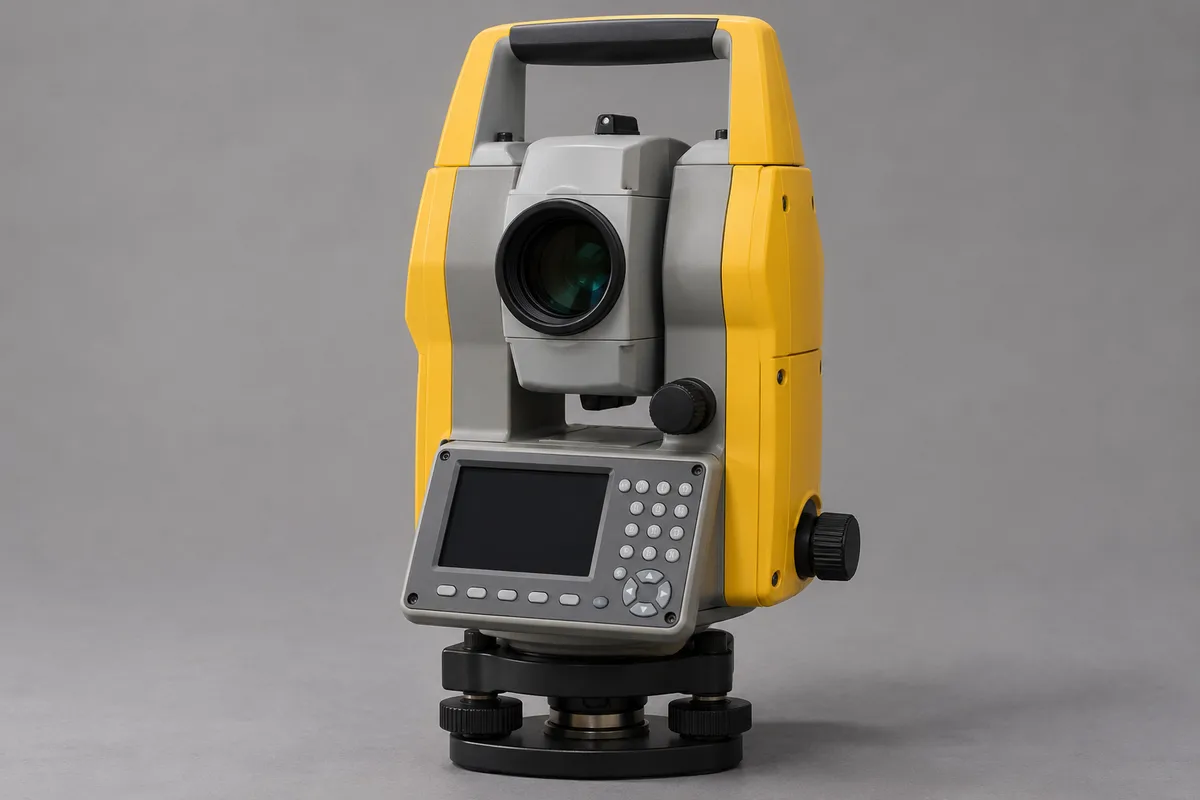
- The Leica FlexLine TS07 combines electronic distance and angle measurement. The geo-FENNEL FTS 300 is another total station example.
- What we check
- Check angular response and compare distances on a traceable baseline in the specified mode. Record reflector type and atmospheric corrections used.
- Reference equipment and accuracy
- Select separate length and angular standards with suitable uncertainty. Verify prism identity when the instrument is used with more than one reflector.
- When to repeat the check
- Review calibration after EDM or telescope repairs. Routine baseline checks can detect a change before the next survey campaign.
Technical references Leica Geosystems product reference · geo-FENNEL product reference