
On this page
AC-only or combined AC and DC readings
Give the AC voltage or current range, typical frequency and whether the meter uses AC-only or AC-plus-DC measurement. If a non-sinusoidal signal is relevant, identify the waveform and conditions so the requested check is defined.
On a signal containing a DC offset, an AC-coupled RMS reading may differ from a combined AC-plus-DC RMS result. Check both the instrument mode and the quantity expected by the process record before using the difference to judge accuracy.
Specifications and service checks
Two AC signals can have the same RMS value yet different peak values. On a drive bench, include the waveform or source description and frequency with the voltage point. A meter’s permitted crest factor and bandwidth determine which waveforms it can measure to its stated specification.
- Range and configuration
- Quote the signal frequency, crest factor and expected RMS value for distorted waveforms. True-RMS operation still has a specified bandwidth and input peak limit.
- Manufacturers and models
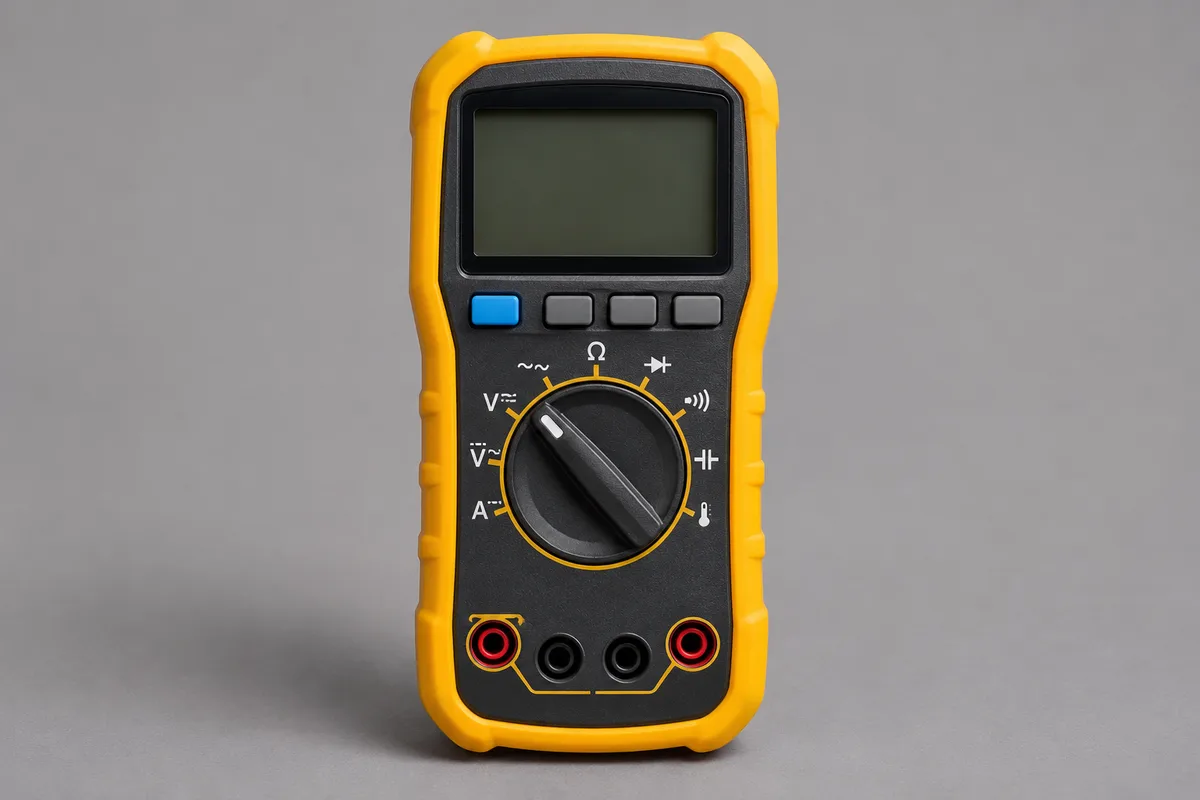
- Fluke 87V is a handheld true-RMS example with DC and AC measurement functions. The complete model matters for frequency response as well as voltage rating.
- What we check
- Compare indication with known voltage, current and resistance values on the functions the user needs. For AC, identify frequency and waveform conditions rather than relying on a single mains-frequency point.
- Reference equipment and accuracy
- Use a traceable multifunction source and suitable resistance references. Compare the source uncertainty with the meter's range-specific accuracy, including counts.
- When to repeat the check
- Use the manual's accuracy period and recent as-found errors to set the interval. Include a check after a current-input repair or overload.
Technical references Fluke 87V Industrial Multimeter