
On this page
Meter pulses per unit of liquid
Record the existing pulses-per-unit figure and the liquid used. Include both the low rate at start-up and the normal running rate where relevant. Identify the pickup, local display and remote totaliser if the result must cover their conversion as well.
A pulse factor in pulses per litre is the reciprocal of litres per pulse. If a replacement totaliser expects the opposite convention, the displayed volume can be badly scaled while the turbine continues to produce a consistent pulse train.
Specifications and service checks
For a meter marked 100 pulses per litre, 2,500 pulses represent 25 L. If a receiving counter records the full pulse count but displays a different volume, its scaling is worth checking separately from the turbine.
- Range and configuration
- The calibration factor is often pulses per litre. At low flow, bearing drag can change that factor more than it does near the middle of the scale.
- Manufacturers and models
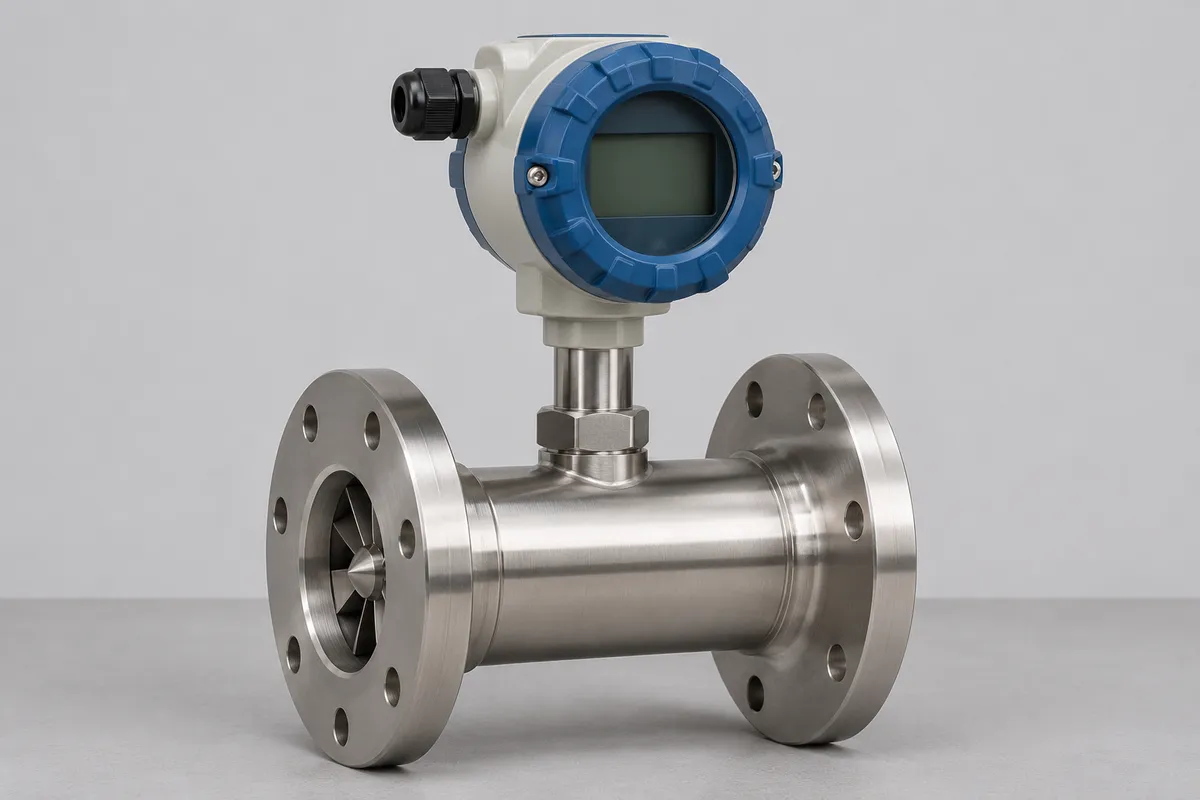
- The Badger Meter Blancett 1100 family spans 2.27–18,930 L/min across different sizes. Each size covers a smaller band.
- What we check
- Compare counted pulses with independently measured volume at several steady flow rates. Report the factor at each rate if a single average hides a useful trend.
- Reference equipment and accuracy
- Use a calibrated prover or gravimetric rig with a pulse counter, temperature measurement and the information needed to convert mass to volume.
- When to repeat the check
- Track changes in the low-flow factor and recheck after bearing or rotor work.
Technical references Blancett Model 1100