
On this page
Small changes at the normal gross load
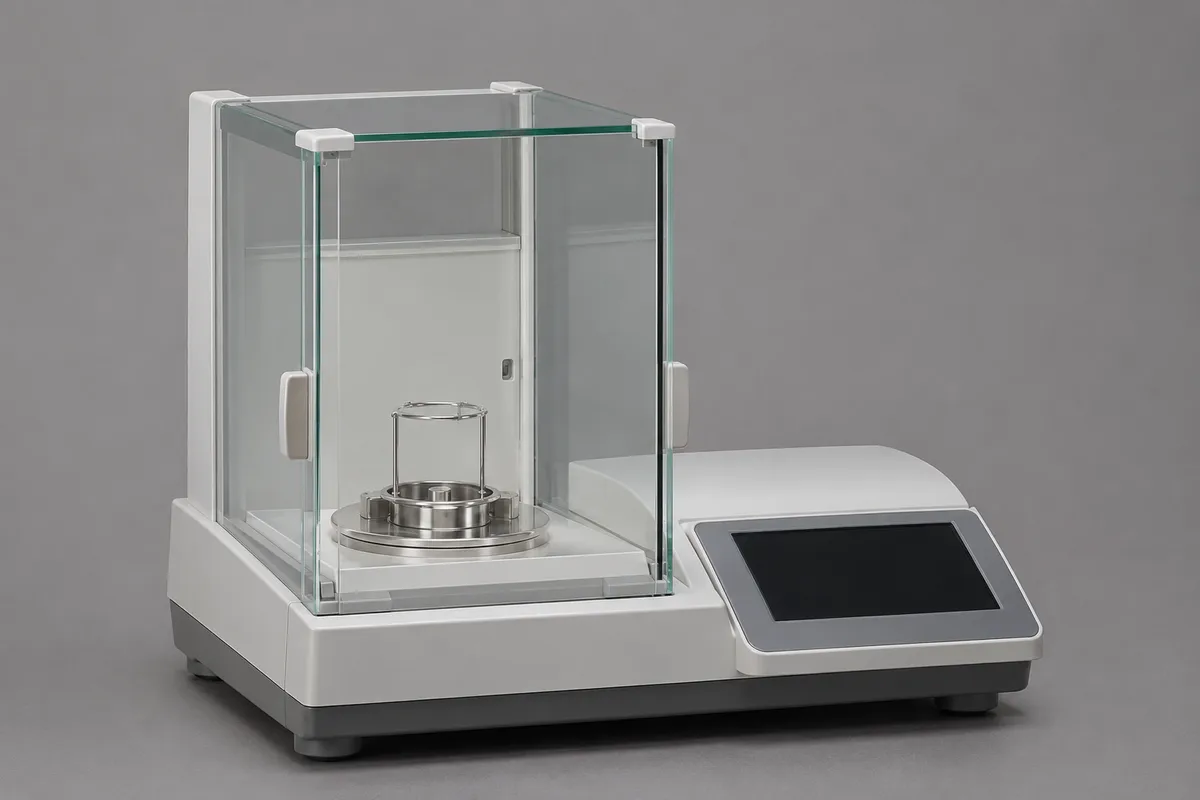
List the instrument's actual readability, gross load and smallest change of interest. Describe its enclosure and the accessories left on the pan. If the method compares a filter before and after use, identify the filter holder and the settling rule used for both readings.
When one weighing is repeated several times, retain the individual readings and the time between them. A draft, static charge or a drifting empty vessel can affect very small net readings. Recording the vessel and stabilisation conditions makes a later comparison more informative than an isolated last digit.
Specifications and service checks
After a warm sample holder enters a weighing chamber, the indication may settle across several readings. Keep the empty holder observations and their times if instability occurs on incoming samples but a stabilised reference mass reads consistently.
- Range and configuration
- Sartorius lists 0.1 µg scale intervals within its Cubis II micro and ultramicro family. At this resolution the test mass, air movement and static control matter as much as the number of display digits.
- Manufacturers and models
- Sartorius Cubis II includes micro and ultramicro versions. Its 6.6S and 10.6S microbalance modules have 1 µg intervals.
- What we check
- Evaluate repeatability near the sample load as well as indication error under reference weights. Allow for air movement, static and the reference weights’ uncertainty.
- Reference equipment and accuracy
- Select calibrated small weights with uncertainty low enough at the intended mass. The choice can require E1 or specially characterised weights and careful handling.
- When to repeat the check
- Use a control weight to track behaviour at low load. Revisit the interval if the instrument moves or its environmental controls change.
Technical references Sartorius Microbalance reference · Sartorius Cubis II Microbalances White Paper