
On this page
Converting the head output to pressure
Find the pressure-to-output curve for the exact model of head on the chamber. A replacement may plug into the same controller but use a different conversion. If a plant PLC calculates pressure directly from the signal, ask us to record both the applied pressure and the output, with the gas setting and the pressure unit. This lets you check the conversion later without repeating the pressure comparison.
For a head whose specified curve is one volt per decade, a change from 10 to 100 Pa spans the same voltage interval as 100 to 1,000 Pa. Use this example only for that slope. The voltage offset and the actual slope for your head come from its own transfer equation.
Specifications and service checks
If the vacuum head is removed from a system that applies its own gas correction, record where that correction was enabled. Reporting the raw electrical output and the configured system reading as separate quantities can explain why two otherwise consistent displays disagree.
- Range and configuration
- Identify the pressure decades and the signal conversion used by the controller. A linear signal-to-pressure assumption can give the wrong result on a logarithmic output.
- Manufacturers and models
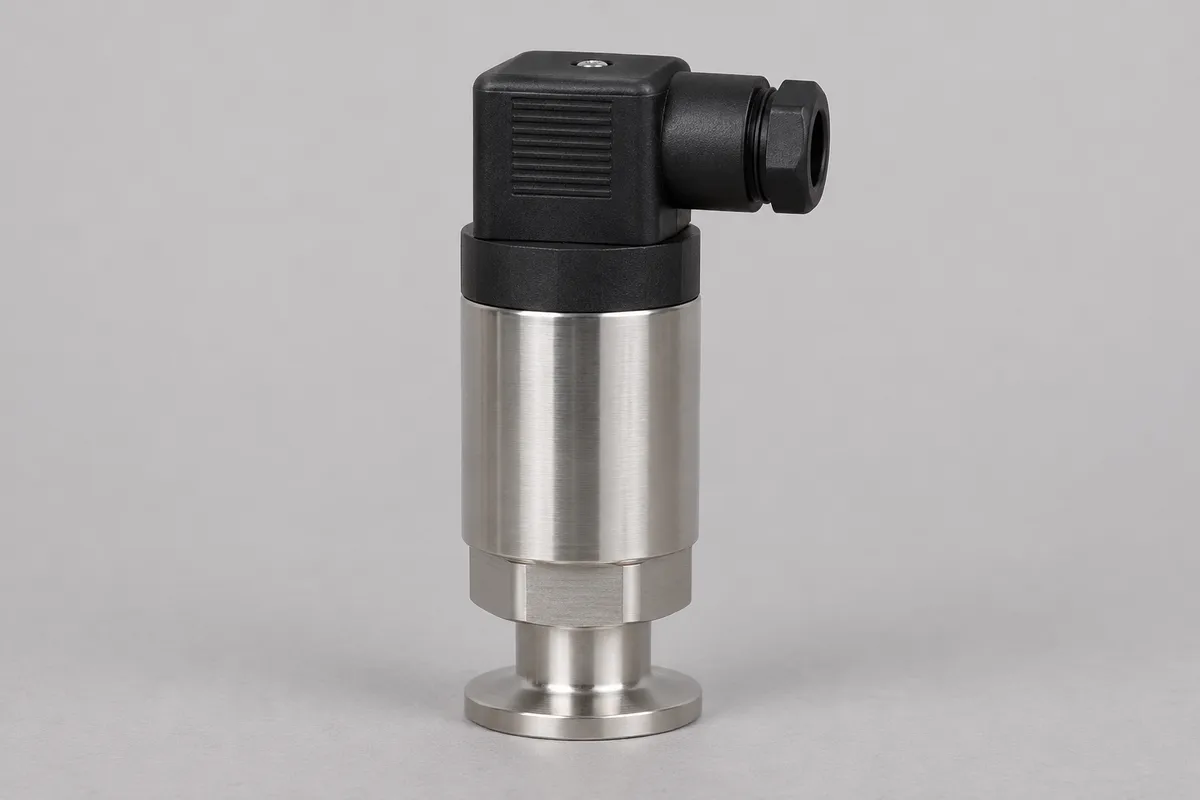
- INFICON PCG550 is a combined Pirani/capacitance gauge with a selectable electrical output.
- What we check
- Compare output voltage or current at independently measured absolute pressures. Use the head's actual transfer curve, which may be logarithmic, to convert the output.
- Reference equipment and accuracy
- Use vacuum transfer standards covering the requested pressures and a calibrated electrical readout for an analogue signal.
- When to repeat the check
- Check again if filament, sensor head, gas service or configured output characteristic changes.
Technical references PCG550, PCG552, PCG554