
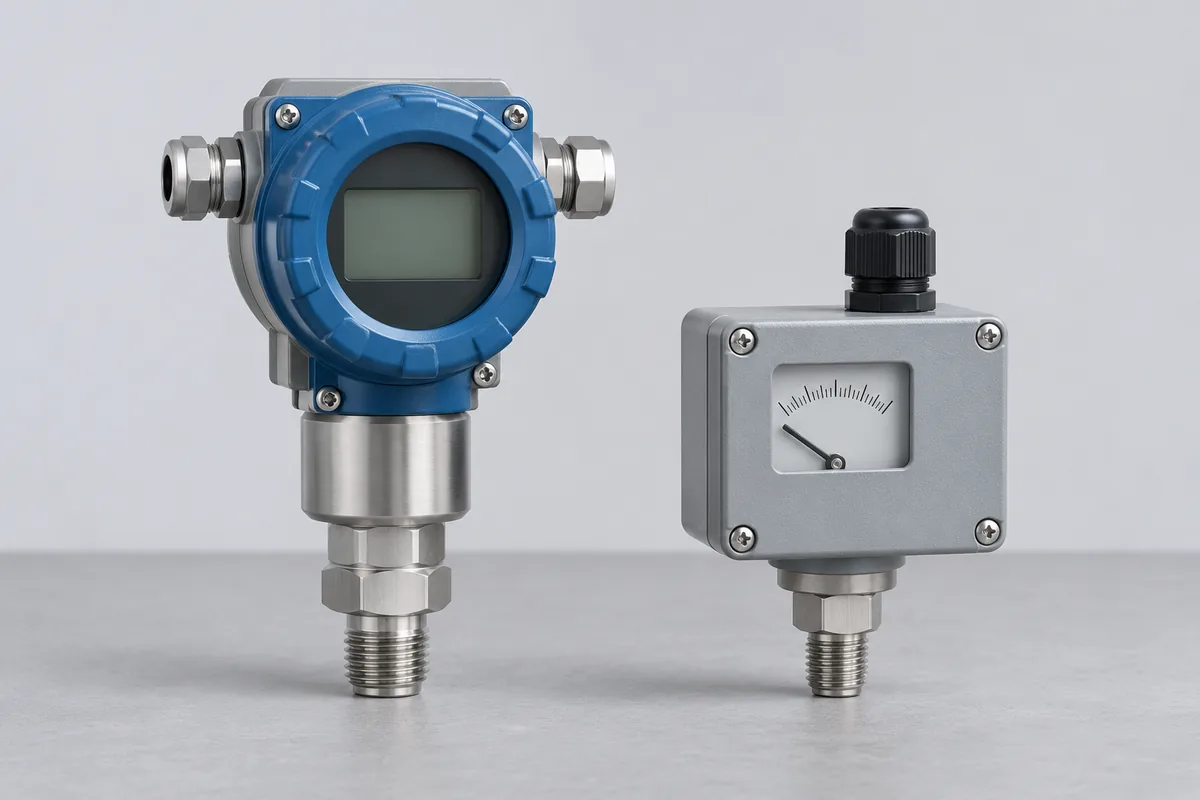
Define the pressure input and output
Identify gauge, absolute or differential pressure and keep the engineering units with the values. Give the lower and upper range settings, the output type and any scaling selected. On a differential-pressure flow application, mention square-root extraction and where that function is applied.
Describe the installation
List the port size, medium in contact with the instrument and any remote seals or capillaries. Tell us whether the drawing calls for results at the transmitter terminals or at a receiving display. Ask RTS to agree on packing and receiving instructions before sending a sealed assembly.
Agree where the calibration result ends
Checking a transmitter's output at its terminals addresses one part of the measurement chain. A reading on a control-room display also involves the wiring, input channel and scaling applied there. Tell RTS which result is used for the process decision, and whether you want the transmitter alone or an installed loop assessed. List the required pressure-to-output pairs in the same units as the work instruction.
For a smart transmitter, record its configured range, output function and relevant damping or trim settings before any proposed change. Include points near important process limits and state whether rising and falling pressure readings are required. A remote seal or capillary arrangement needs its installation described with the request. If a discrepancy is being investigated, ask for initial readings and settings to be retained, together with a separate record of any authorised adjustment.
Working around a utility shutdown
Identify the plant contact responsible for isolation and the access window available. For an off-site quotation, confirm who will release the transmitter and whether its supply or readout has to travel with it. Agree the receiving instructions for process-wetted connections and sealed assemblies before packing.
Diaphragm seals and attached transmitters
A diaphragm seal transmits process pressure through its filled connection to the measuring instrument. Keep the seal, capillary and transmitter identified as one assembly when that is how they are used. Give their relative mounting positions and the operating temperature information needed for review. Do not separate a filled system merely to dispatch its display. RTS can agree the pressure comparison and reporting boundary for the supplied assembly.