
On this page
Valve seating and transmitter indication
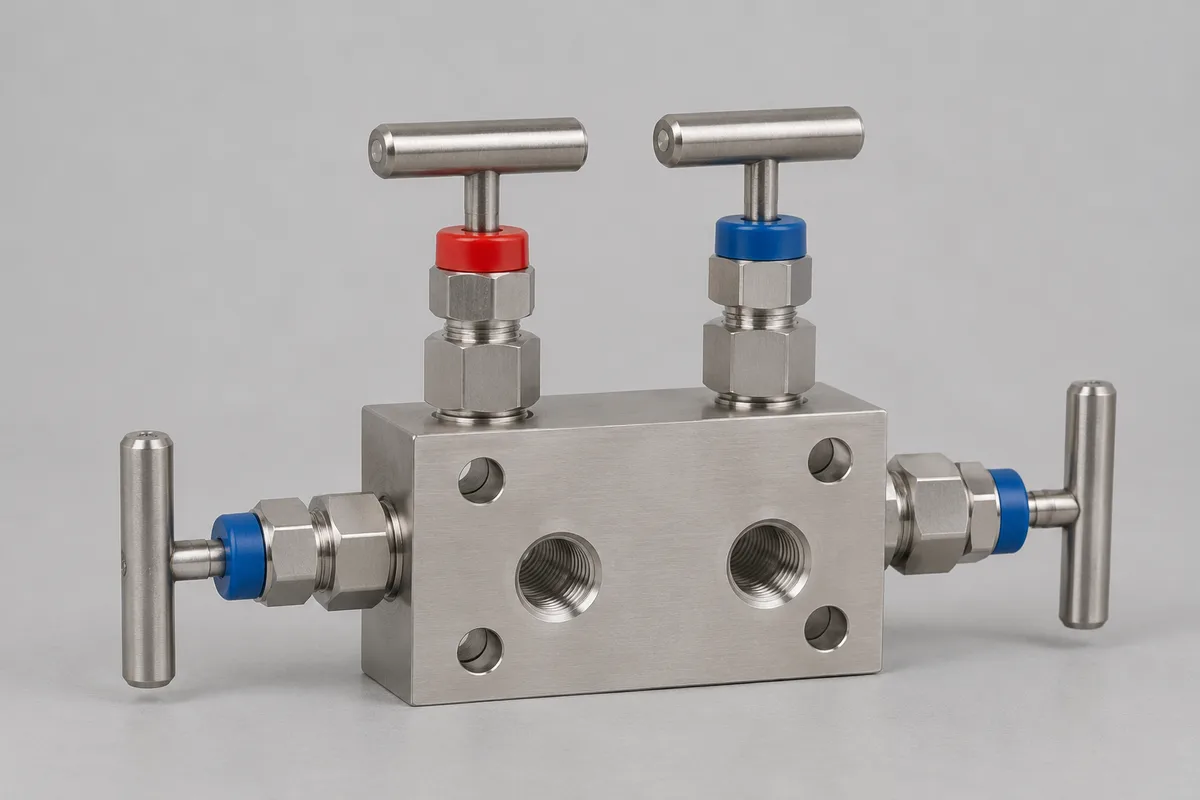
On a transmitter with a three-valve manifold, a small leak across the equalising valve can reduce the pressure difference between the two sides. The transmitter may still respond correctly to the difference it actually sees. Tell us whether the concern is the valve seating, the transmitter output or the pair as installed. A marked photo of the high and low ports, together with the pressure rating and medium, will identify the arrangement.
Valve manifolds
Identify the connection used for the proposed pressure comparison. A manifold can be part of that arrangement without being a separately calibrated measuring instrument. Provide any leakage or pressure-integrity requirement as a distinct test enquiry, and leave the operating configuration to the responsible plant team when arranging a site visit.
Specifications and service checks
A process crew may isolate a transmitter through its manifold before applying a comparison pressure. If the pressure drifts only with one manifold position, describe the port and valve arrangement used. The enquiry can then cover manifold leakage as well as transmitter response.
- Range and configuration
- The relevant values are working pressure, leakage or pressure retention and any differential left across the connected instrument when equalised.
- Manufacturers and models
- WIKA IV3 and IV5 manifolds provide isolation and equalisation for differential pressure instruments. The number and function of the ports identify the arrangement.
- What we check
- Verify valve functions and defined leakage limits, then check zero with equalisation established if the pressure transmitter is included.
- Reference equipment and accuracy
- Use calibrated pressure or differential references and a suitable means of detecting leakage at the agreed limit.
- When to repeat the check
- Repeat the functional and isolation checks after seal changes or work on the impulse lines.
Technical references Valve manifold - IV3, IV5 - WIKA USA