
On this page
Delivery time and residual liquid
For a certificate that will be used by the analyst, retain the delivery and waiting convention with the measured volume. A correction for the marked delivery can then be applied to that pipette without confusing it with a graduated pipette of similar capacity.
A pipette marked to deliver 25 mL may retain a small amount of liquid after normal drainage. Whether that liquid is included in the delivery depends on the marking and specified convention. The buyer should preserve that convention when comparing the reported delivery with a routine transfer.
Specifications and service checks
A single-mark transfer pipette is often selected for one fixed delivery. Identify the exact fill mark and the marked drainage convention. If operators normally use a pipette controller, include that detail where it affects holding or delivery on the bench.
- Range and configuration
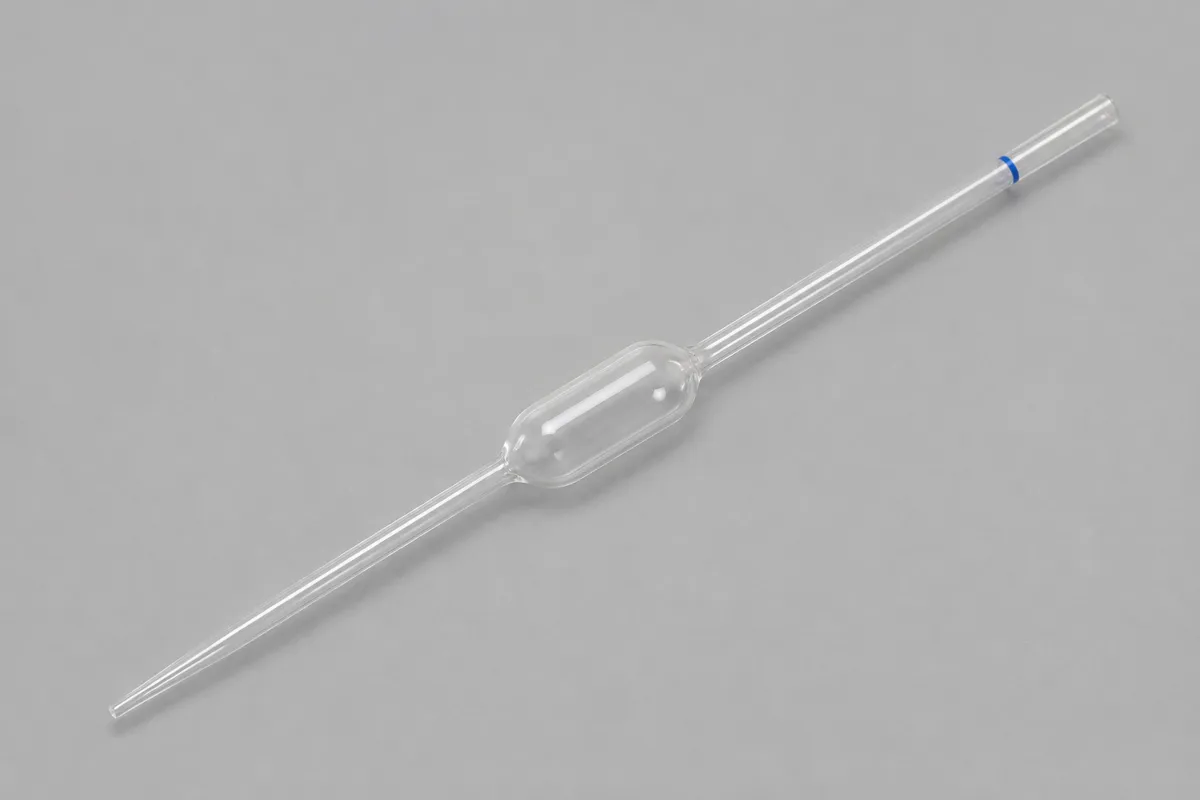
- One BRAND bulb pipette is marked 25 mL with a tolerance of ±0.03 mL. For a one-mark pipette, use the nominal volume, reference temperature and delivery convention etched on the individual piece.
- Manufacturers and models
- BRAND BLAUBRAND includes bulb and graduated glass pipettes. Corning’s Stripette is an example of a serological pipette.
- What we check
- Measure the amount delivered under the drainage convention marked on the instrument. Record which marks were used and whether blow-out is specified for that design.
- Reference equipment and accuracy
- A traceably calibrated balance and thermometer support a volume comparison. Choose resolution and evaporation control for the smallest delivery under test.
- When to repeat the check
- Identify glass pieces individually where practical. For disposable serological or transfer pipettes, follow the lot-control requirements used by the laboratory.
Technical references BRAND volumetric glassware testing guide · Corning Stripette serological pipettes · NIST volumetric calibration procedures · Corning 4488 10 mL Stripette · BRAND bulb pipette markings